— notebook · fairs · milan · april 2026
milan design week 2026.
stone beyond the fair.
Every April Milan becomes the world’s design showcase. The Salone del Mobile fills the fairground, but what really sets the trends happens in the city: courtyards, showrooms and shops. This year I went to look at one thing only: how stone is being used.
words and photos: Ray Ródenas, architect · april 2026
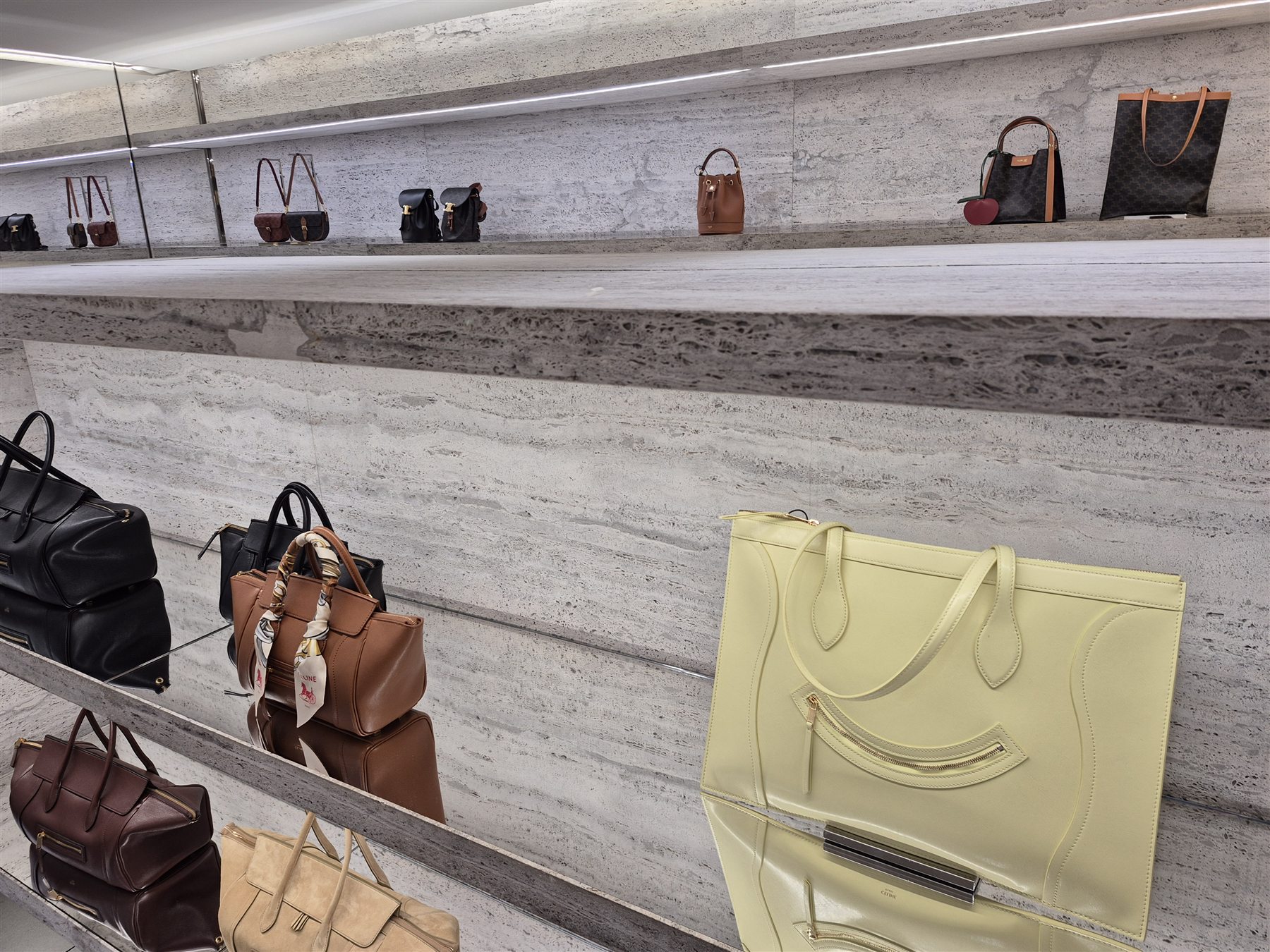
travertine is back. and raw.
The first thing you notice is travertine. Not the filled and polished travertine of the nineties, but open-pored, vein-cut, in thick pieces. Fashion brands use it as if it were timber: cantilevered shelves, solid counters, clad columns. Celine builds its space with it; Fendi wraps its columns in a warmer, golden tone with a texture so strong you want to touch it. I did.
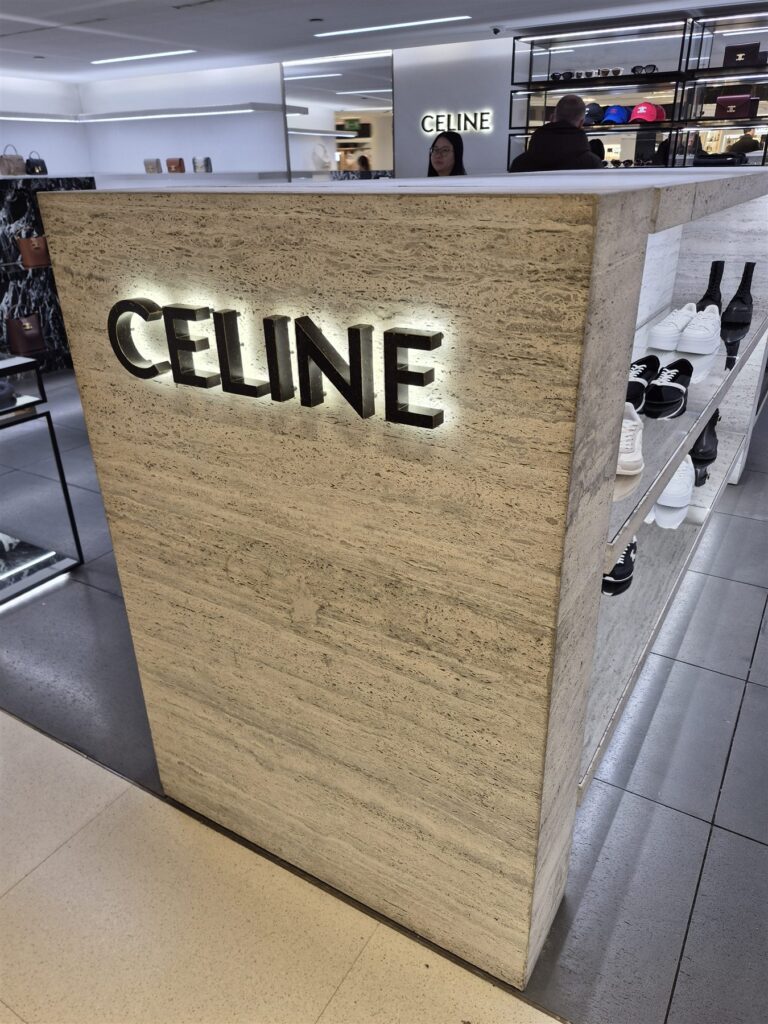
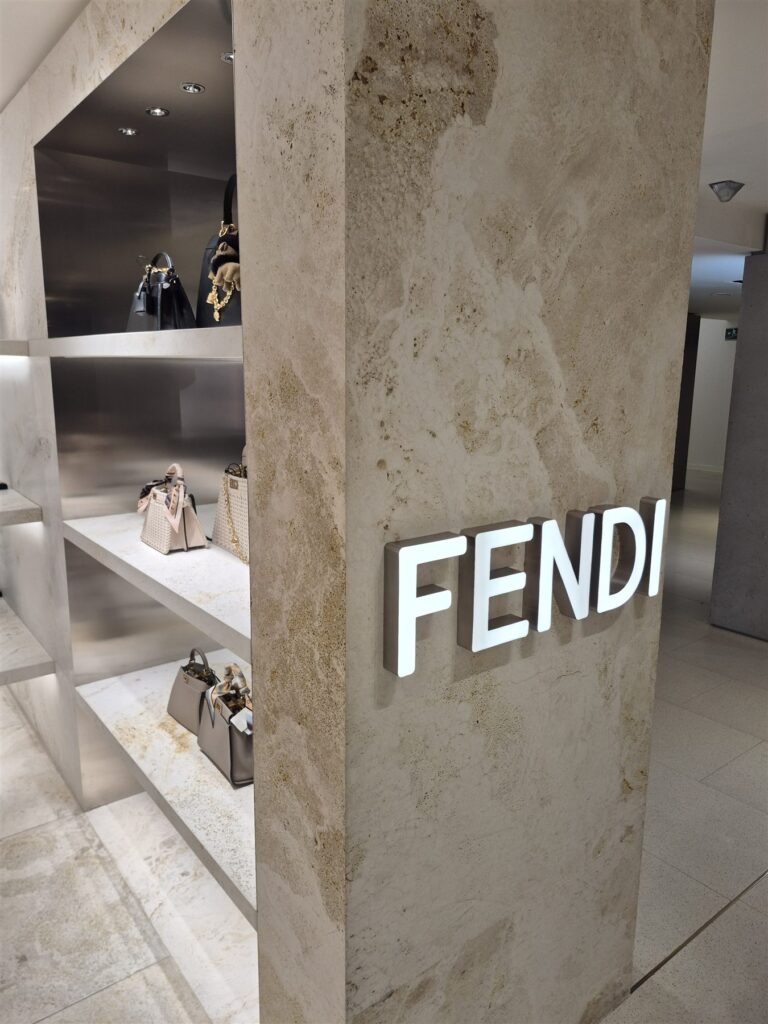
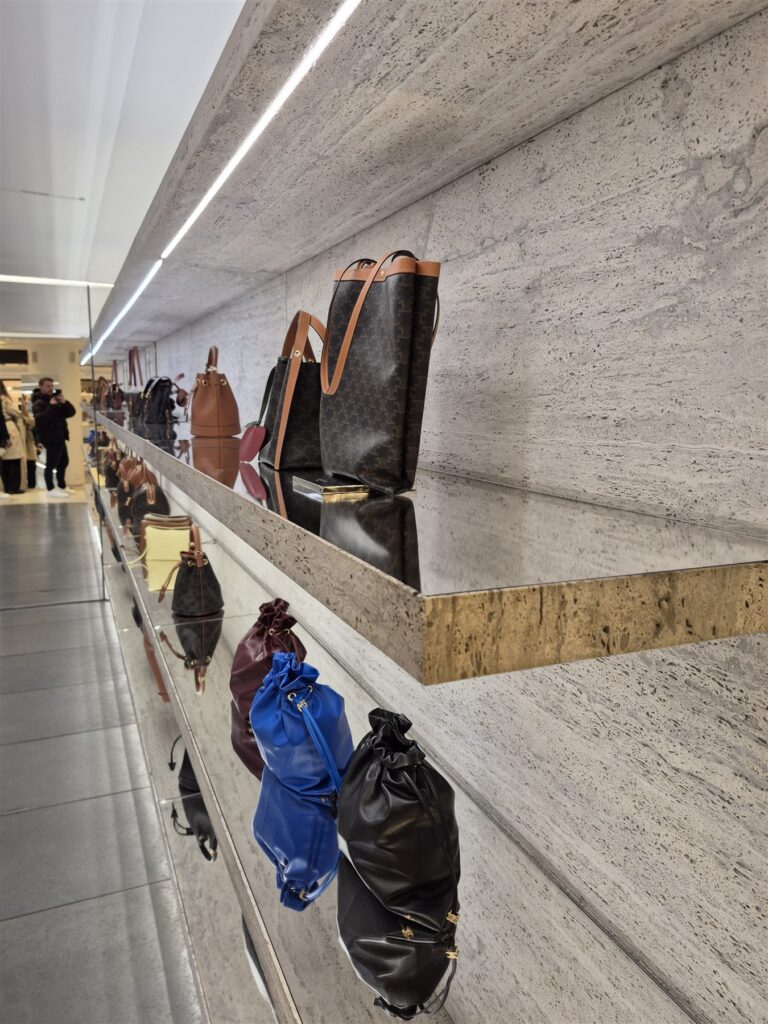
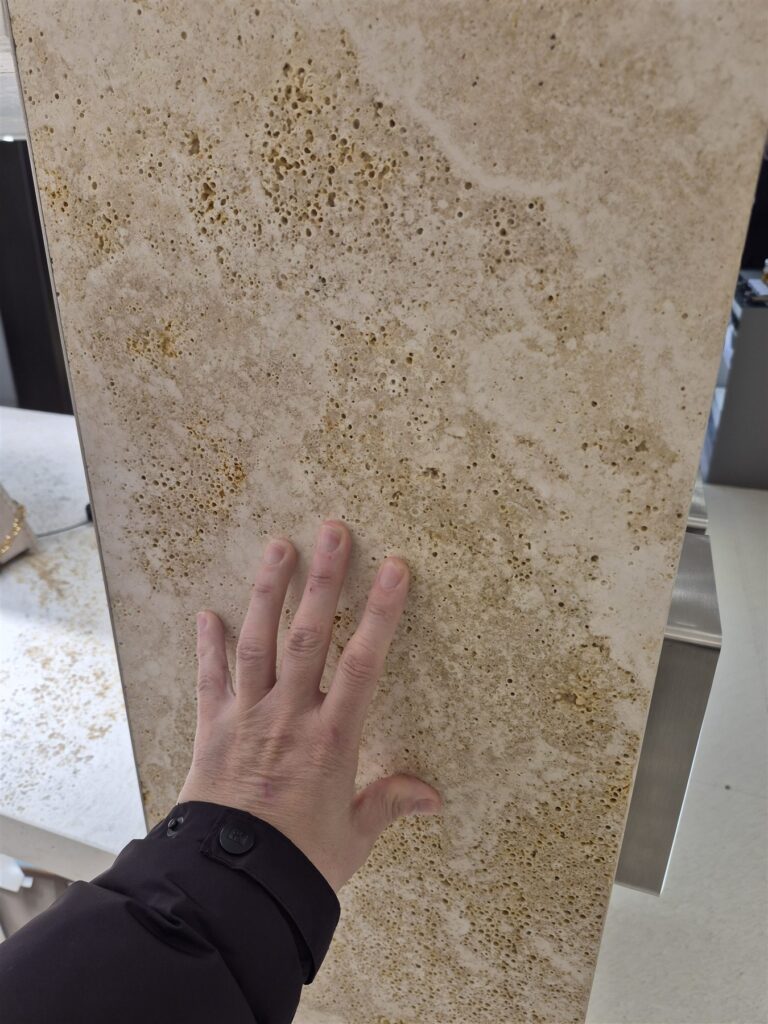
For an architect the reading is clear: travertine has left the floor. It is no longer just paving; it is furniture, cladding and volume. And the finish rules: honed, aged or raw. Gloss is out.
stones with character: black, fantasy, red.
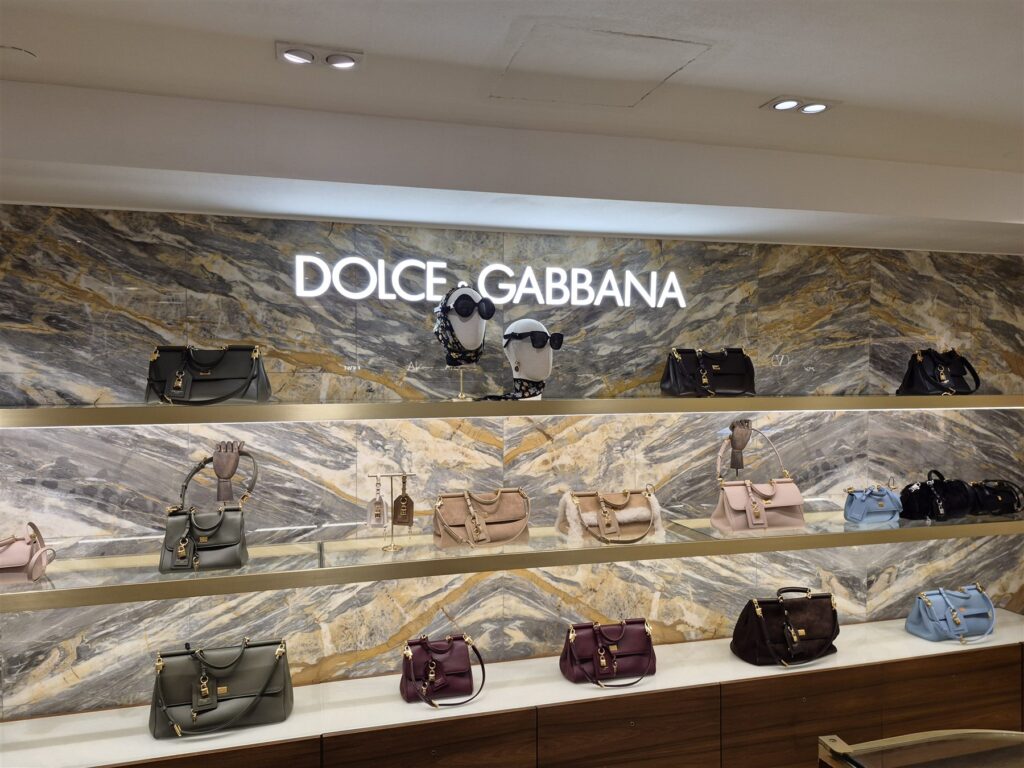
Against the calm of travertine, the other extreme: highly figured stones used in large panels. Loewe wraps its space in a black marble with white veining, almost graphic. Dolce & Gabbana clads an entire wall in a fantasy stone with undulating greys and ochres, bookmatched like a painting. The message is the same: stone as the protagonist, not the background.
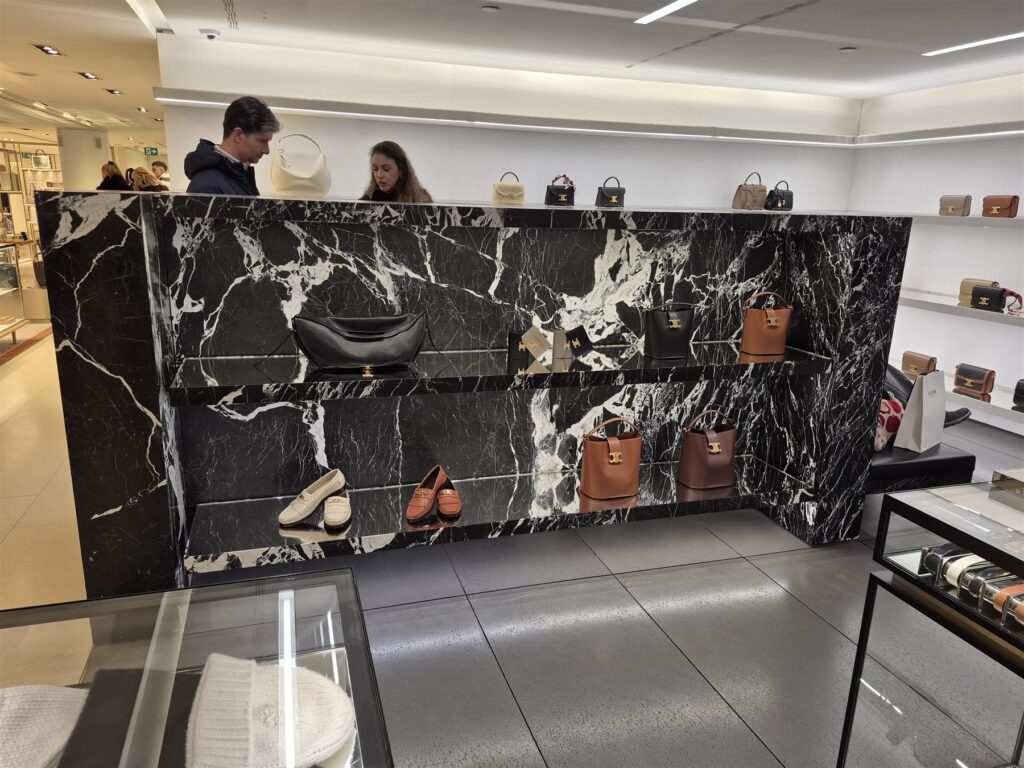
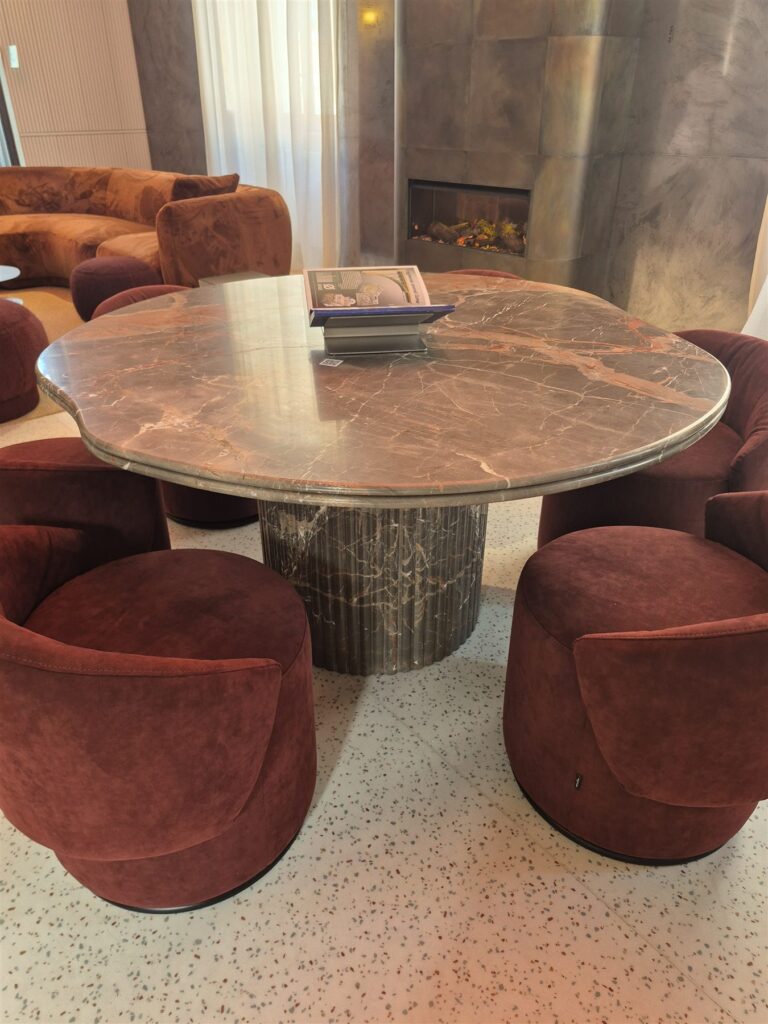
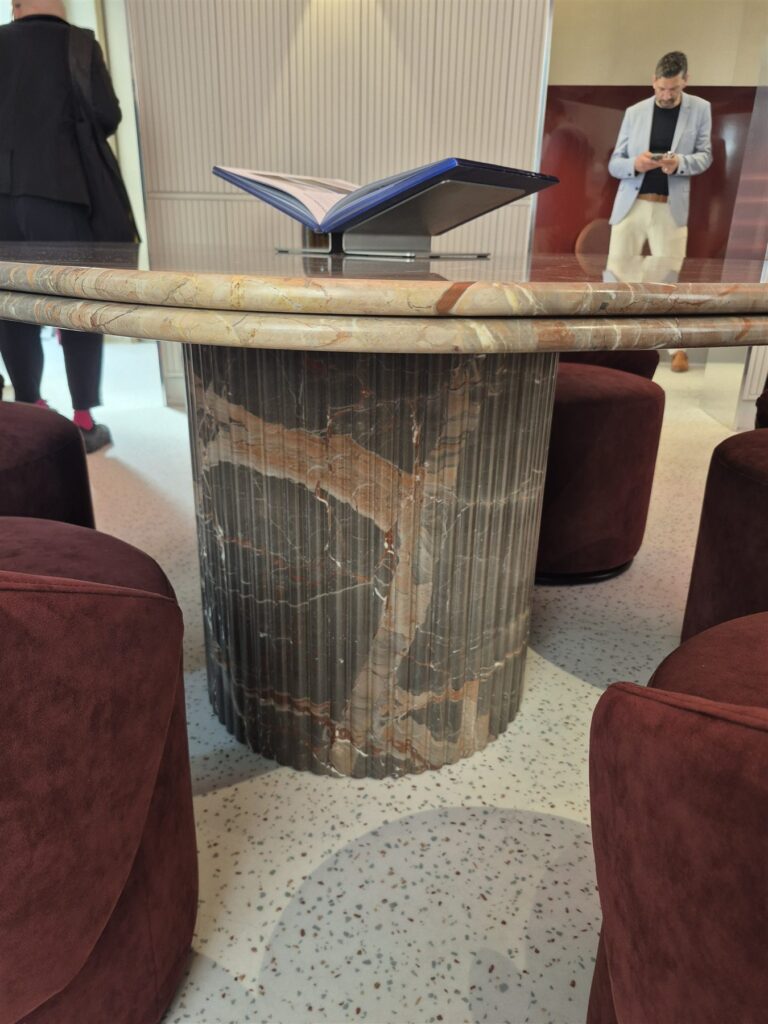
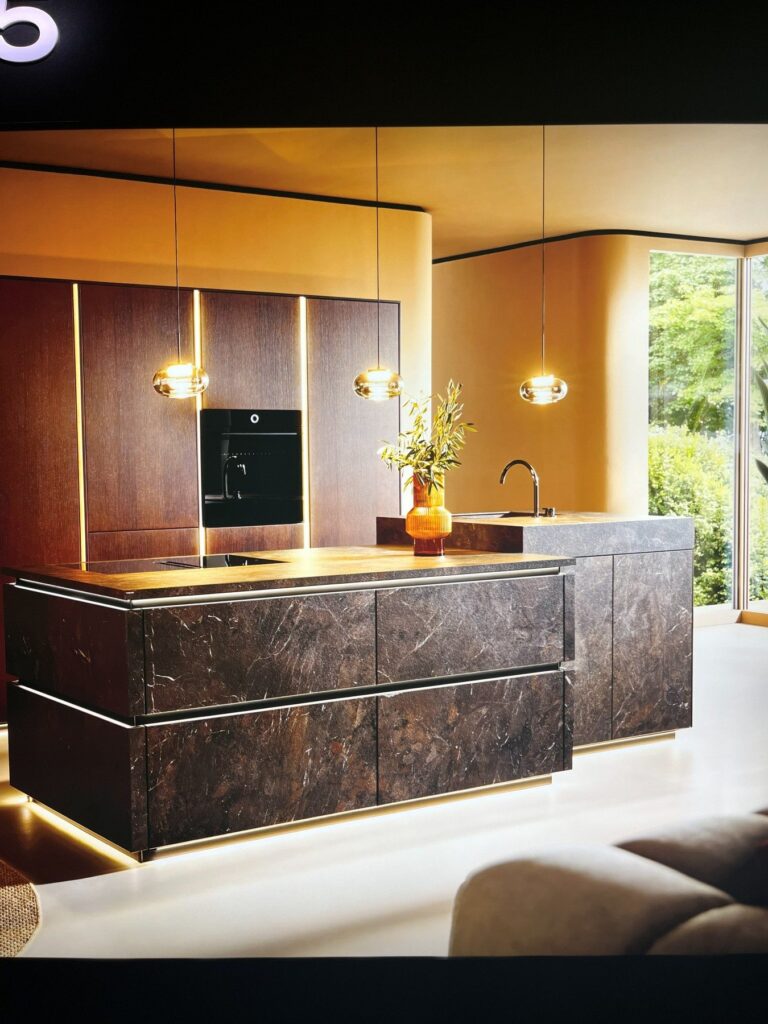
In furniture showrooms, tables come in reddish and brown marbles on solid stone bases, paired with earth-toned velvets. Red and brown, which hardly anyone asked for ten years ago, are back on the moodboards.
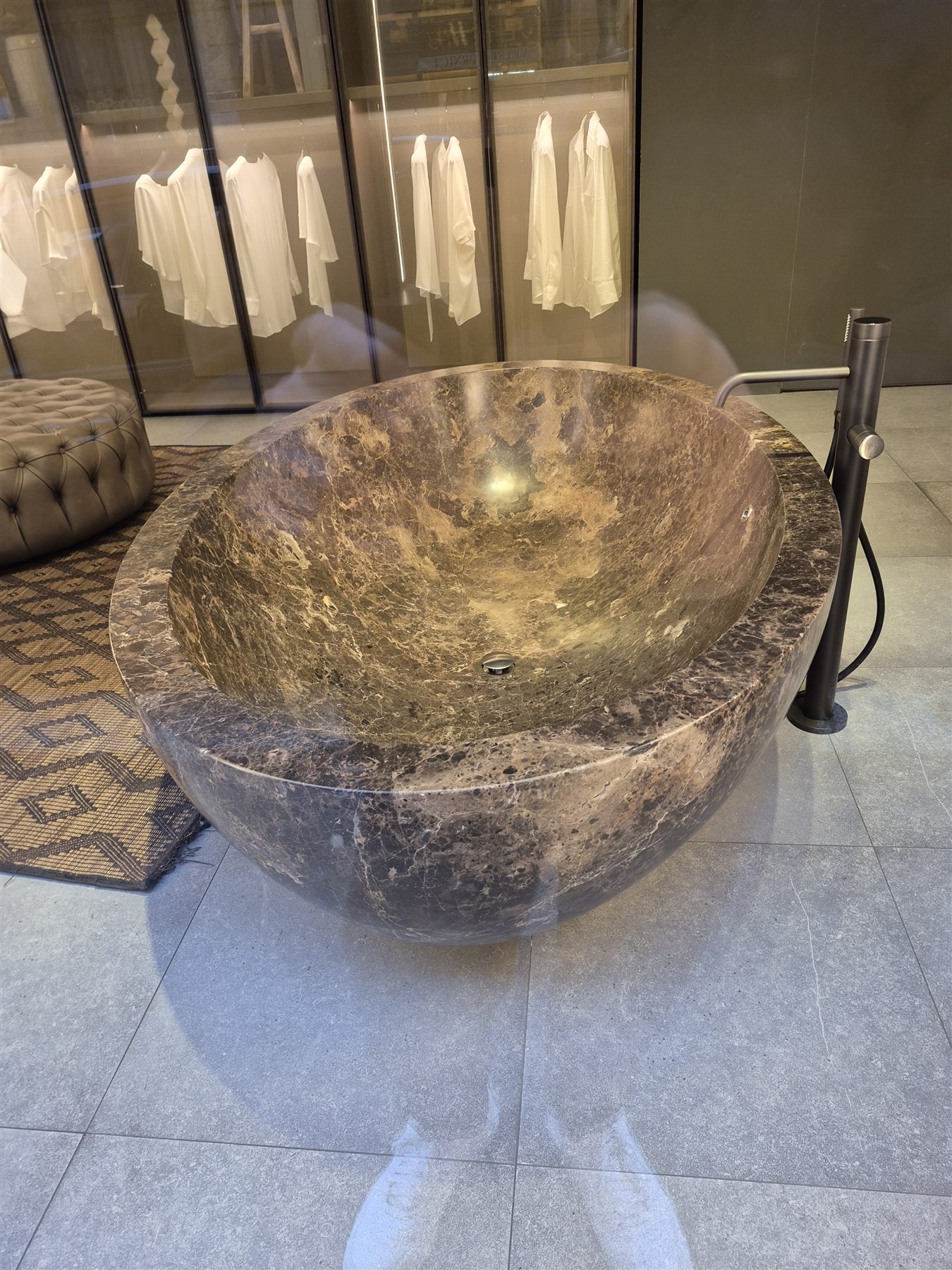
The bathtub carved from a single block may be the object that best sums up the week: weight, matter and no artifice.
the kitchen as a block.
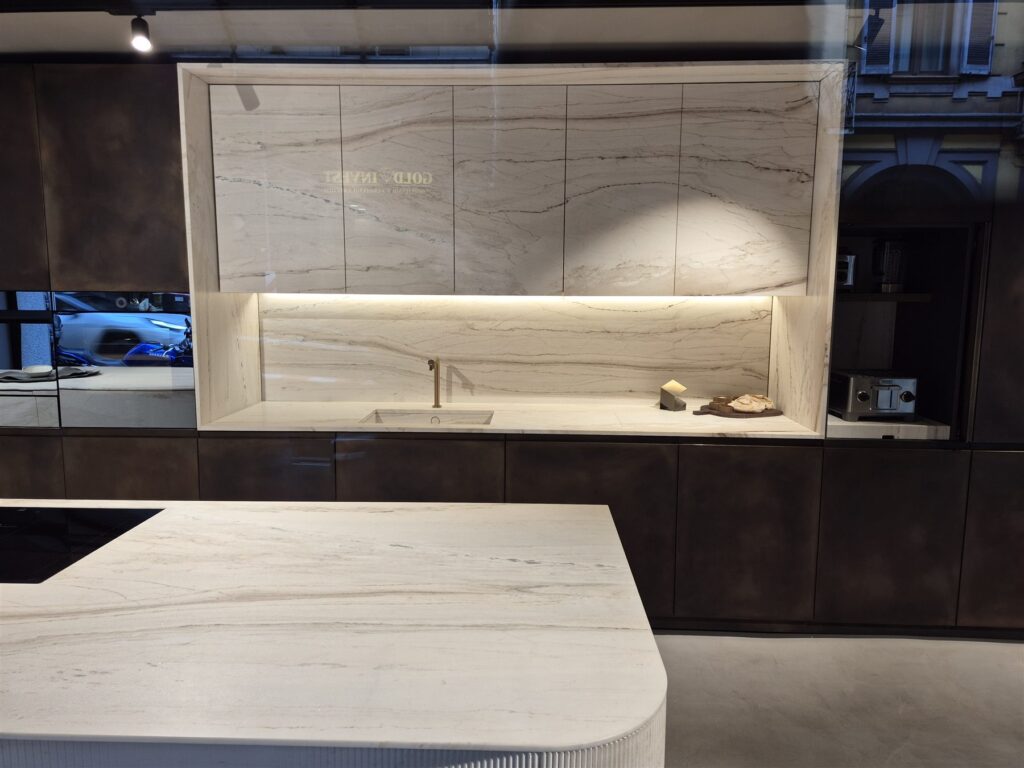
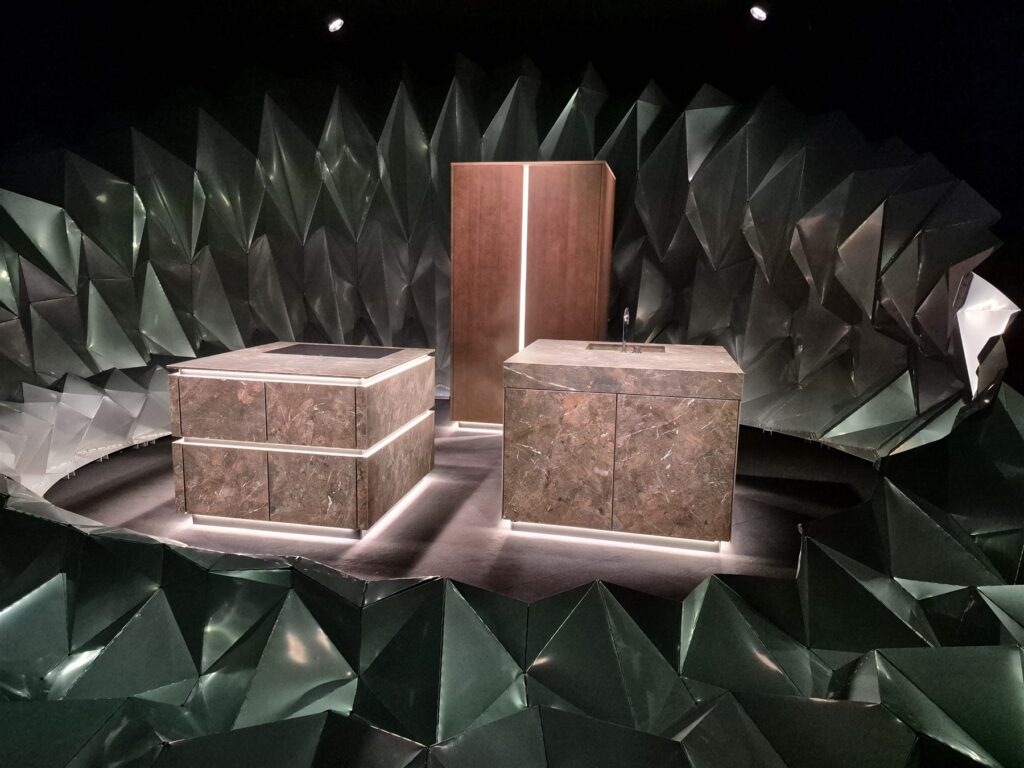
In kitchens, the island is no longer a cabinet with a worktop: it is a monolith. Light stones with horizontal veining, rounded edges and fronts clad in the same material, with no visible handles or plinths. On tables, dramatic veining is bookmatched so the pattern runs continuously from top to front.
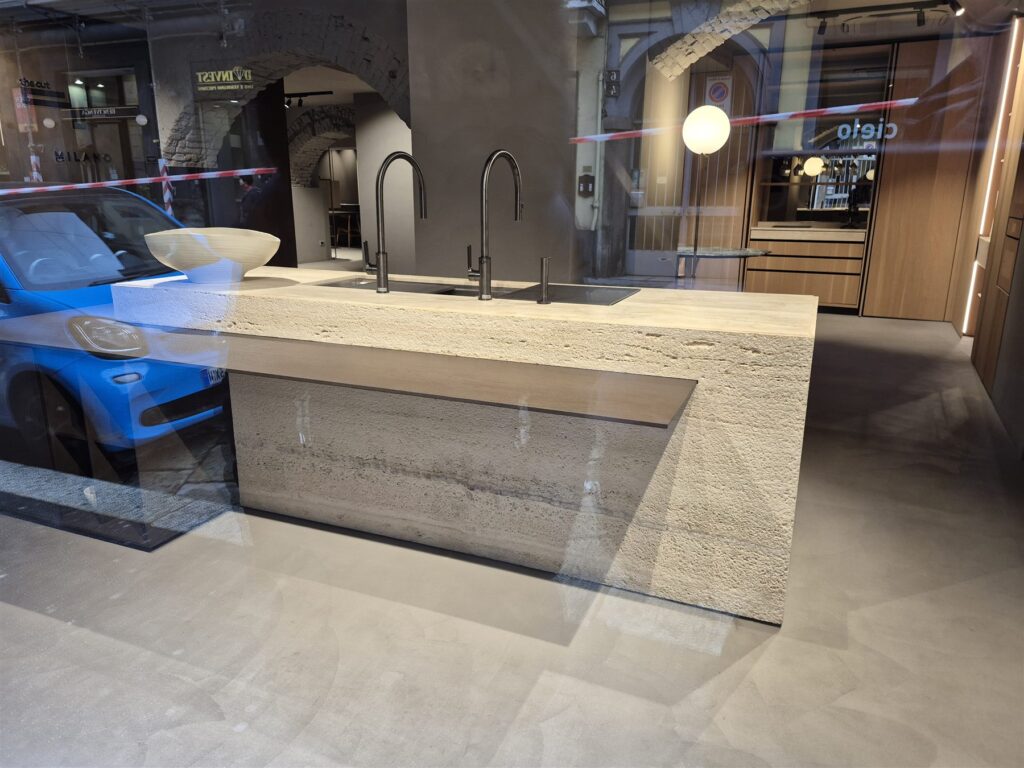
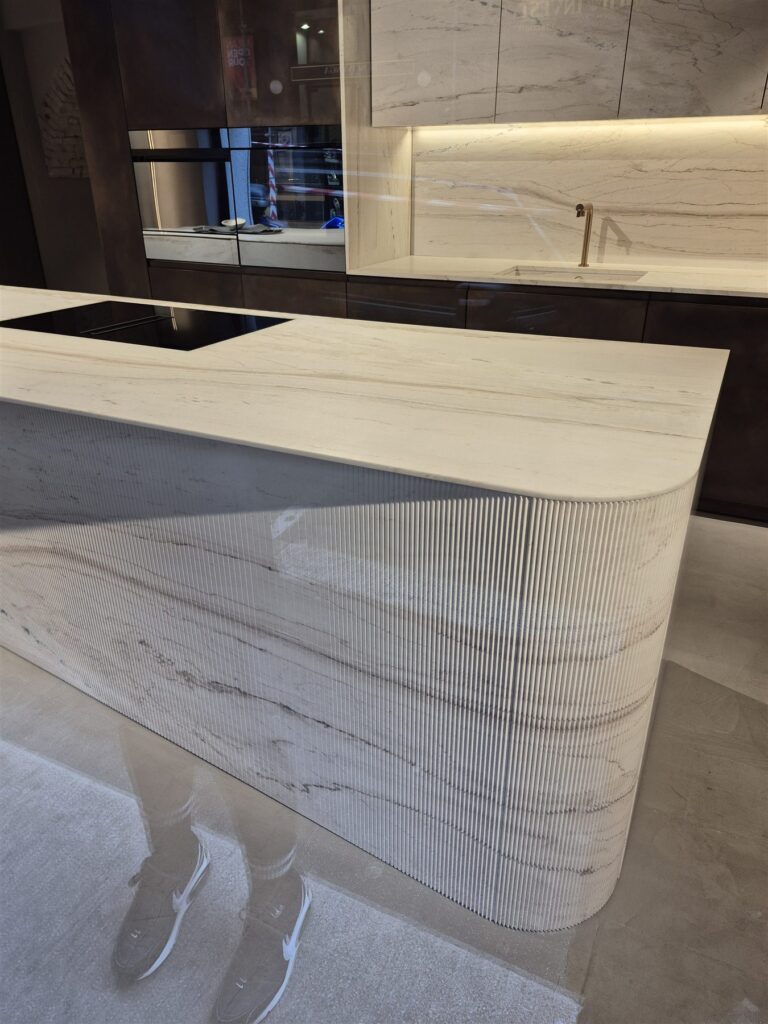
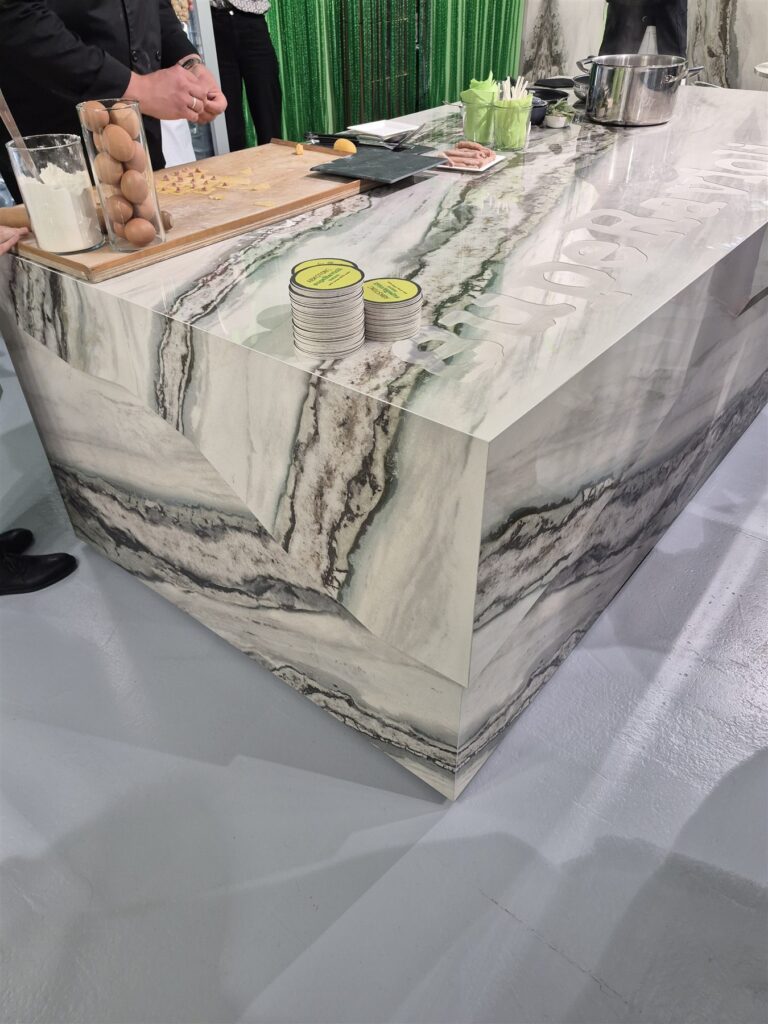
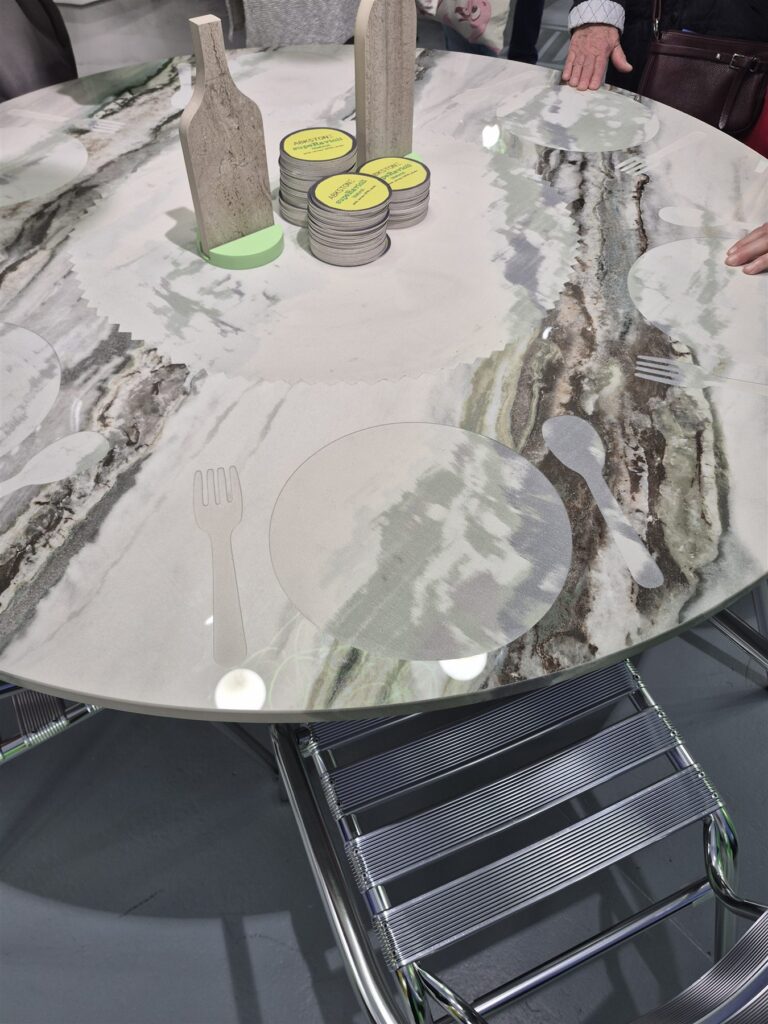
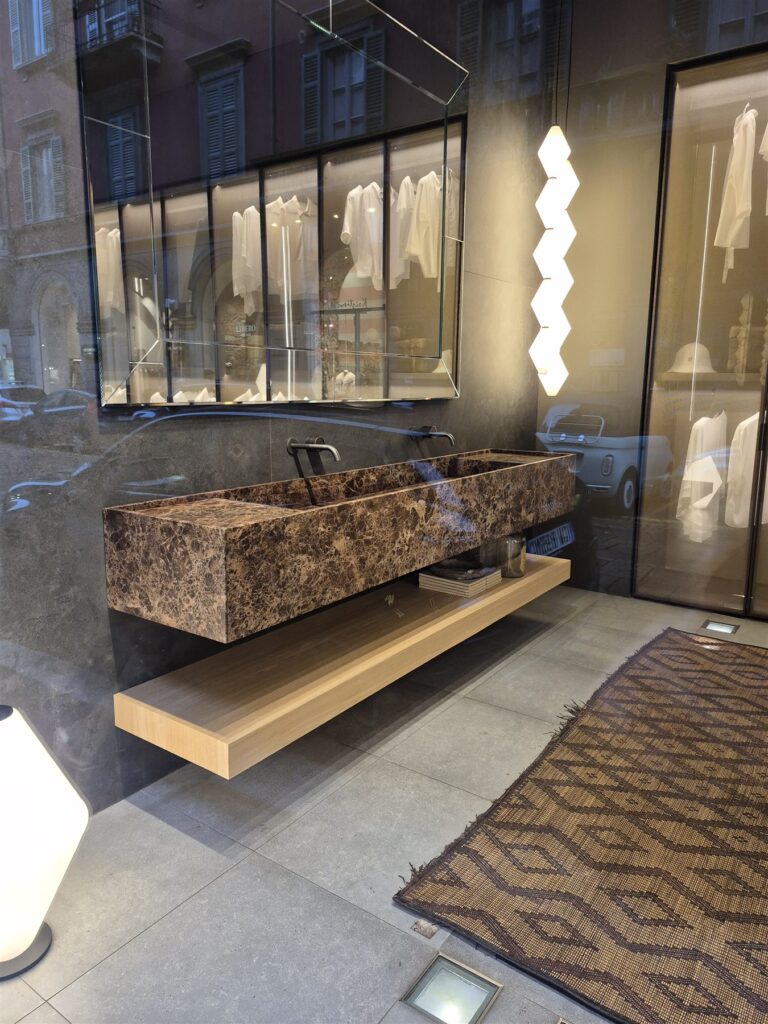
In the showrooms, more of the same: white marble islands, bars clad in dark marble, black marble tables under glass chandeliers and even a whole bowling alley dressed in red.
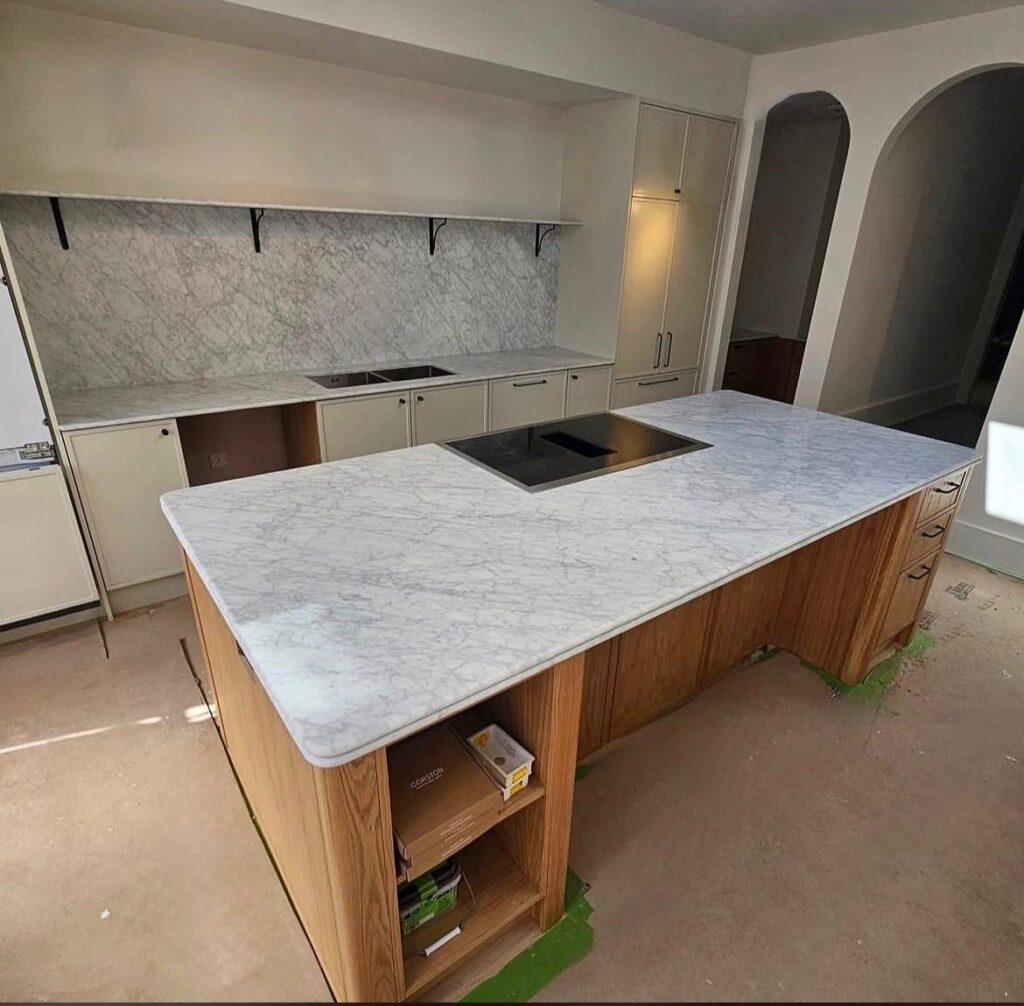
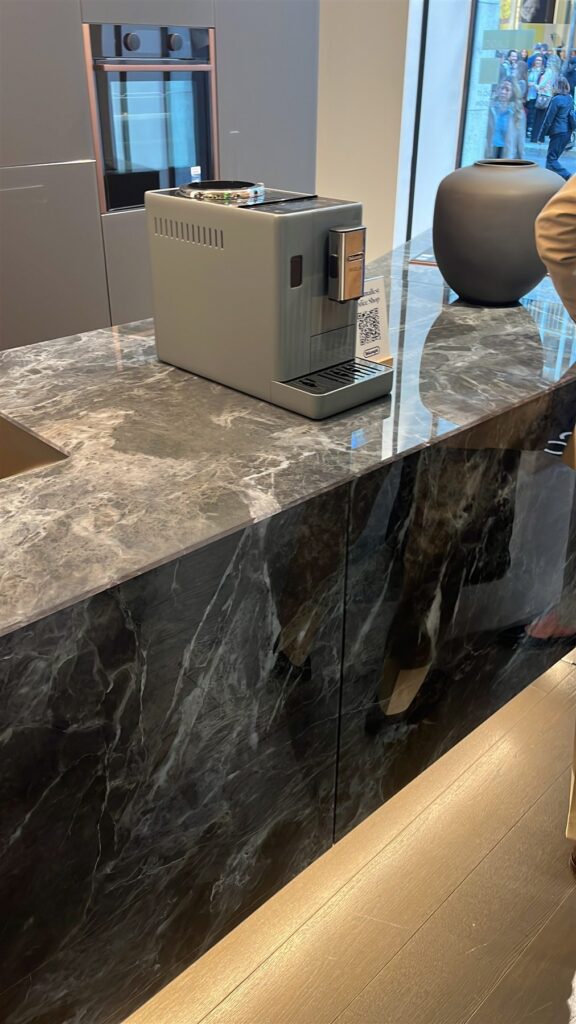
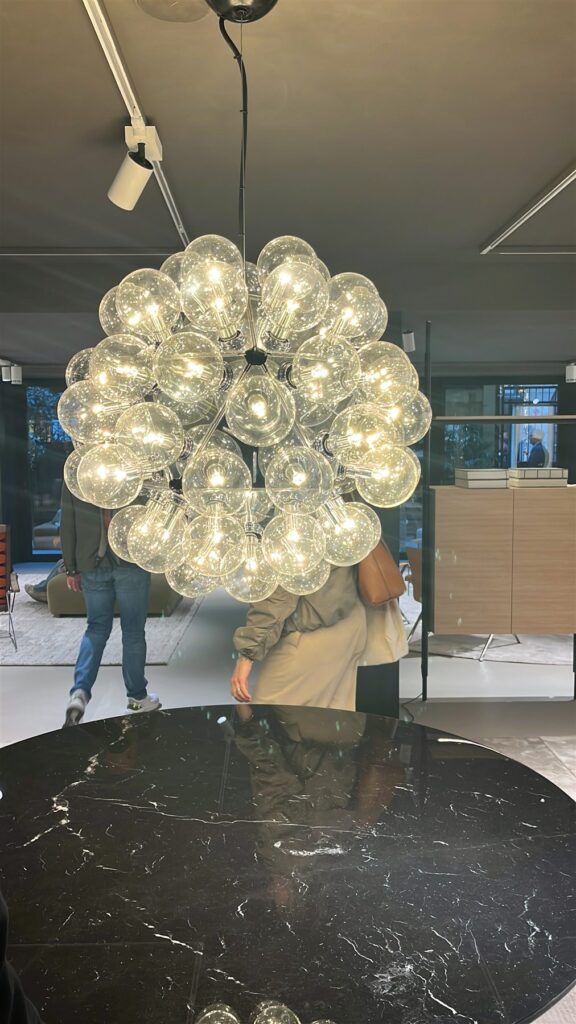
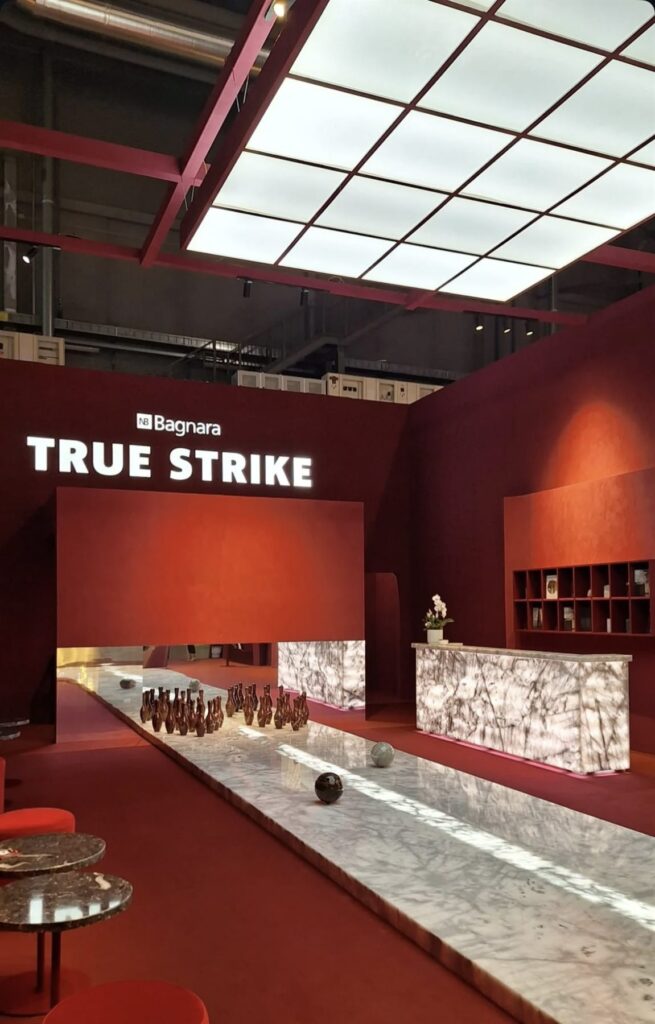
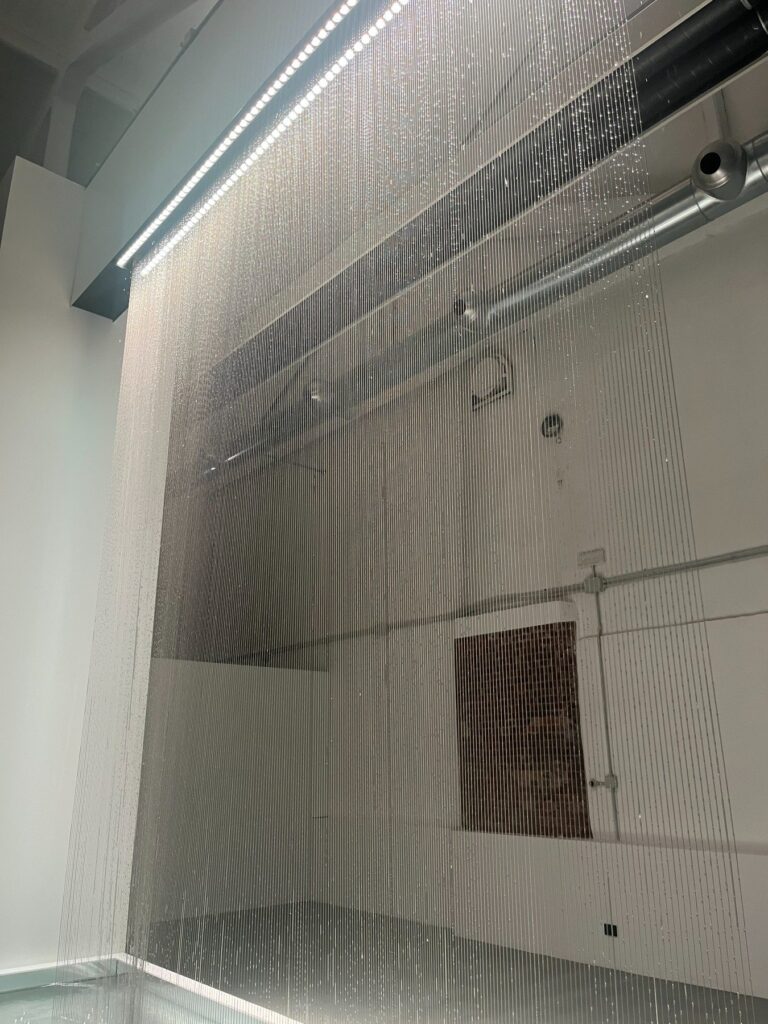
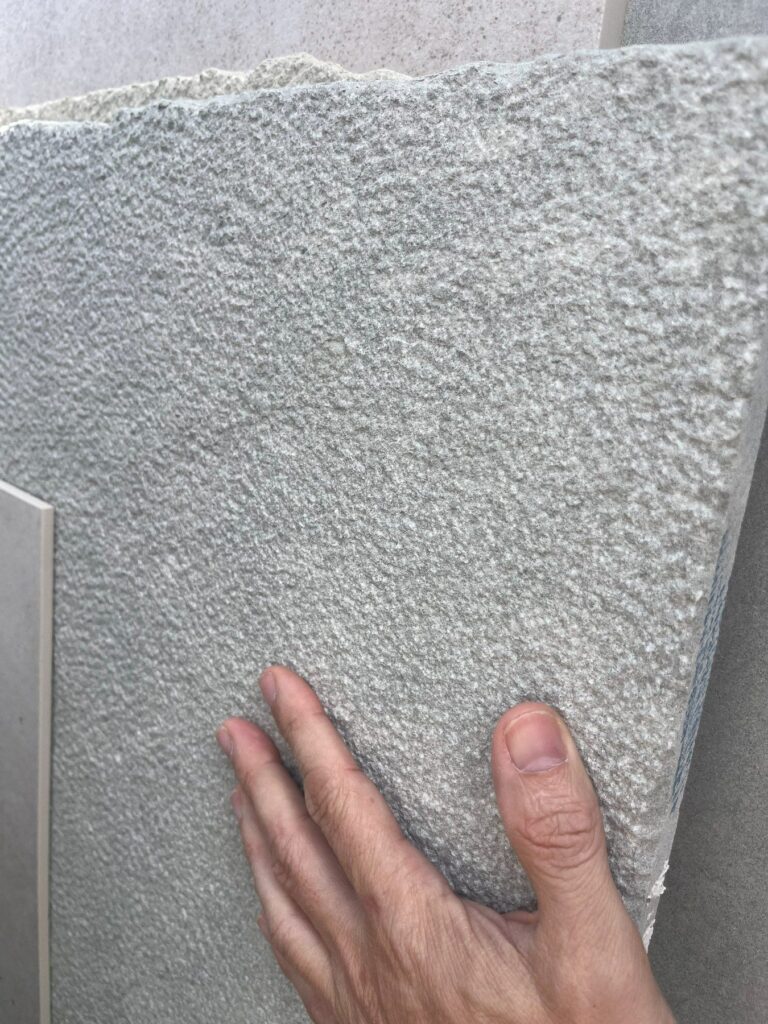
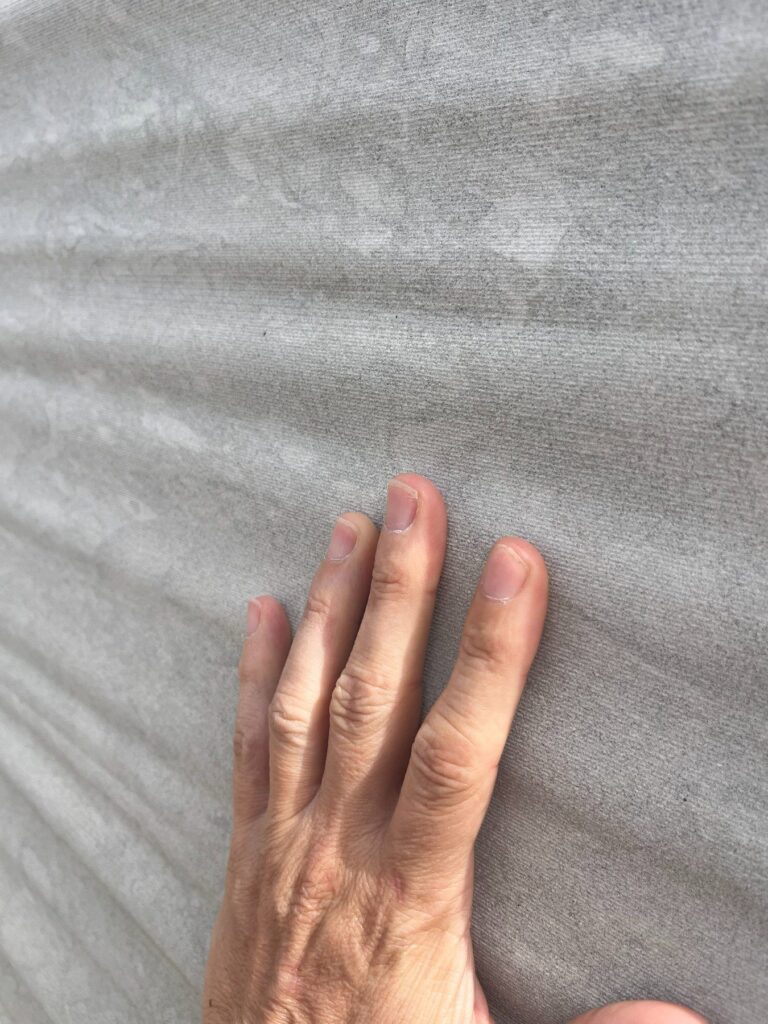
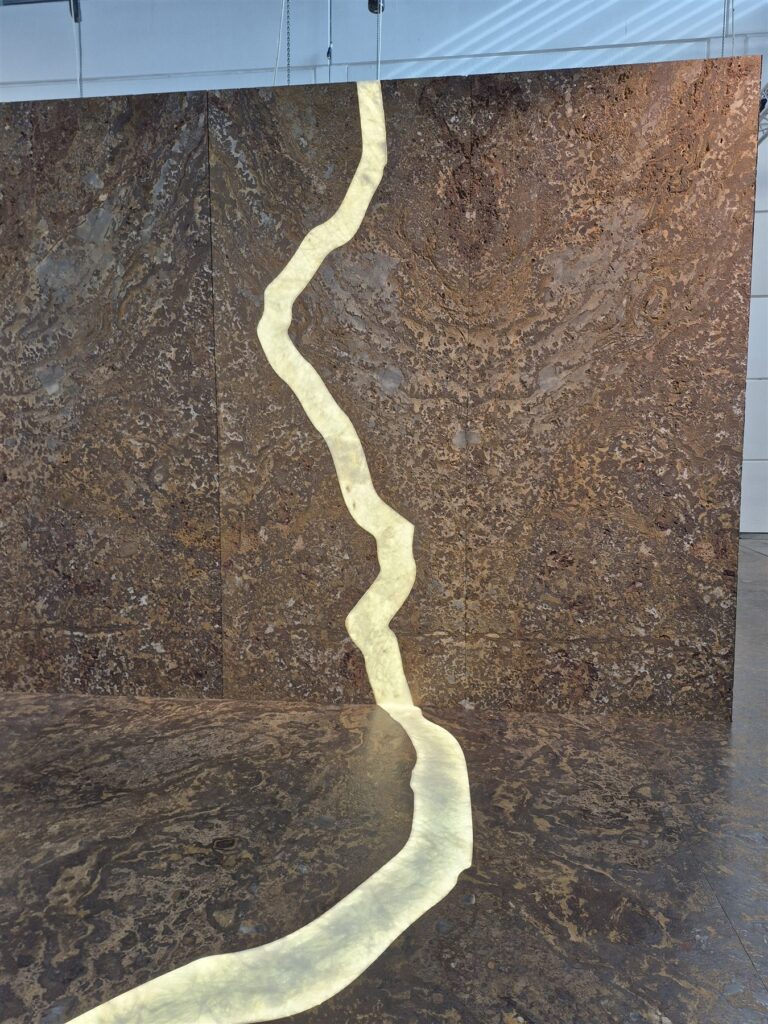
And what interested me most, because it speaks of craft: stone worked as matter rather than surface. A sheet of water running in front of a stone wall, kitchens with island and backsplash clad in the same veined stone, and rippled and bush-hammered surfaces that ask to be touched.
milan, the city.
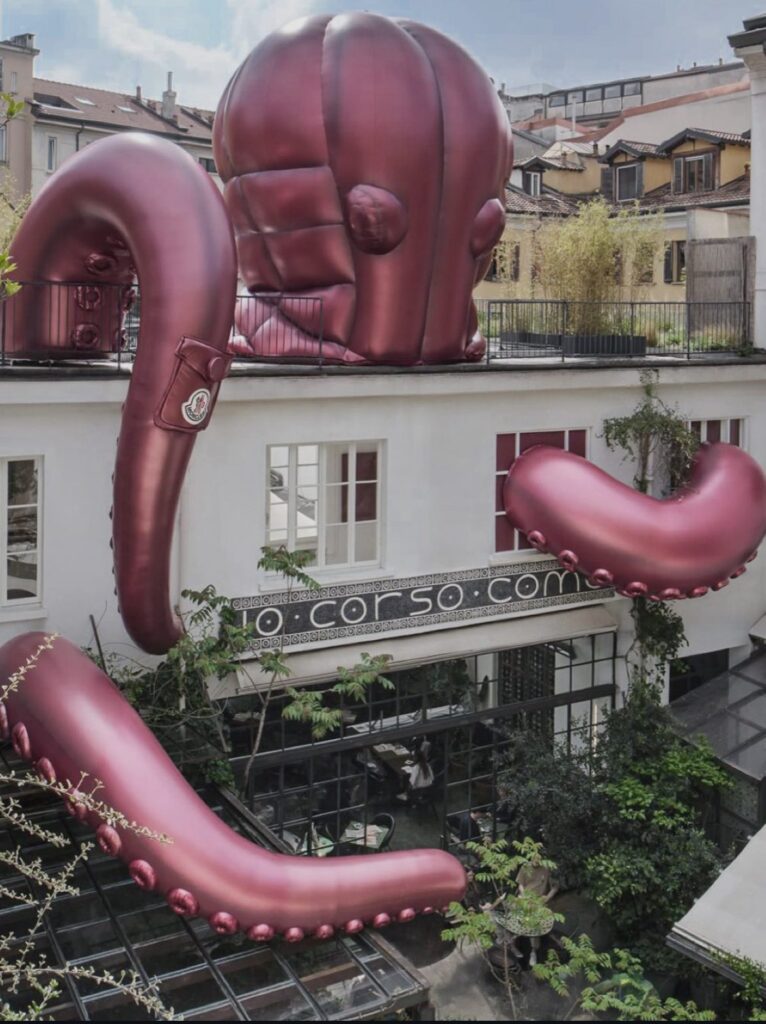
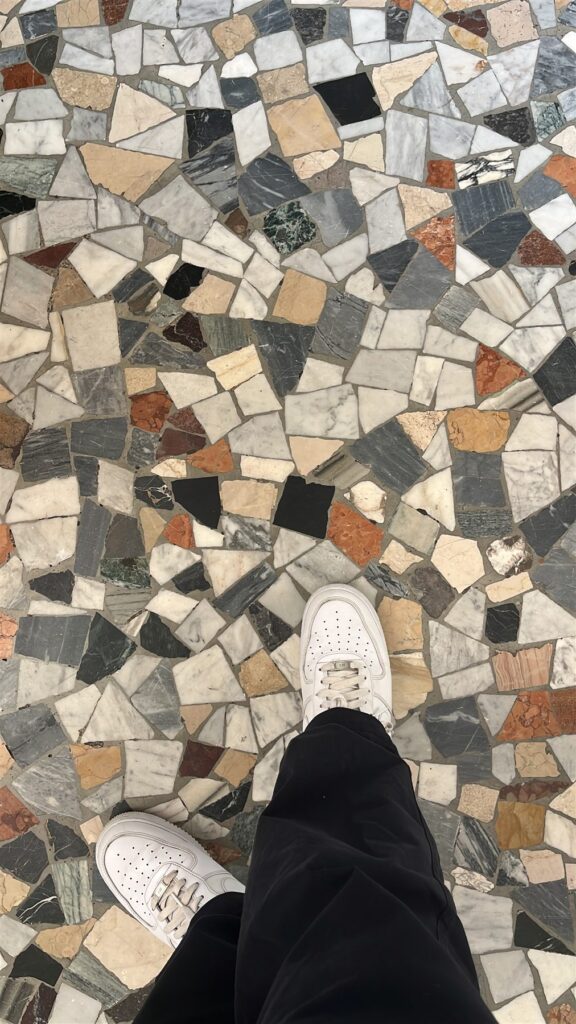
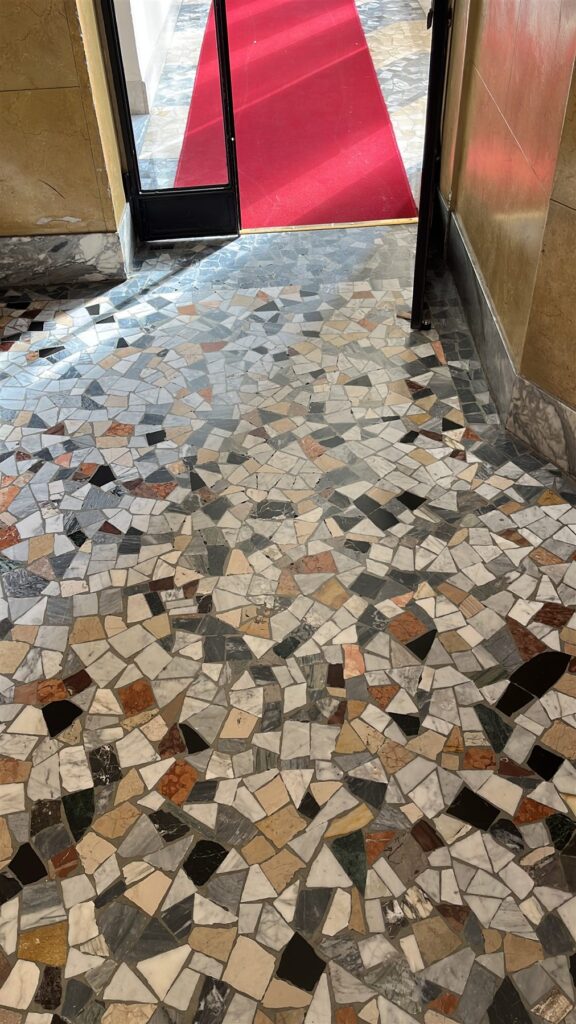
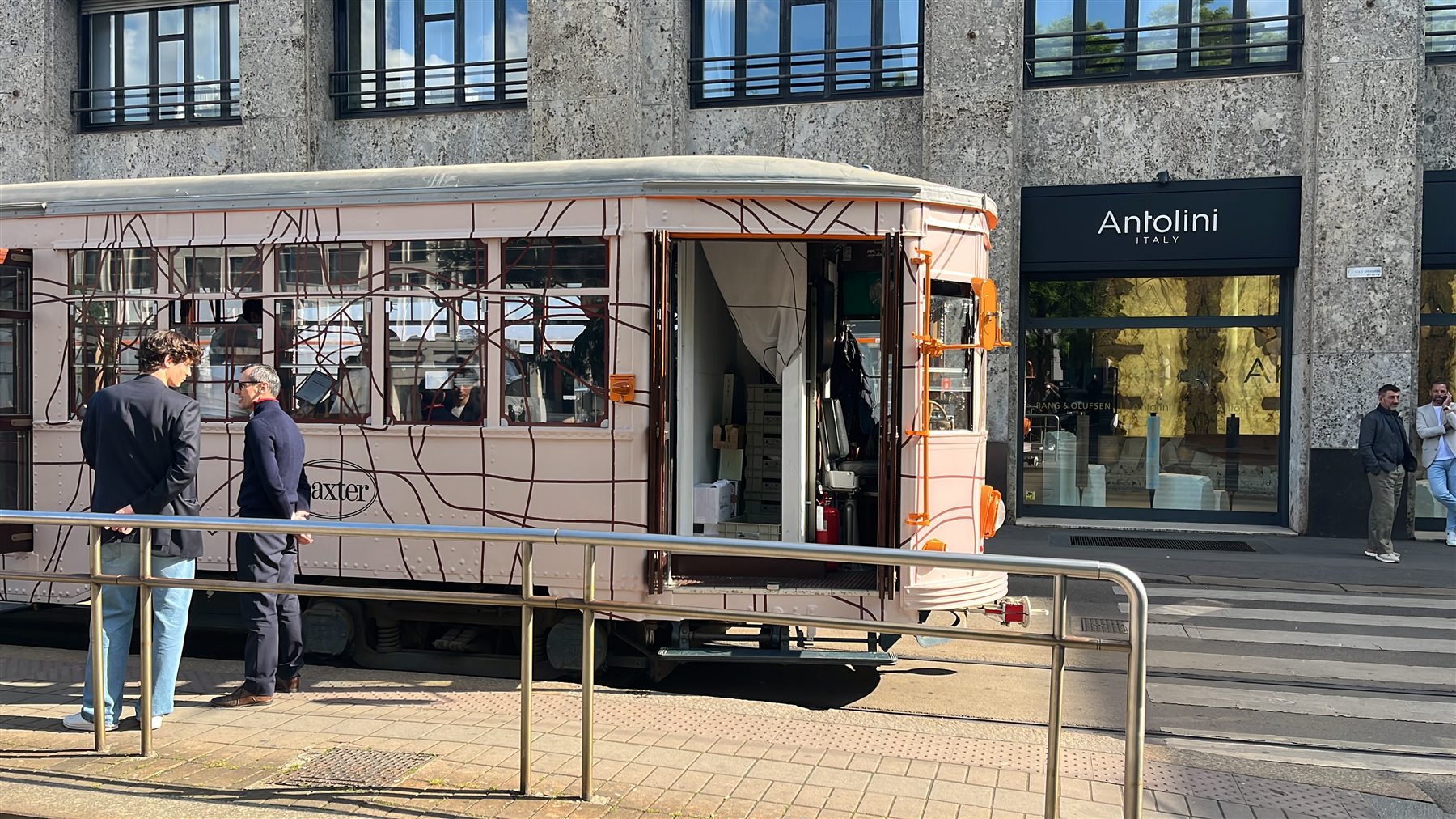
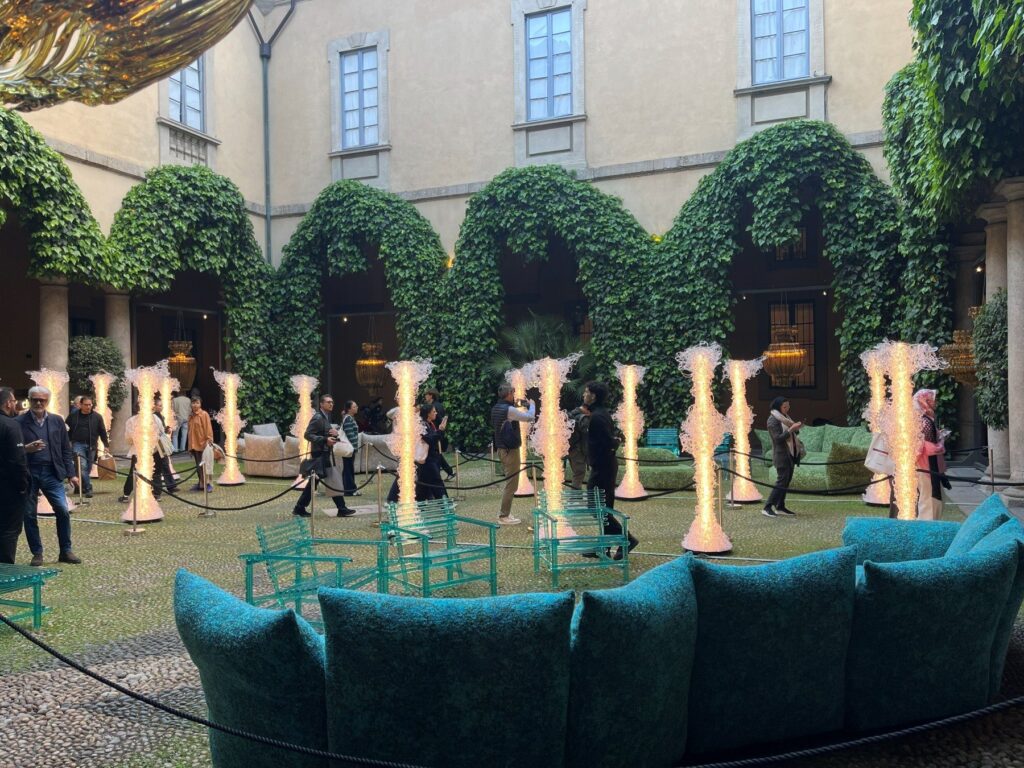
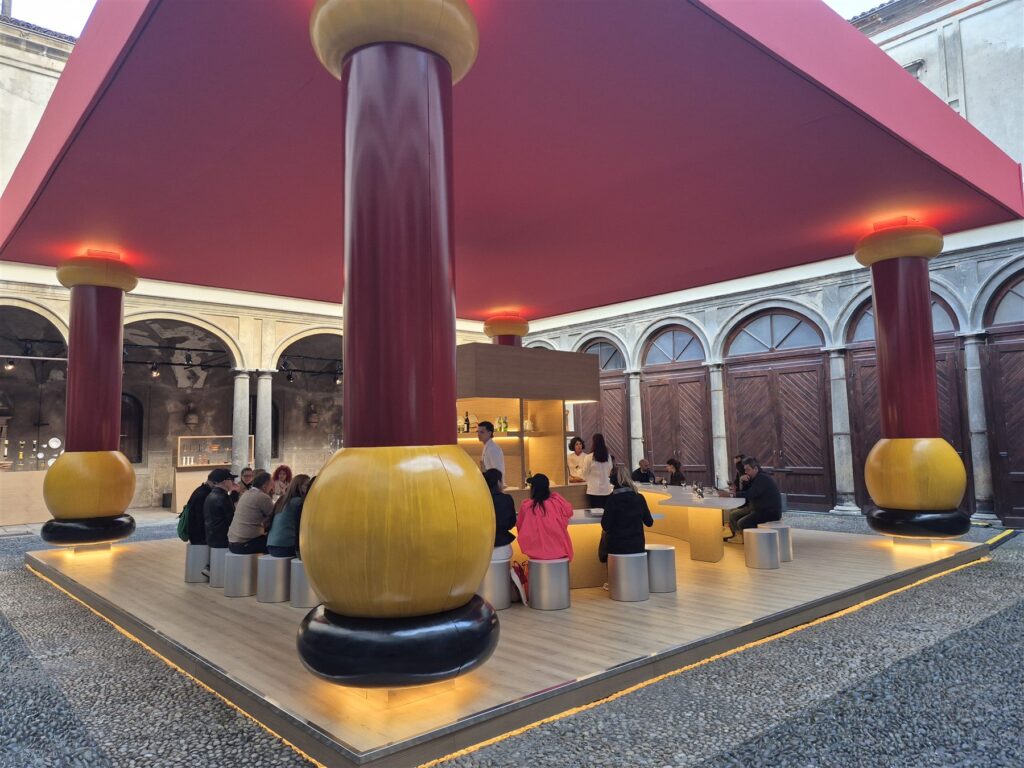
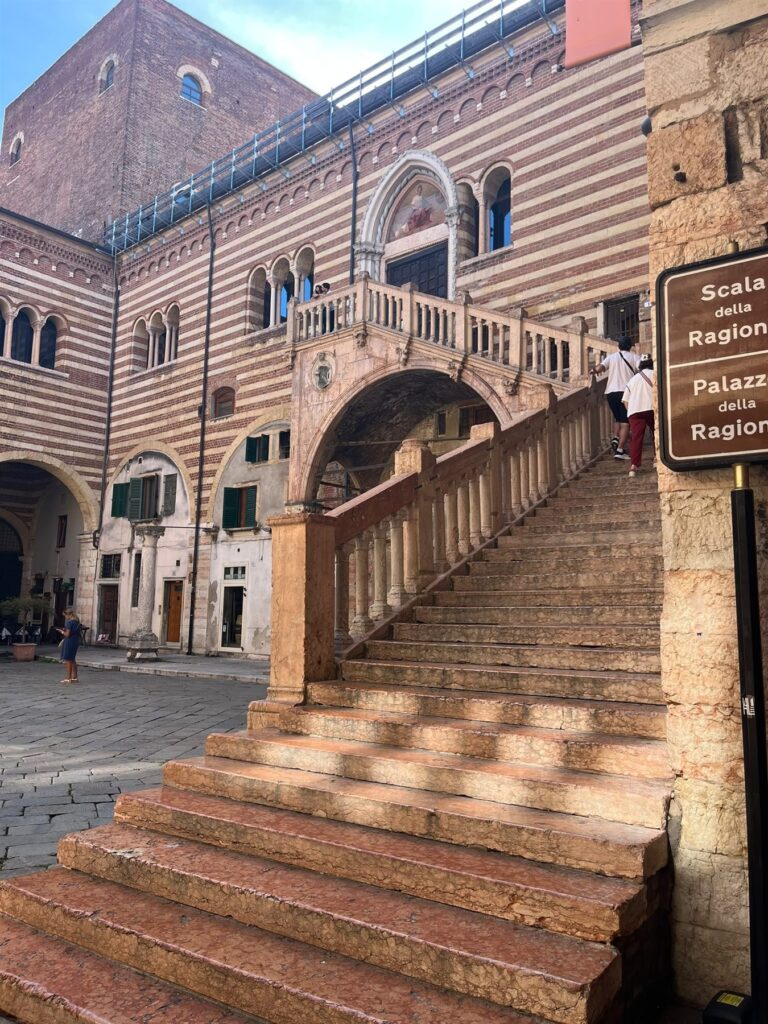
During that week the whole city is the fair. In Brera, palaces open their doorways and courtyards; on Corso Como a giant octopus climbs a façade; the historic trams keep crossing the streets. And underfoot, stone again: terrazzo floors with large marble fragments in doorways and shops. The same language I would find months later in Verona.
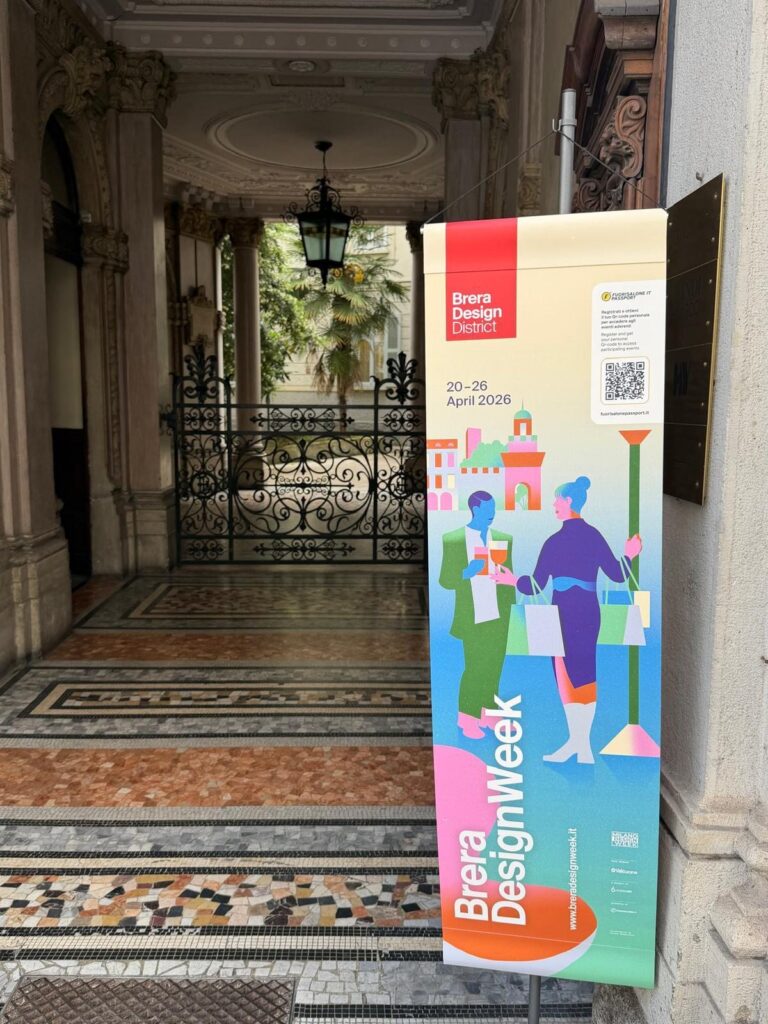
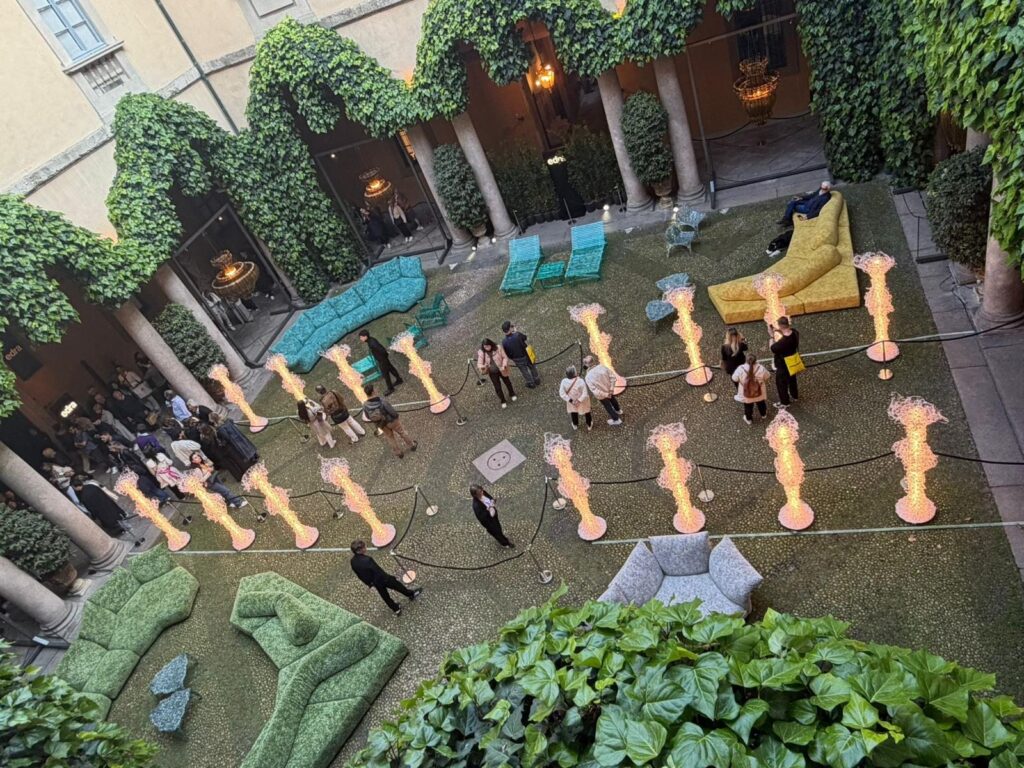
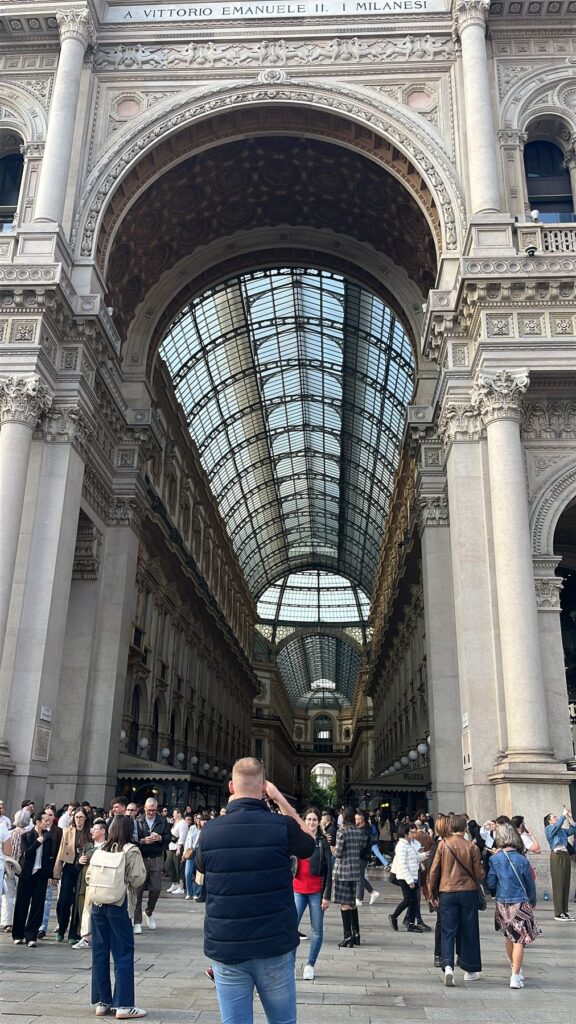
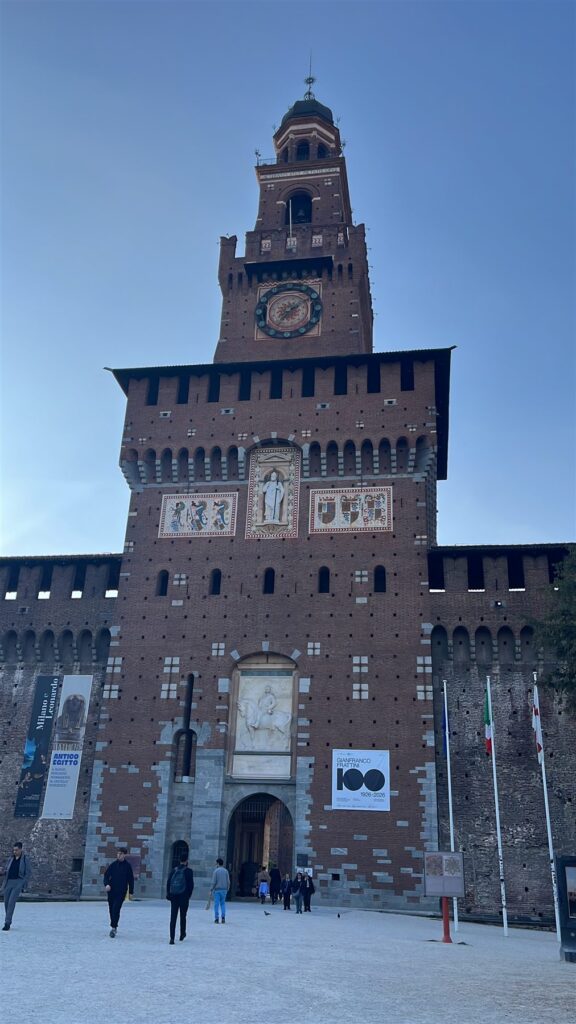
For first-timers: the Galleria Vittorio Emanuele, the Castello Sforzesco and, across Sempione park, the Arco della Pace. Best by tram.
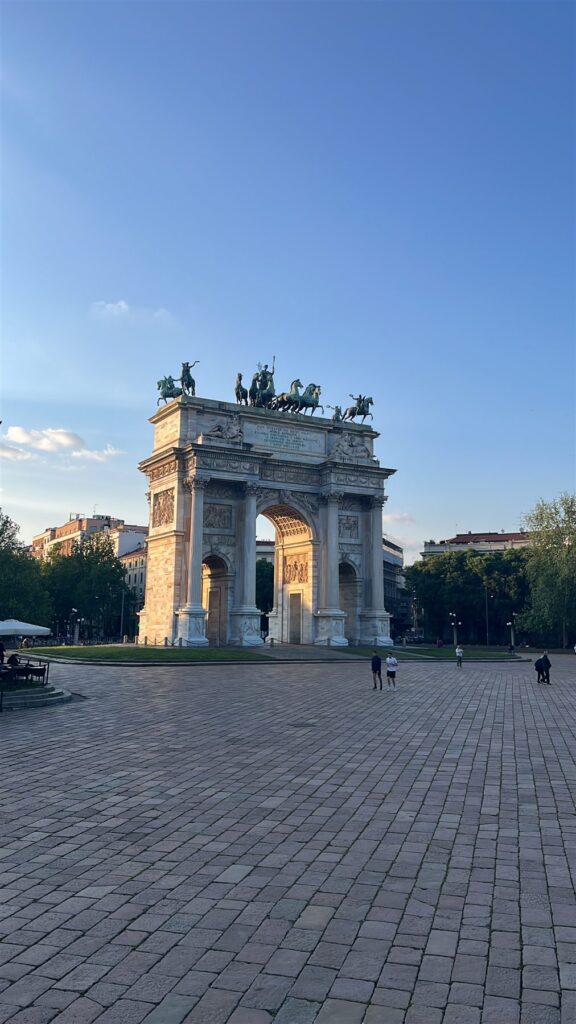
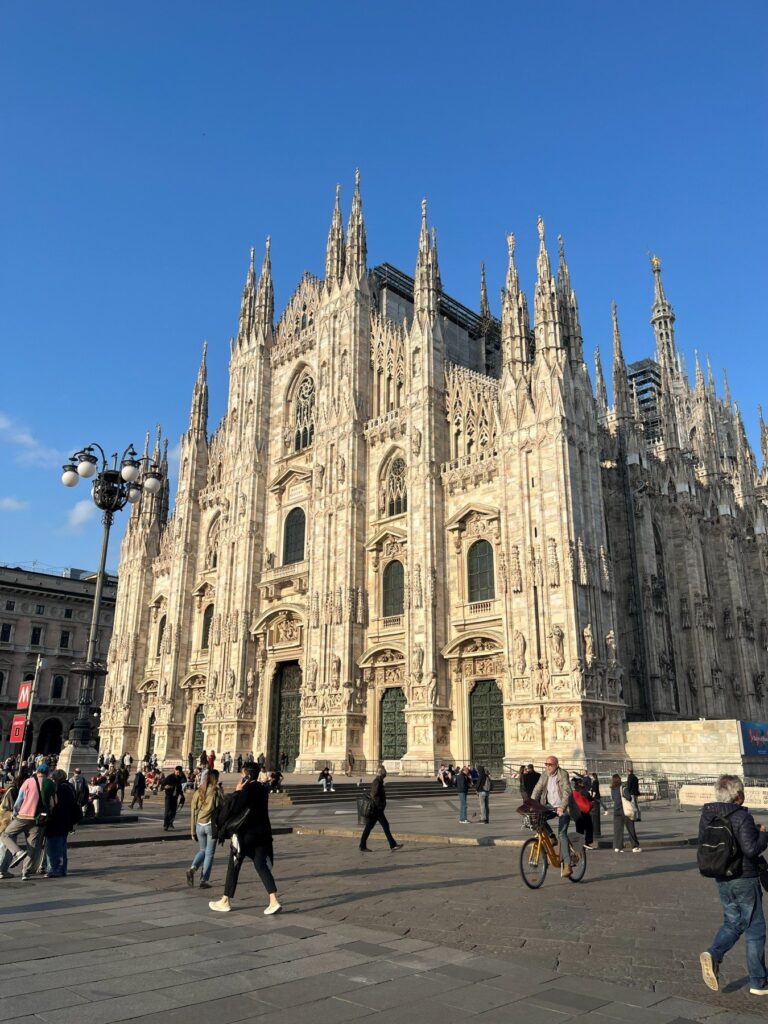
And in the square, the Duomo: a whole cathedral in Candoglia marble, white with pink veining, from a Piedmont quarry granted to the cathedral works in the fourteenth century and still worked for its upkeep. Few buildings explain the bond between a building and its quarry so well.
what i take home.
1. Less gloss, more texture. Honed, aged and open-pored finishes.
2. Thick pieces. Stone reads as volume, not veneer.
3. Colour returns. Reds, browns and greens alongside the usual whites.
4. Veining as drawing. Bookmatched and vein-cut slabs planned from the design stage.
None of this is new for stone; what is new is how we look at it. And a catalogue is not enough to achieve it: you have to choose block, cut and finish. That is exactly what we do.
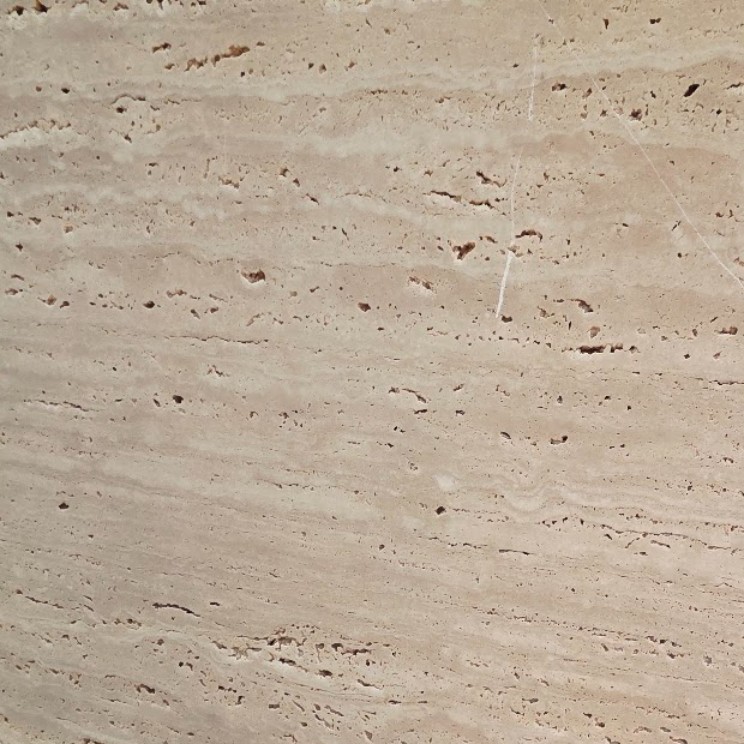 Travertino Classicsee the stone →
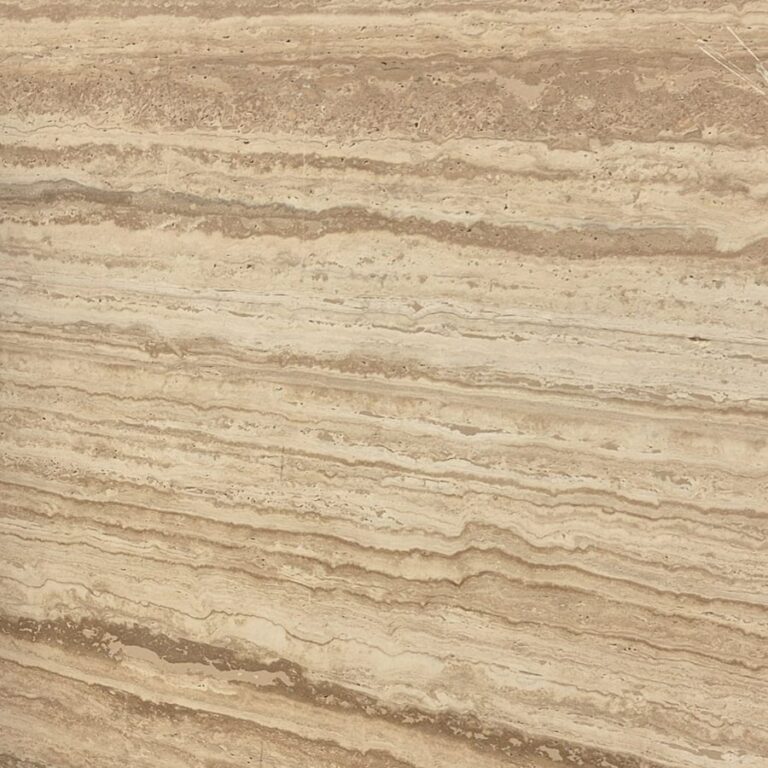 Travertino Goldsee the stone →
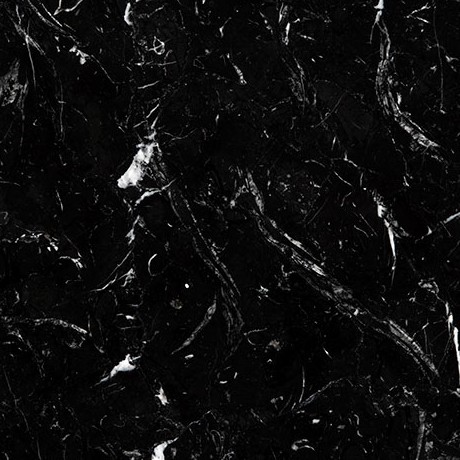 Negro Marquinasee the stone →
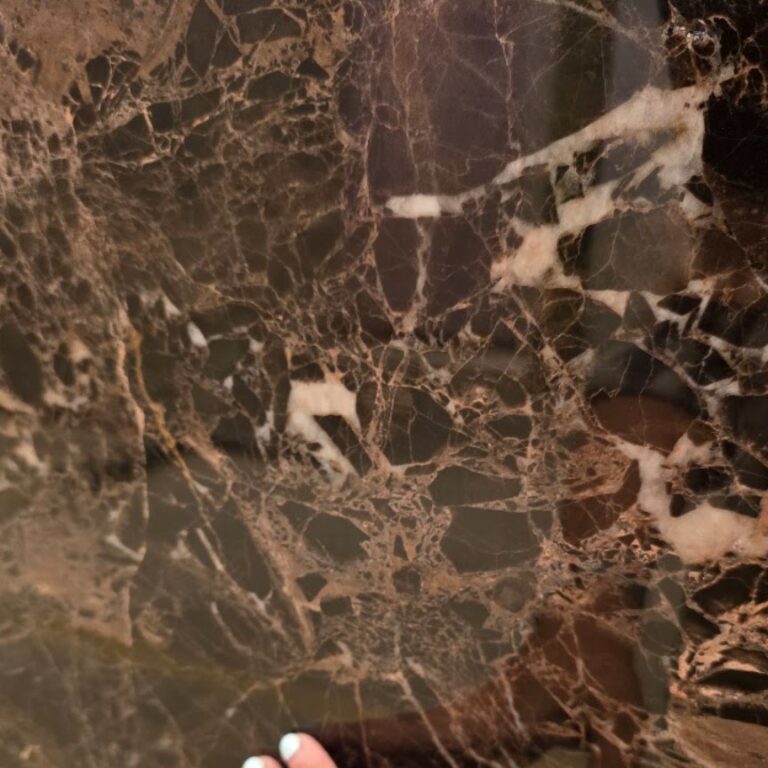 Dark Emperadorsee the stone →
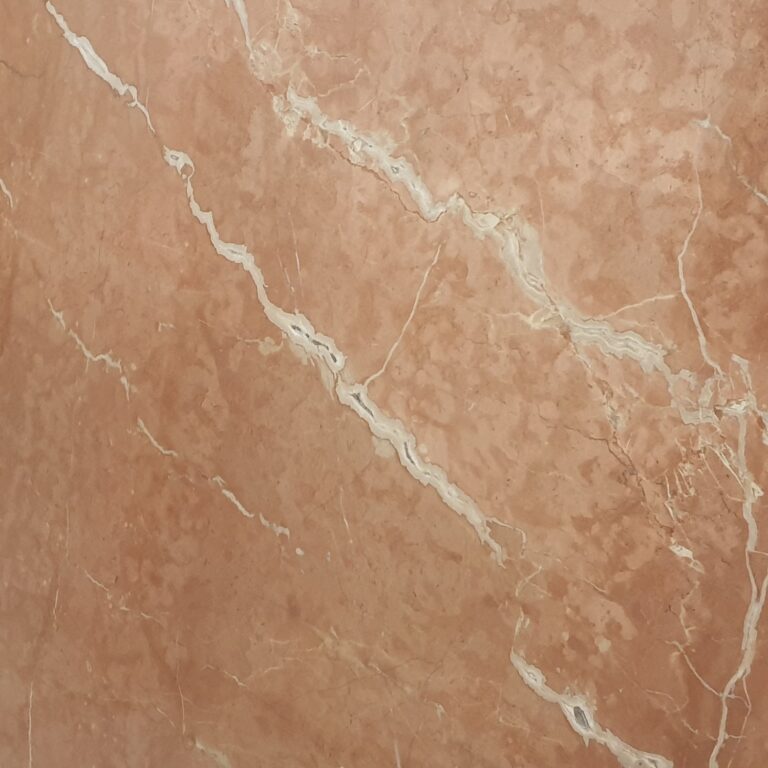 Rojo Alicantesee the stone →
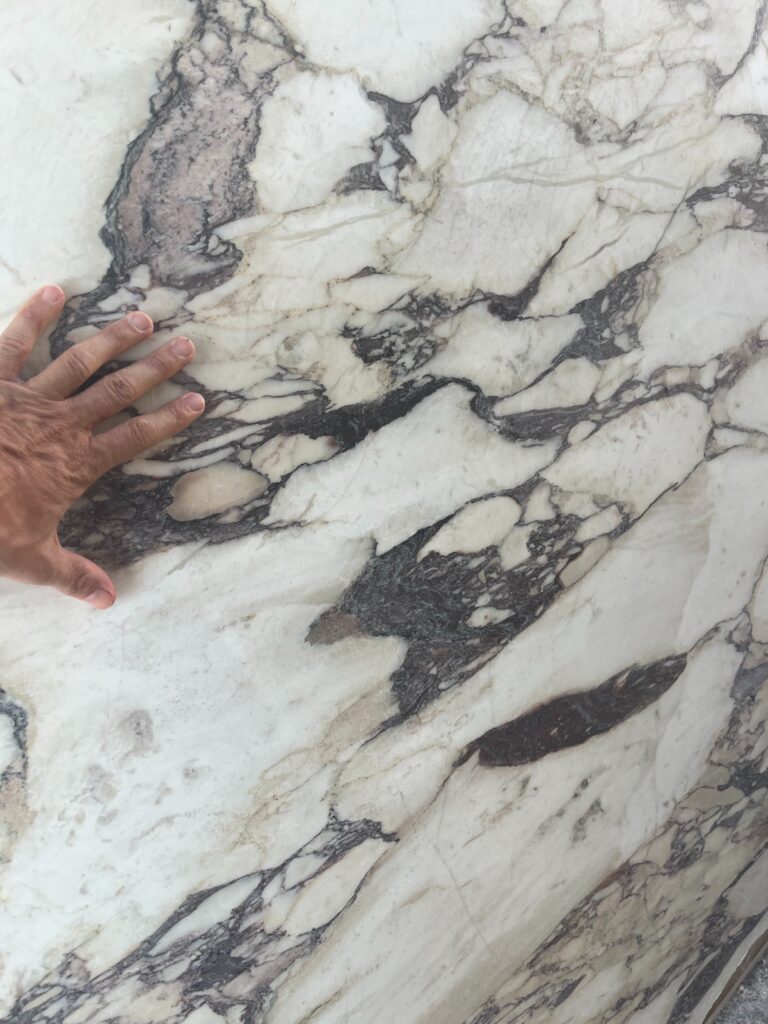 Calacatta Violasee the stone →
nothing else.
Travel, fairs, quarries and buildings, told by an architect. We only write when there is something to tell, and you can unsubscribe at any time. By subscribing you accept our privacy policy.
bala material studio · alicante