— notebook · visits · pinoso · october 2026
casa camaleón.
the house dressed in its own land.
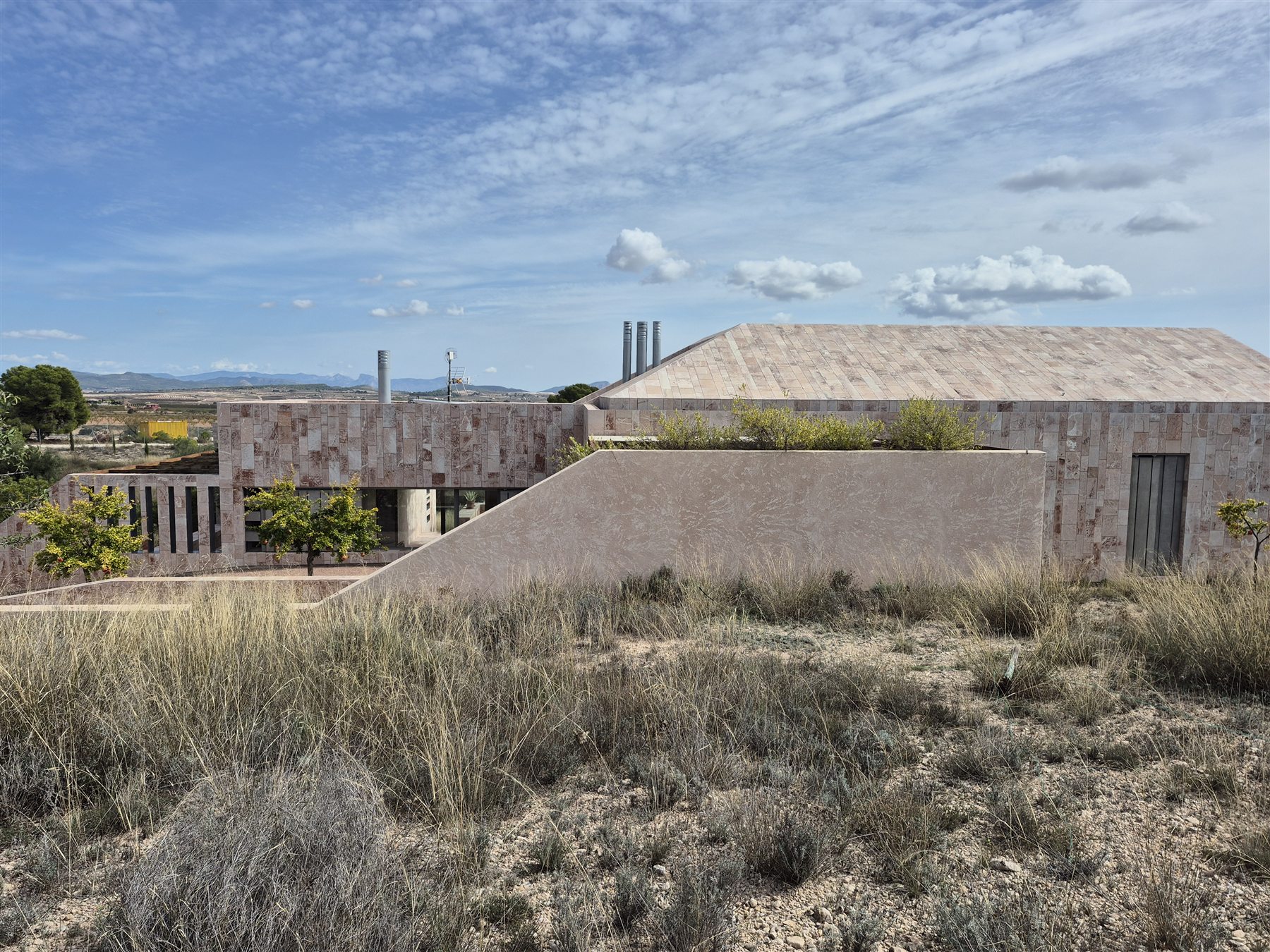
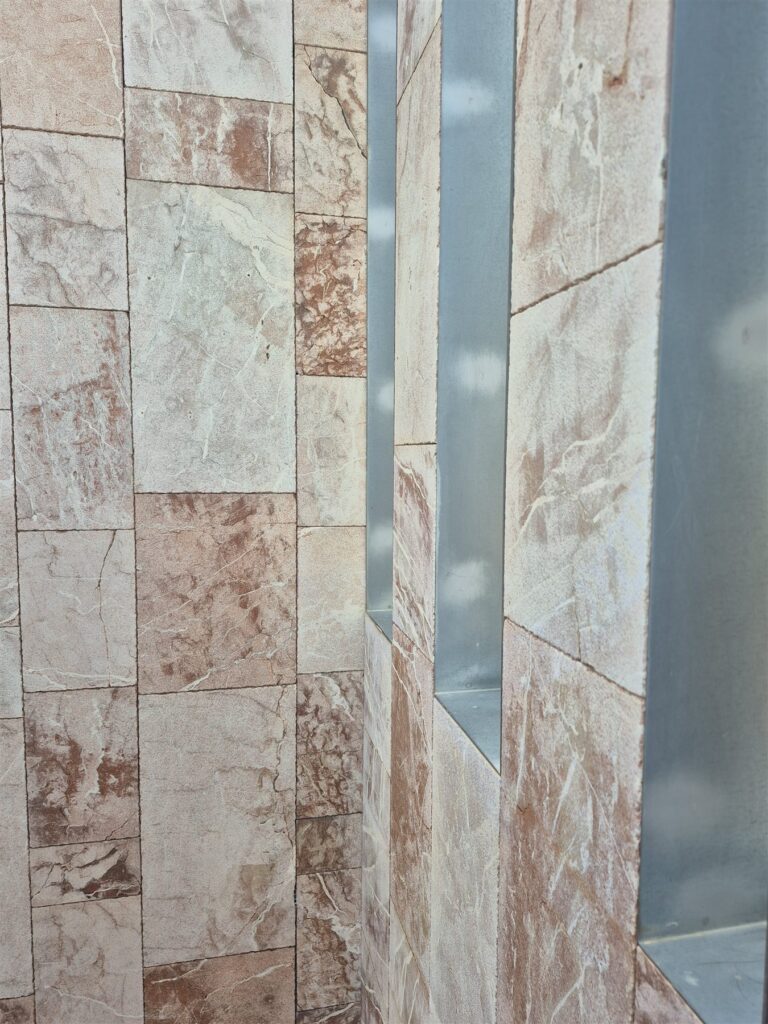
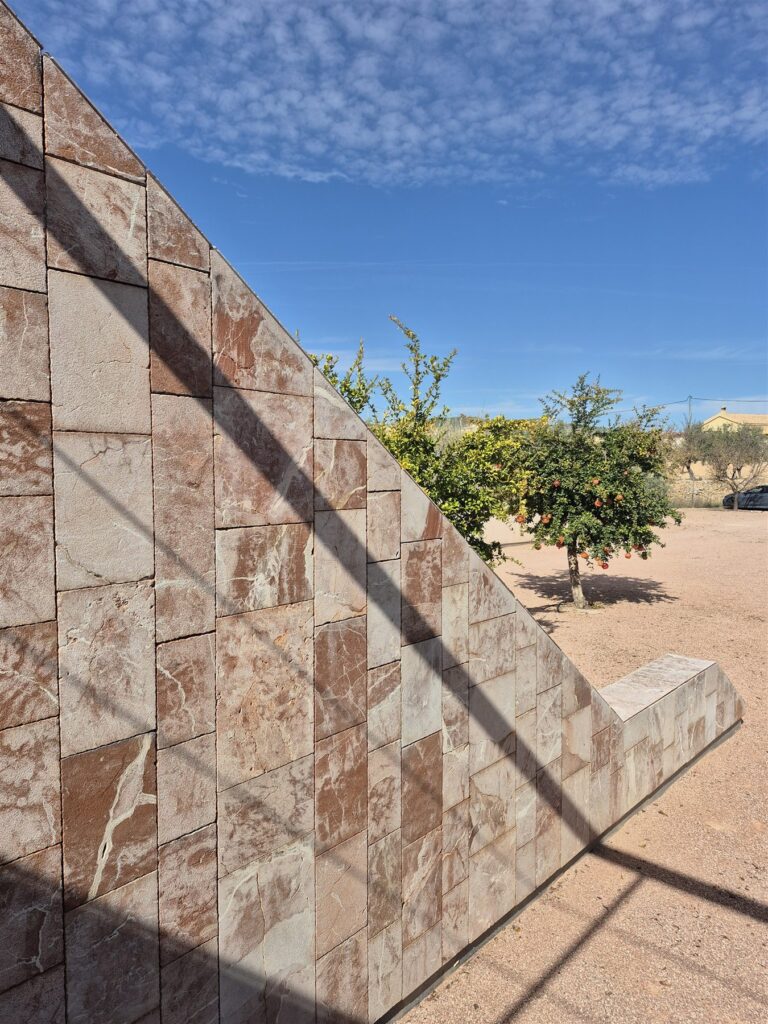
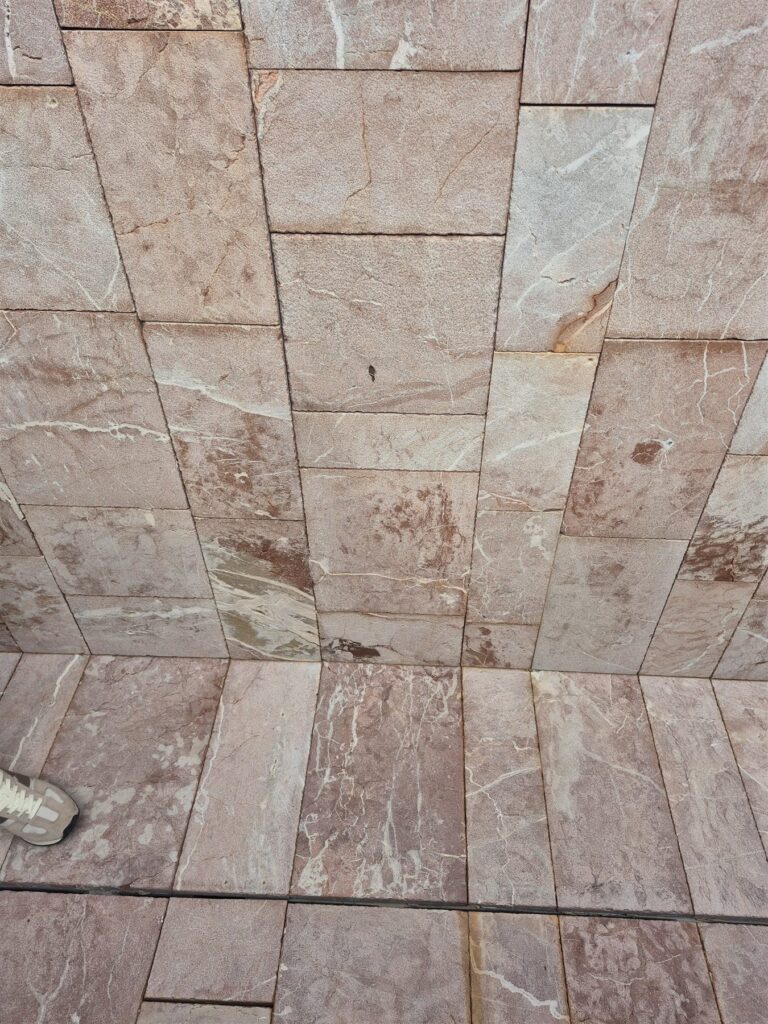
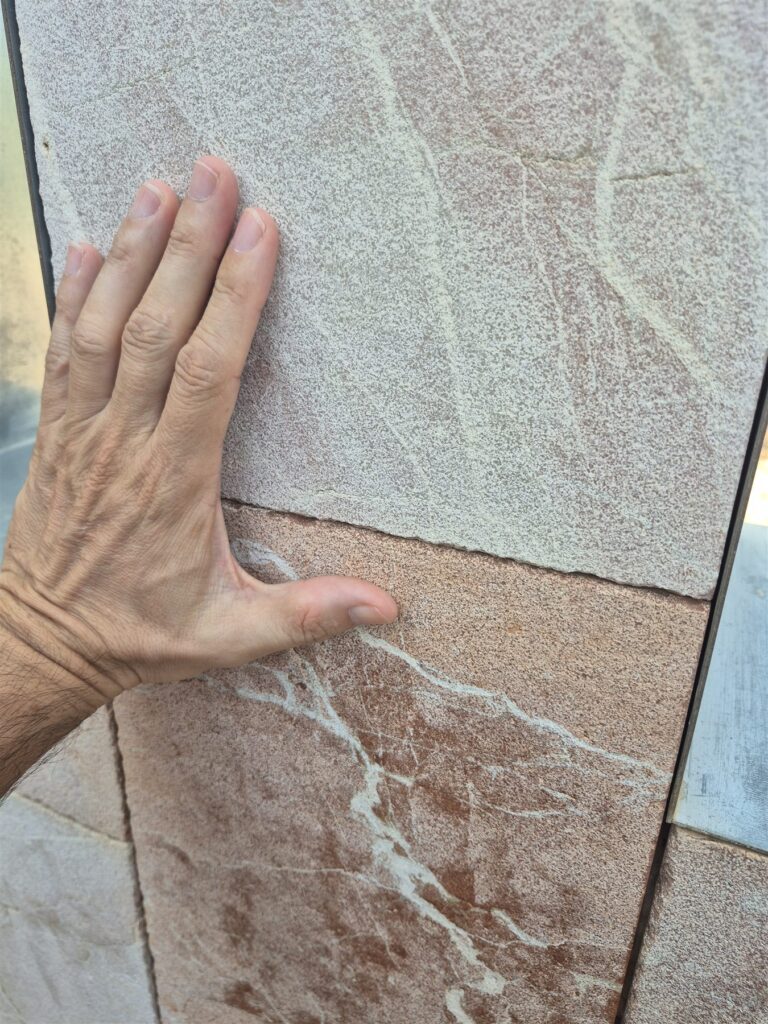
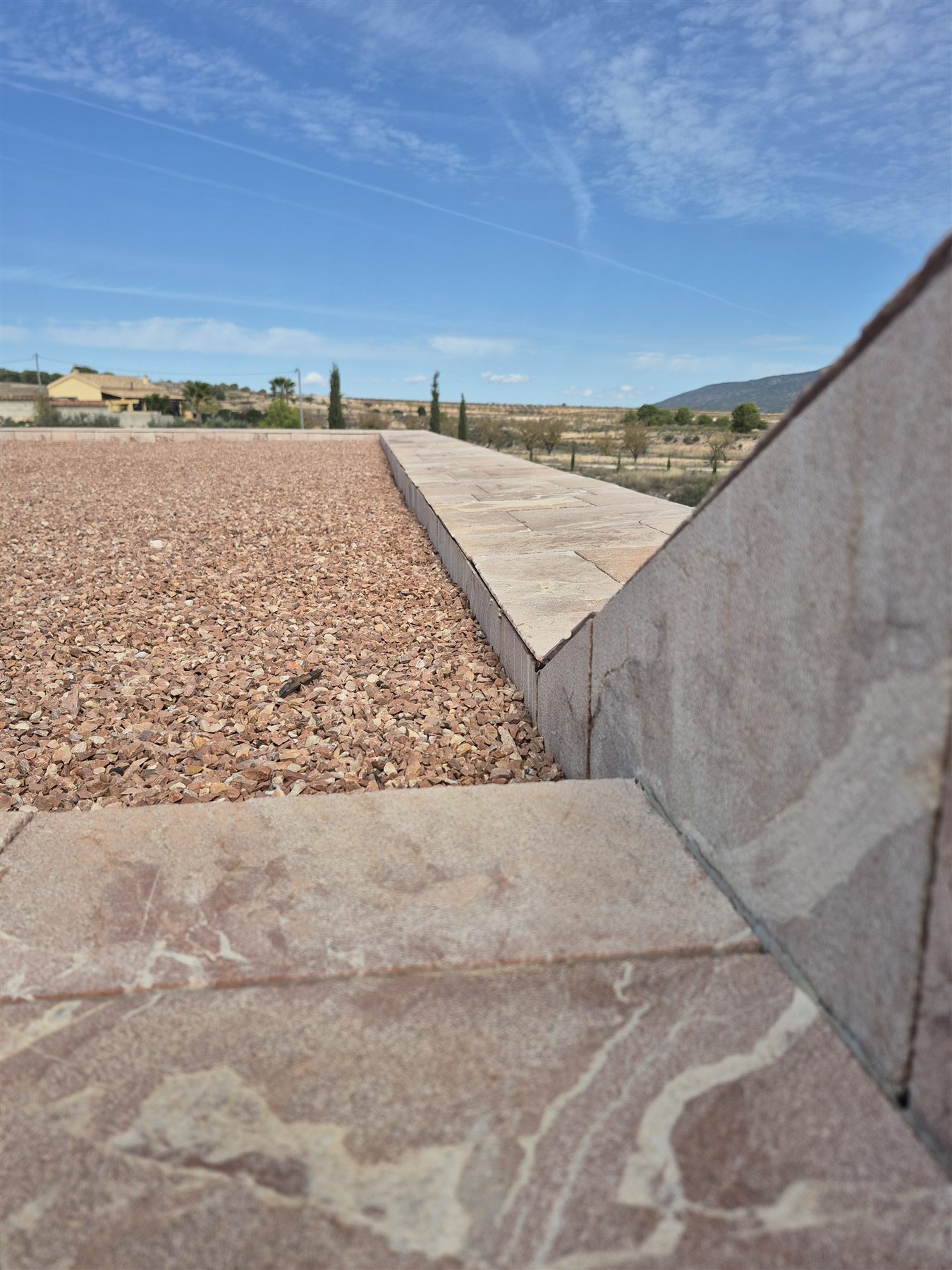
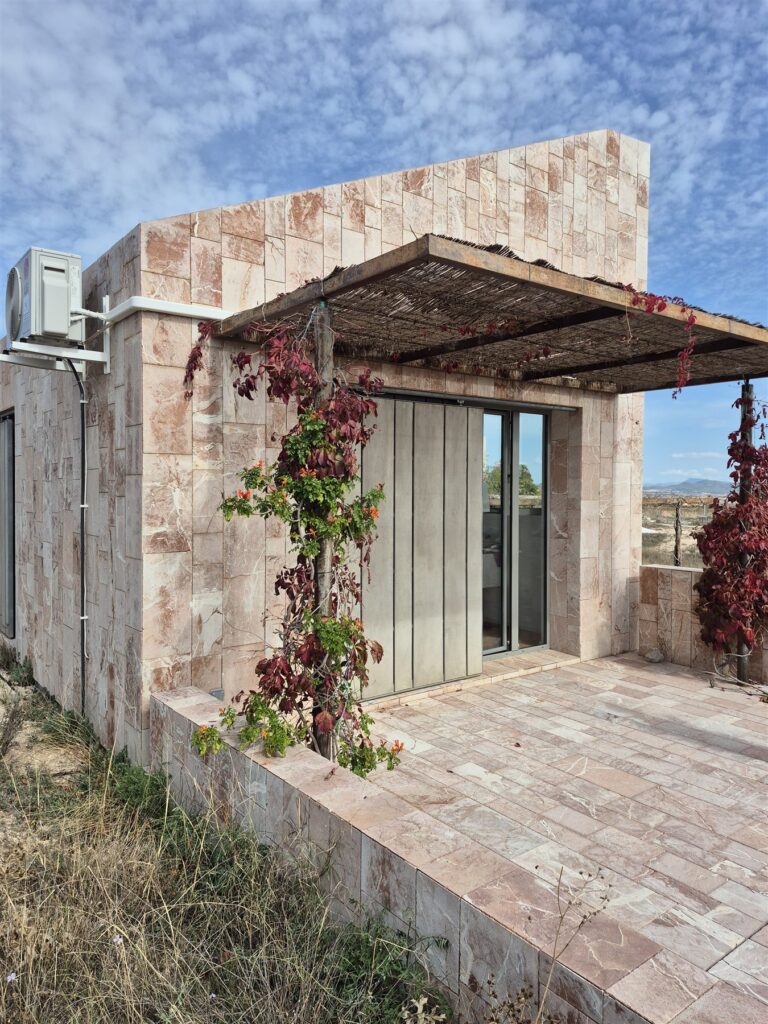
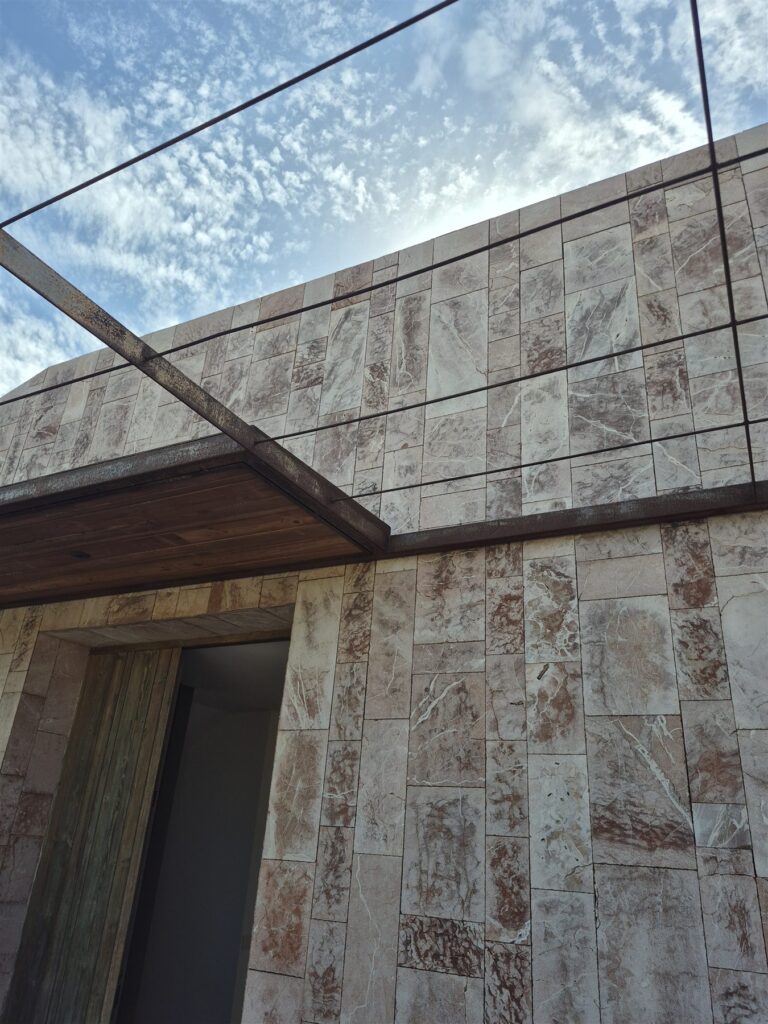
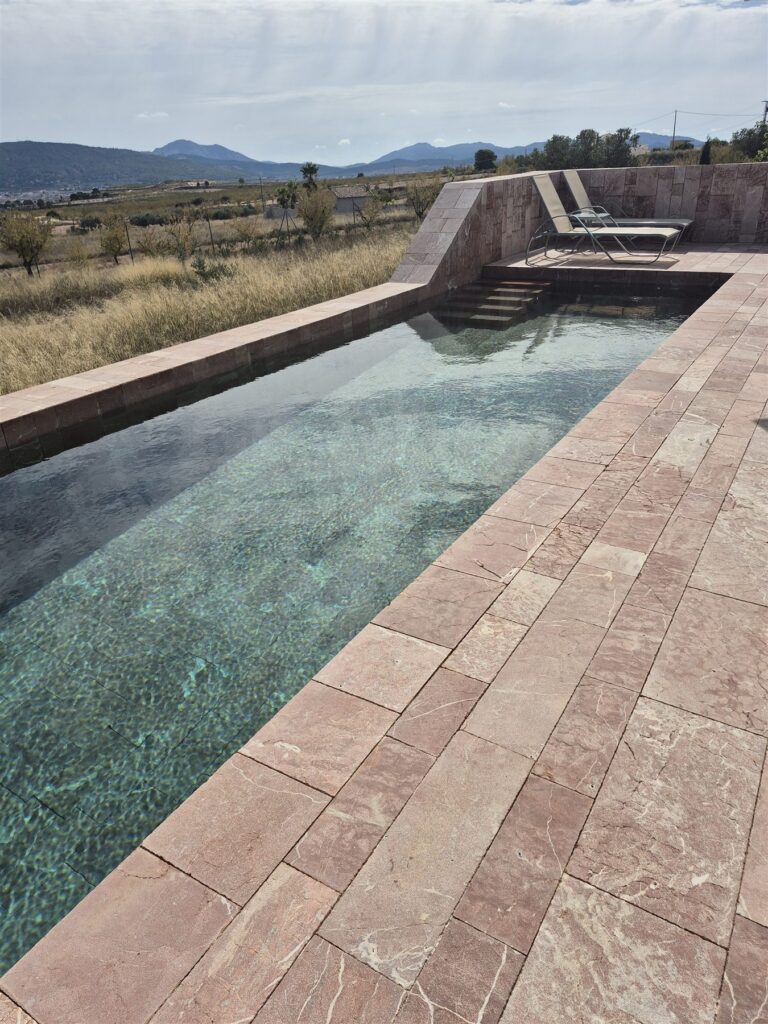
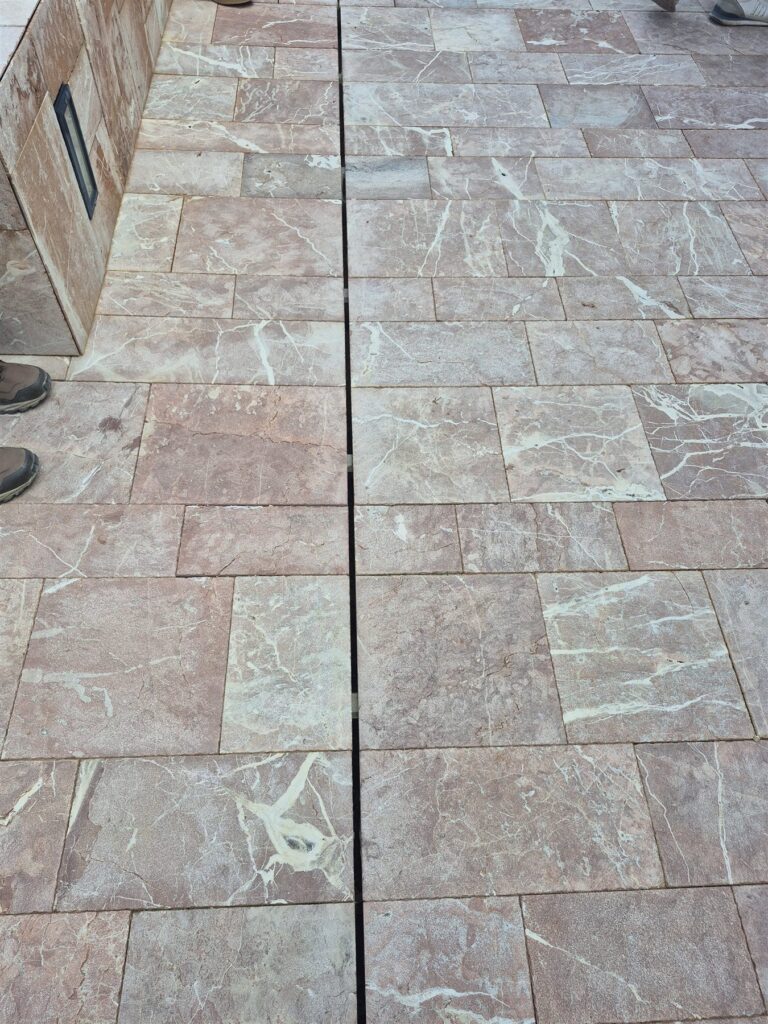
On 16 October we visited Isaac Peral’s Casa Camaleón in Pinoso with the Territorial Association of Architects of Alicante (CTAA), as part of its “Arquitecturas cercanas” programme, with the architect himself as our guide. A house clad entirely in sandblasted Rojo Alicante, from floors to roofs, with stone from the neighbouring quarries. Rarely is it so clear that stone is not a finish: it is the project.
words and photos: Ray Ródenas, architect · october 2026
arriving.
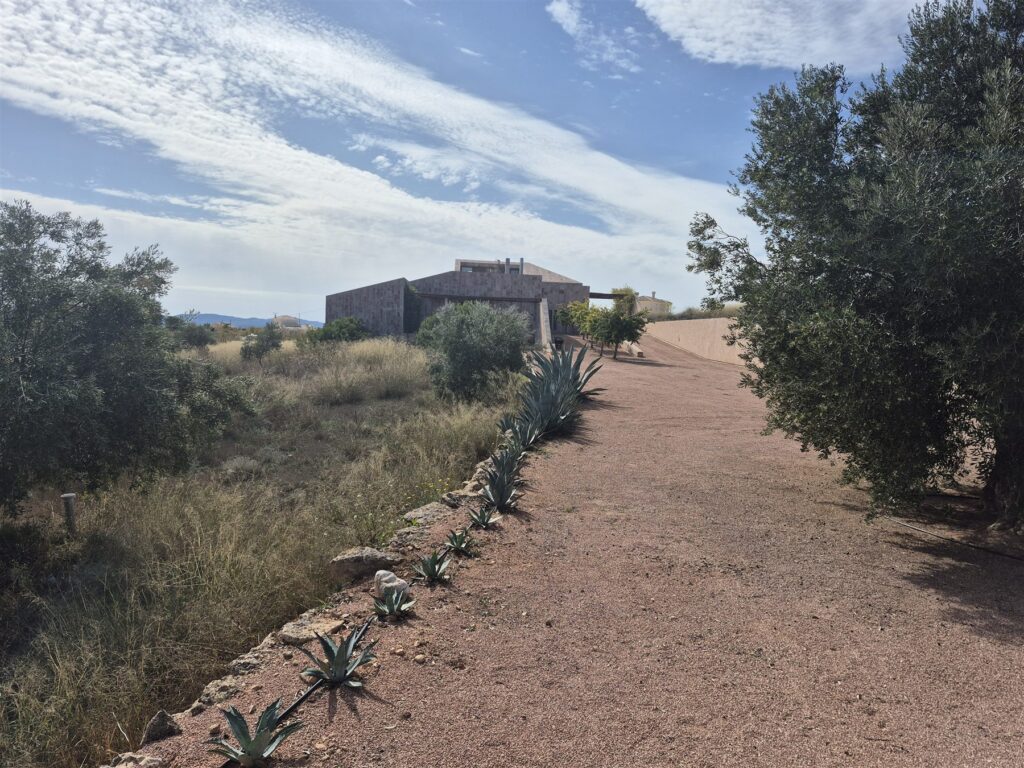
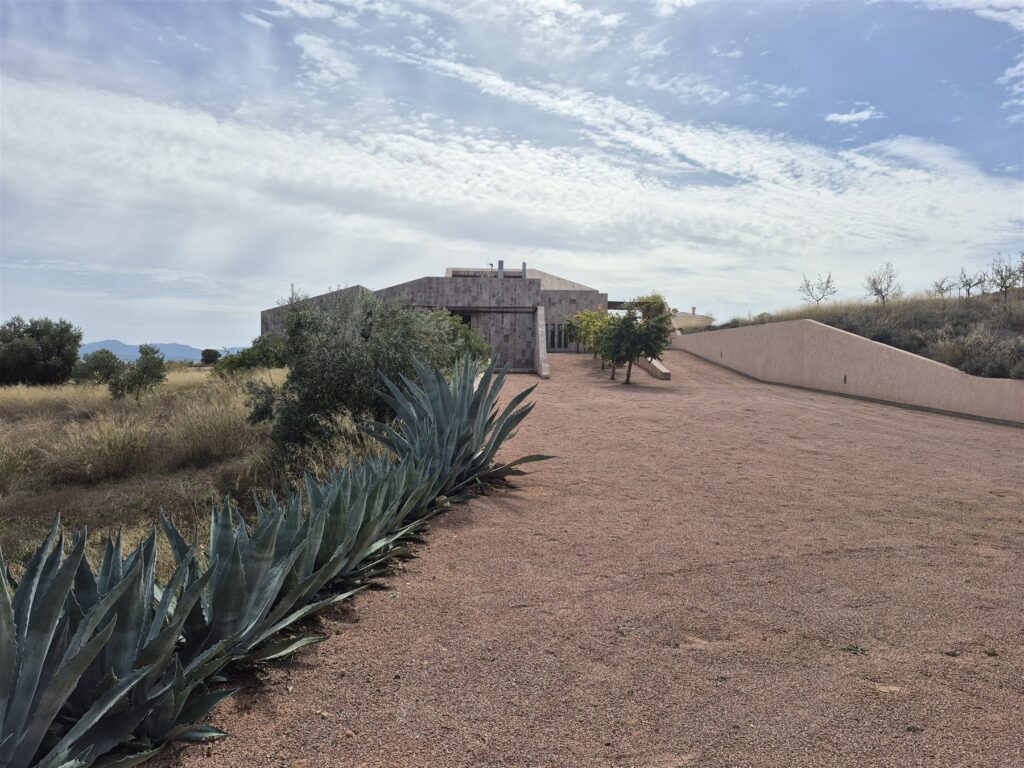
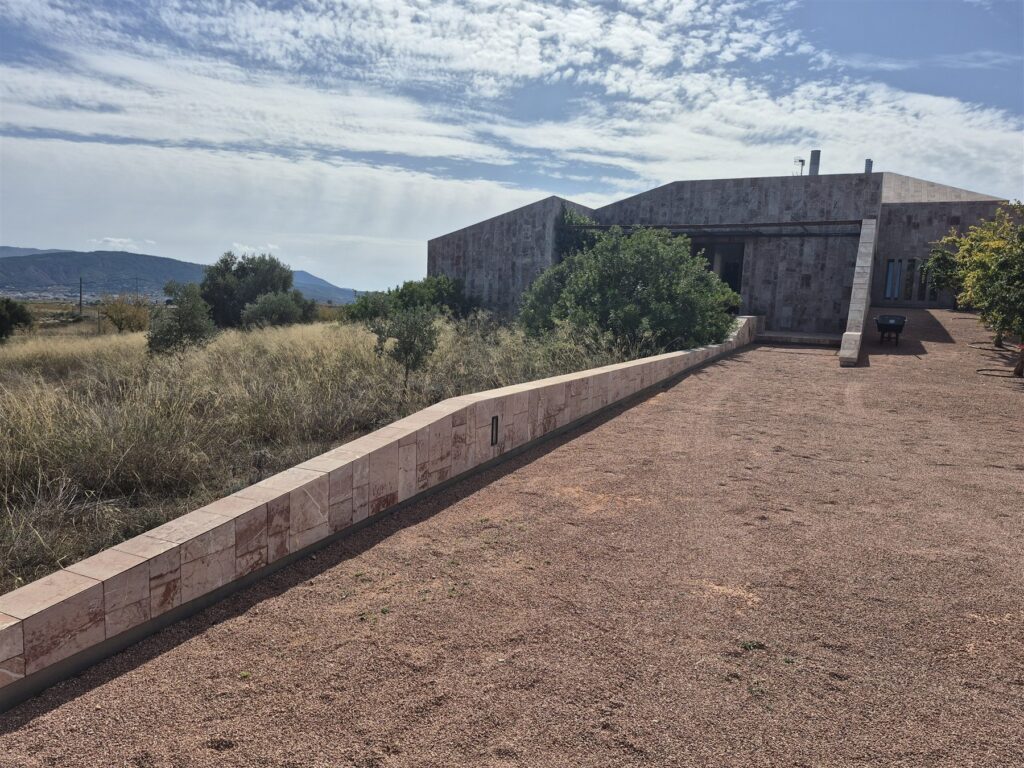
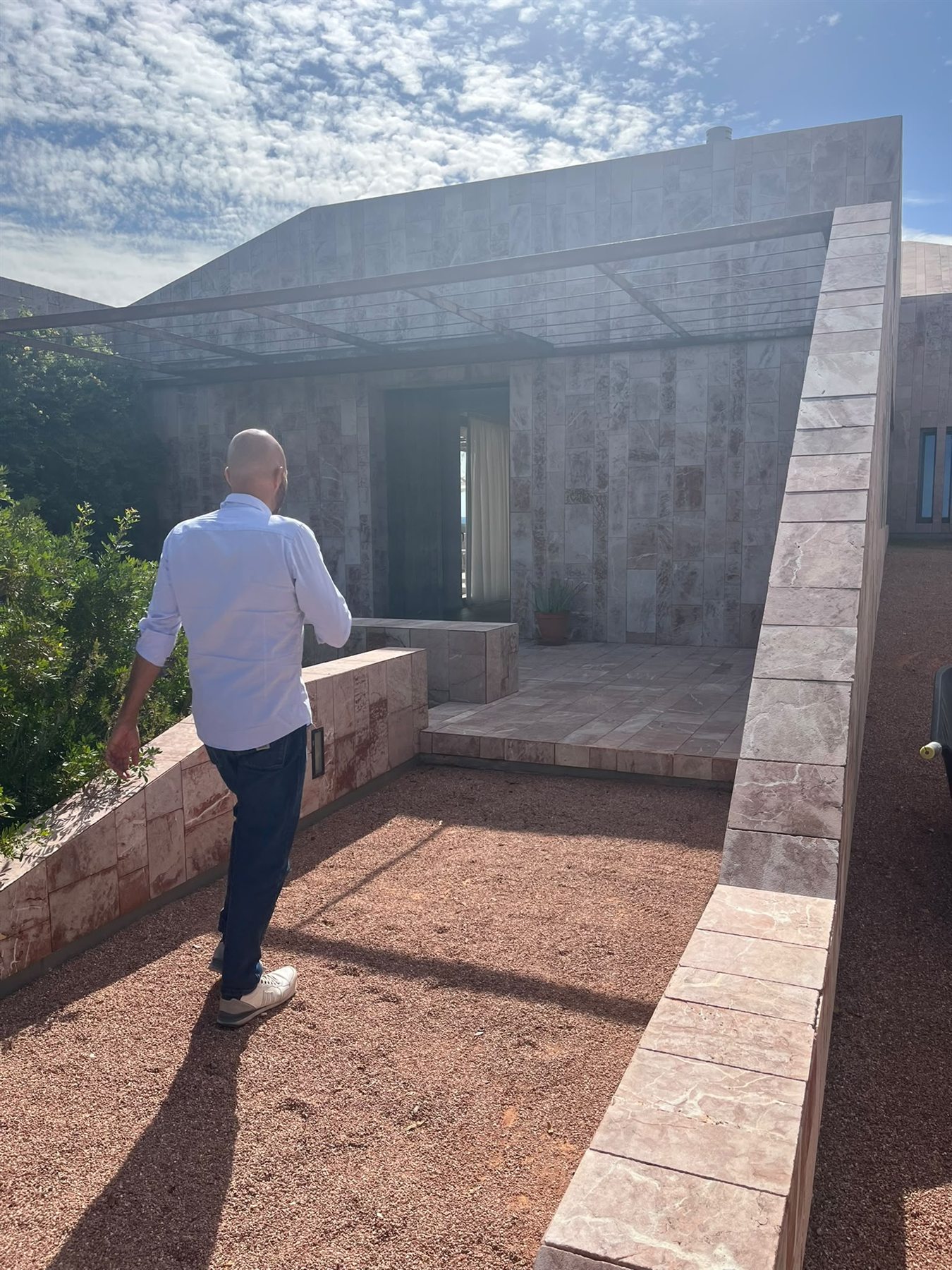
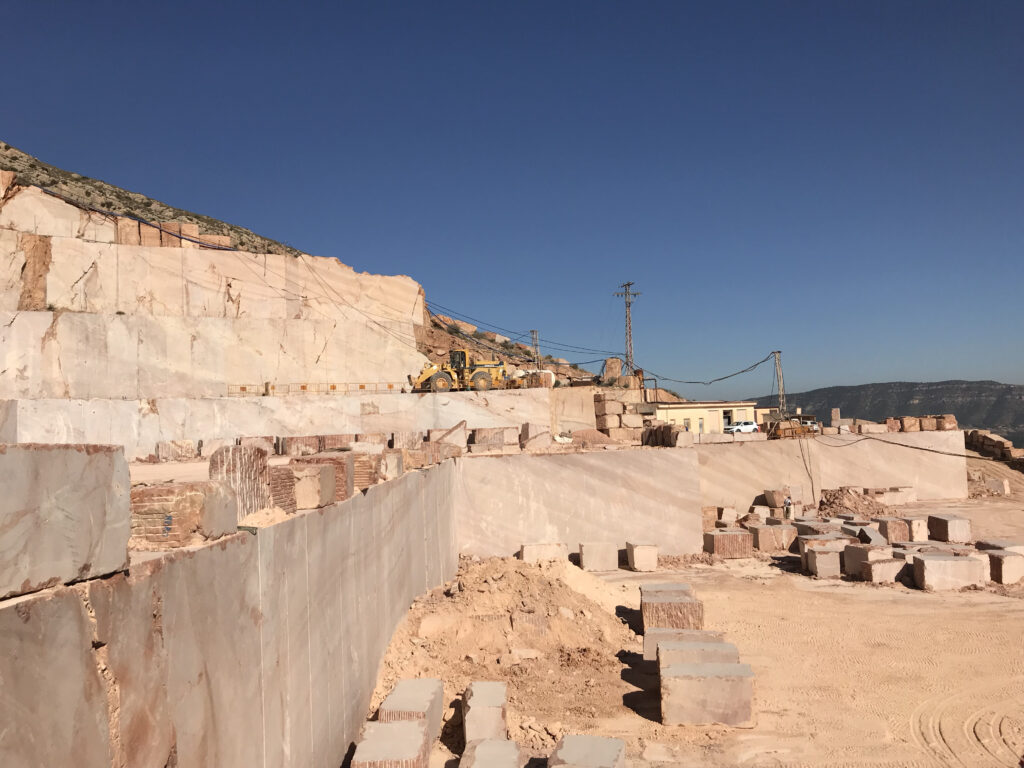
You arrive along a red earth track between agaves and olive trees, on the border with Jumilla, in a Vinalopó landscape marked by quarries. For a while the house is out of sight. When it appears, it does so like another slope: low volumes, pitched roofs echoing the outline of the hills and the same colour as the ground beneath your feet.
stone as the origin.
Isaac Peral summed it up in front of one of the walls, with an idea everyone who chooses the material at the end of a project should hear:
“The house is built from the material. With another stone it would make no sense: it would be another house. Its identity comes from the stone, in tune with the land.”— Isaac Peral, during the visit
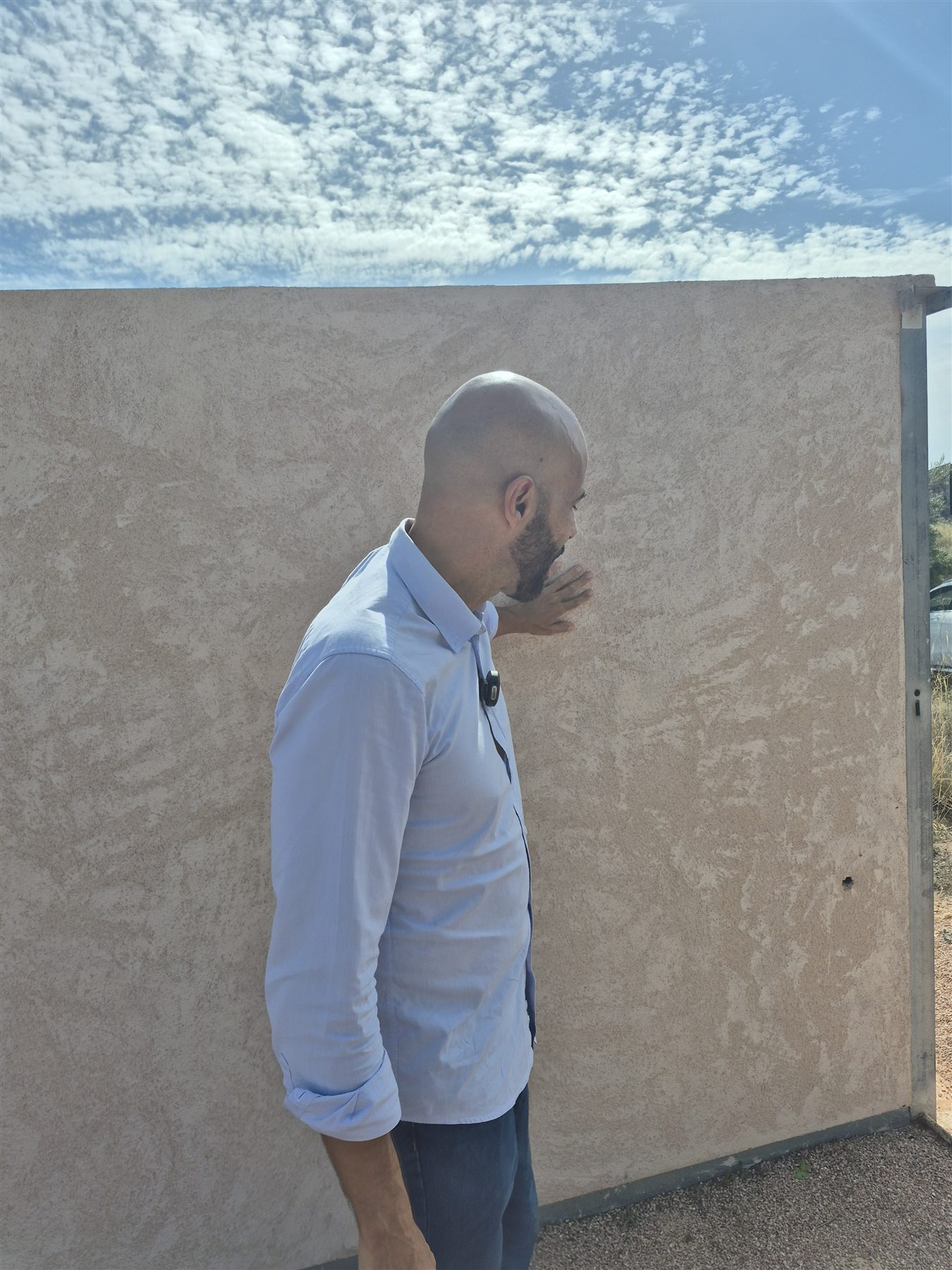
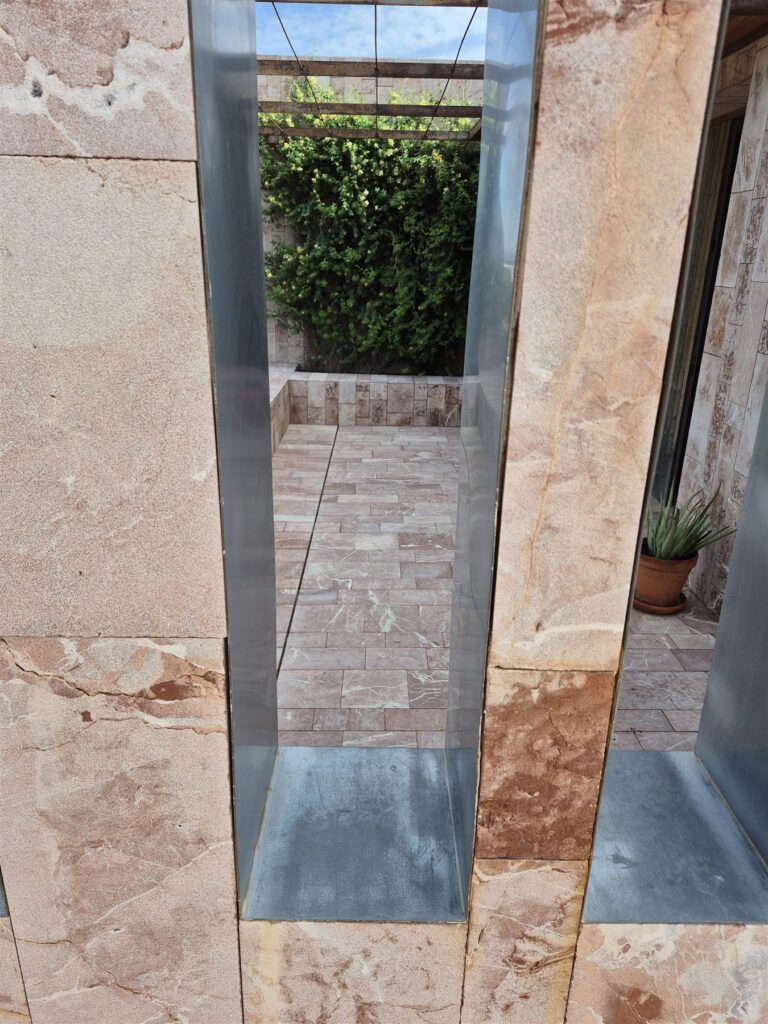
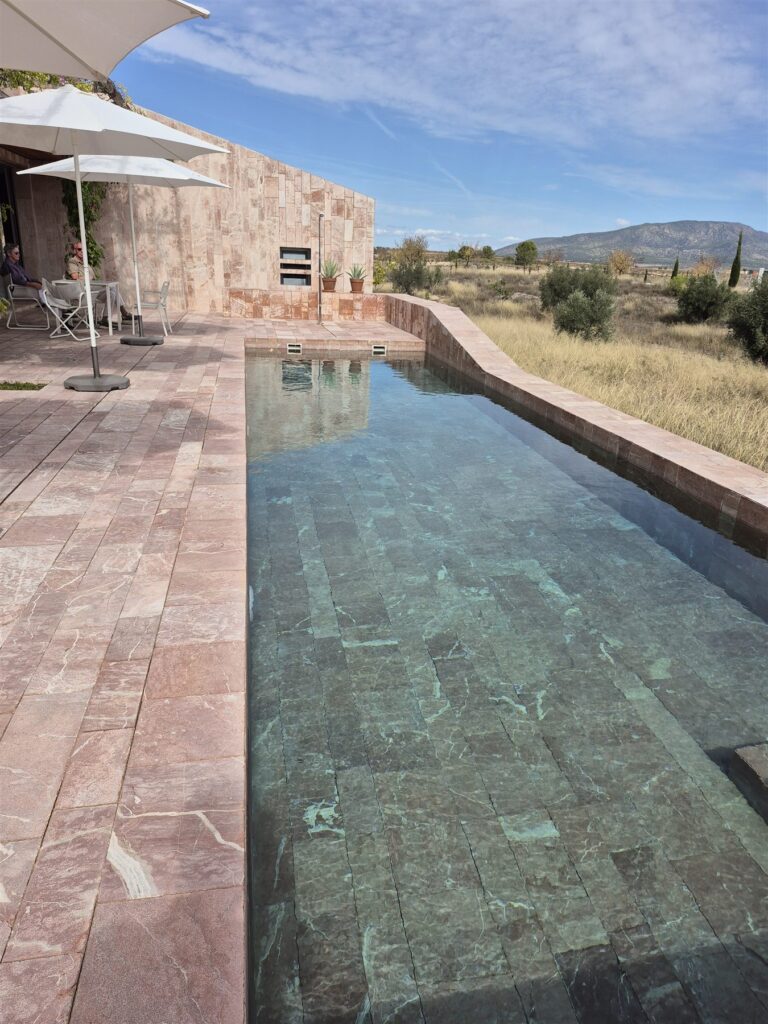
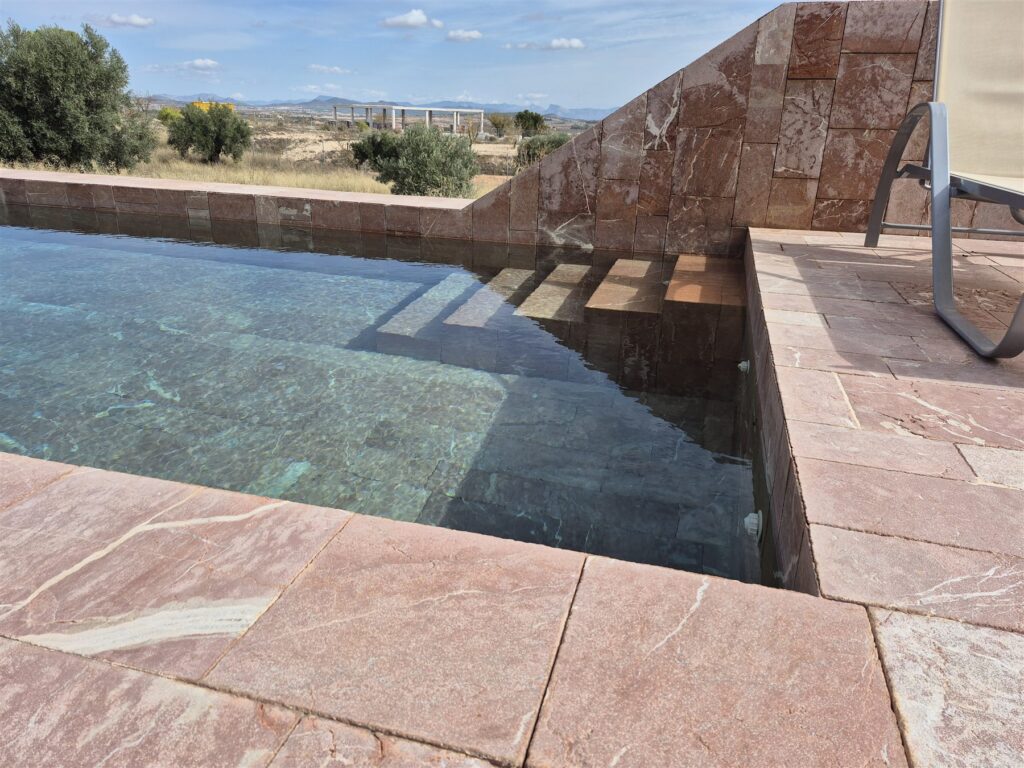
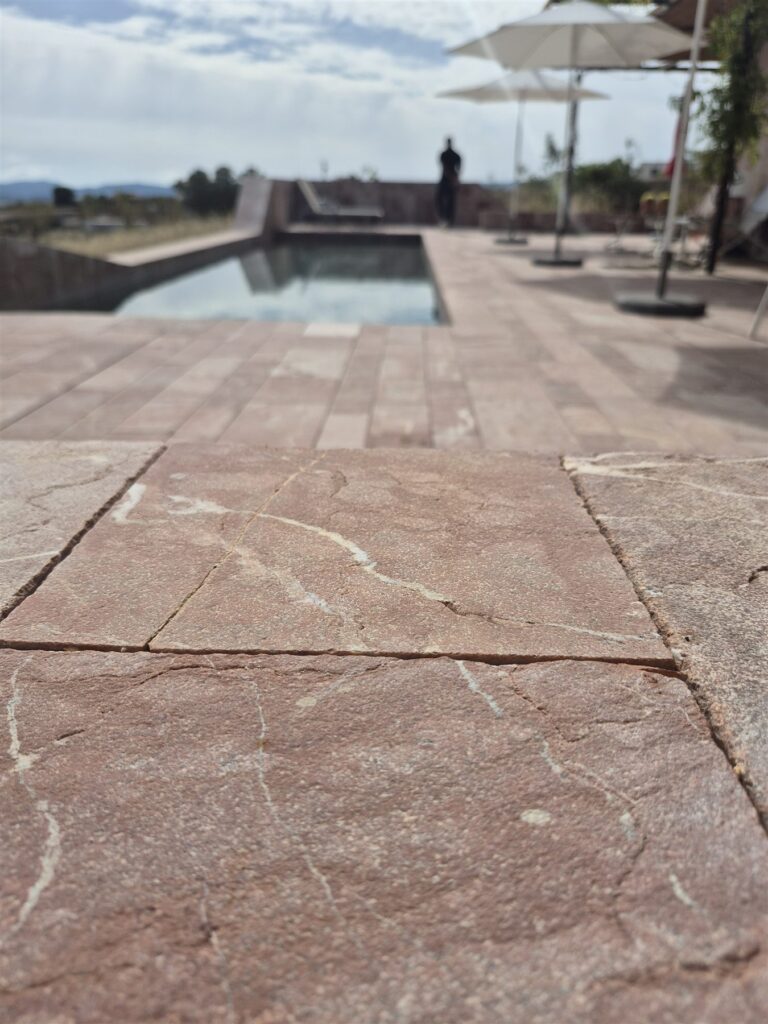
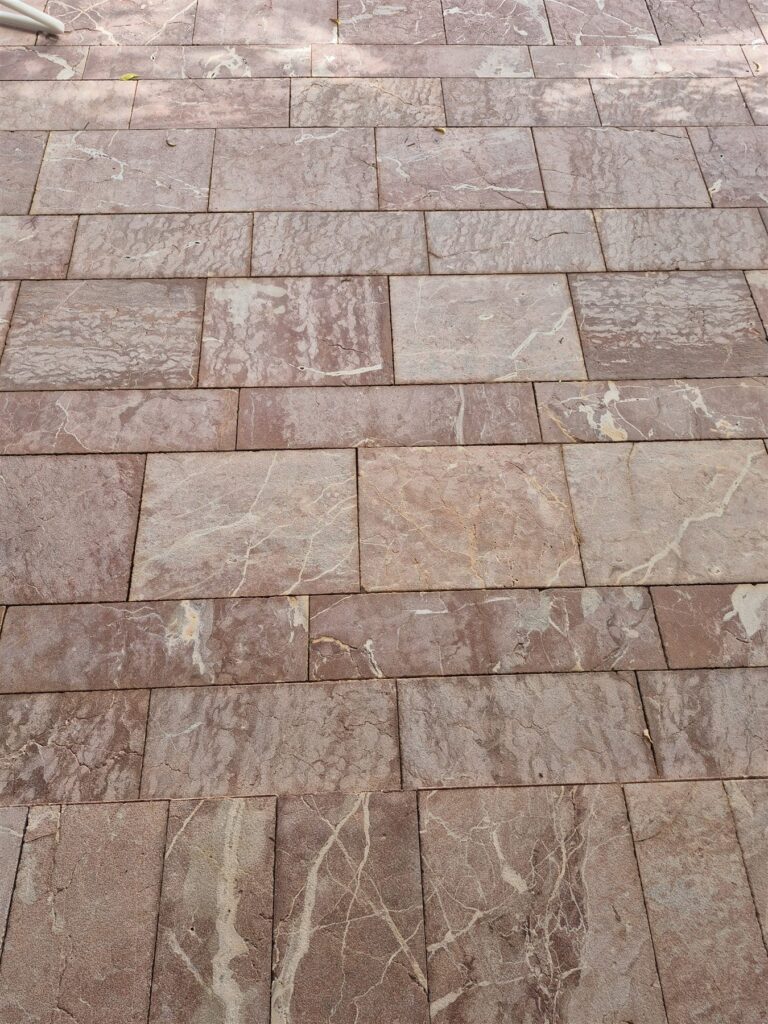
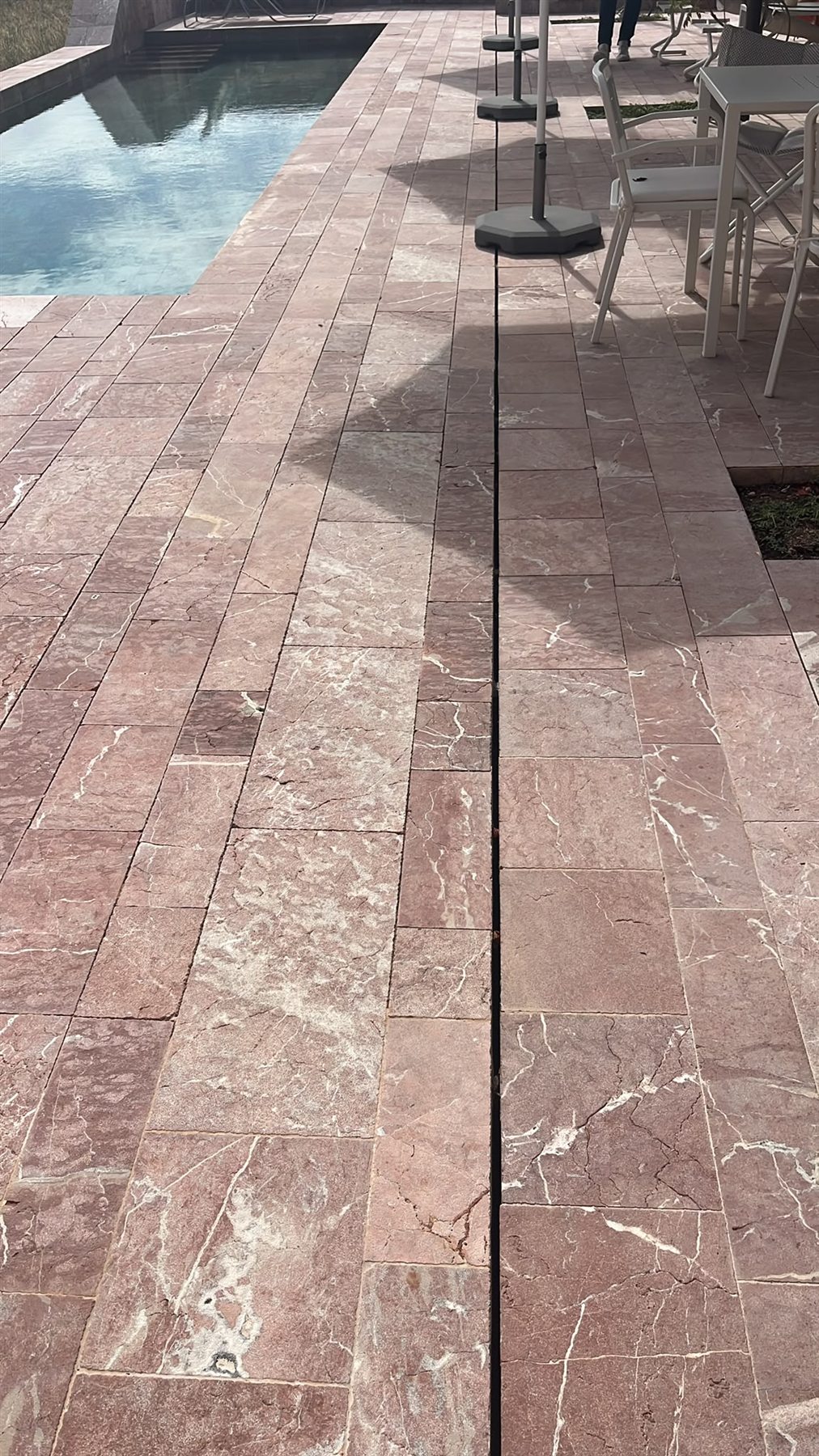
Hence the name. The strategy is the chameleon’s: to blend into the place. Sandblasted Rojo Alicante has the colour of the earth around the house, and it covers everything: floors, façades, retaining walls and roofs. No second material competes with it.
the house follows the land.
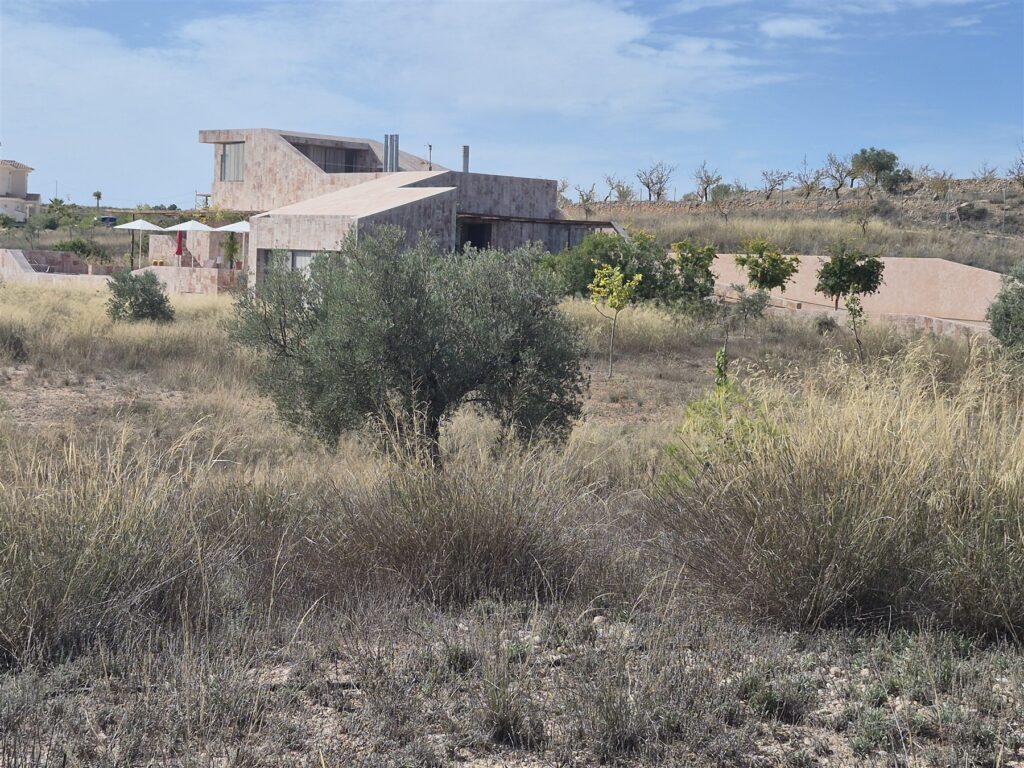
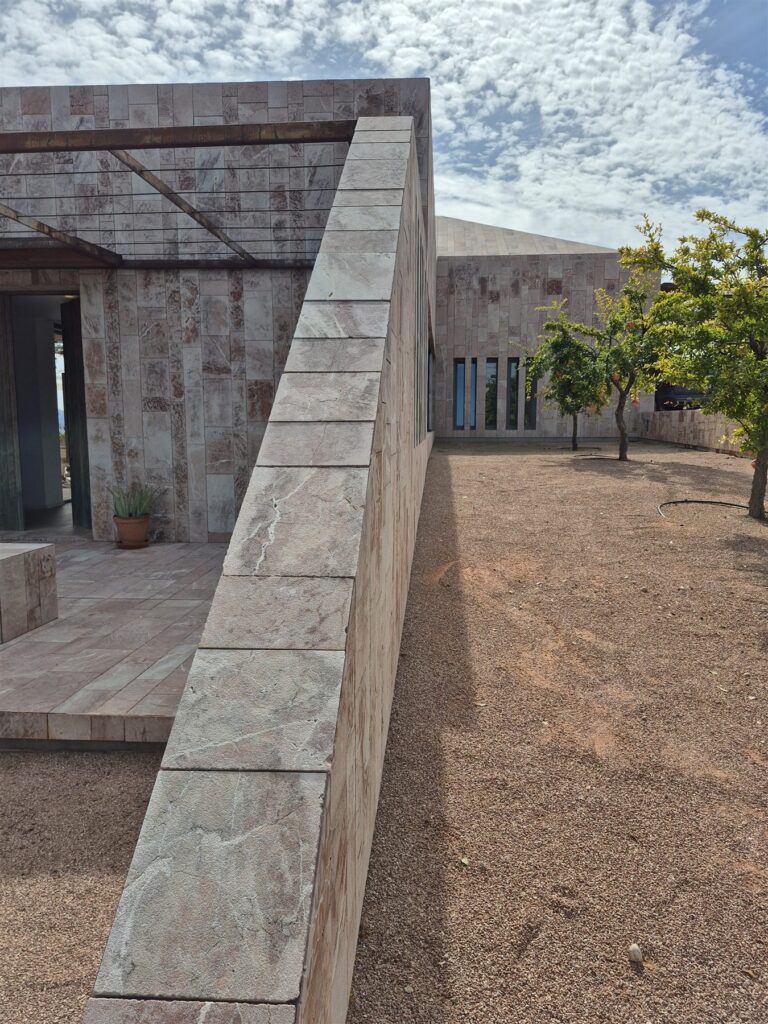
The plot falls to the east, and the house splits into three volumes at different heights, always resting on the ground and offset by half a storey. They open east and south for views and light, and close to the north and west. Outside, retaining walls terrace the slope along the contours, and natural earth ramps connect every level, so the whole house is wheelchair accessible from outside.
courtyards, pomegranates and water.
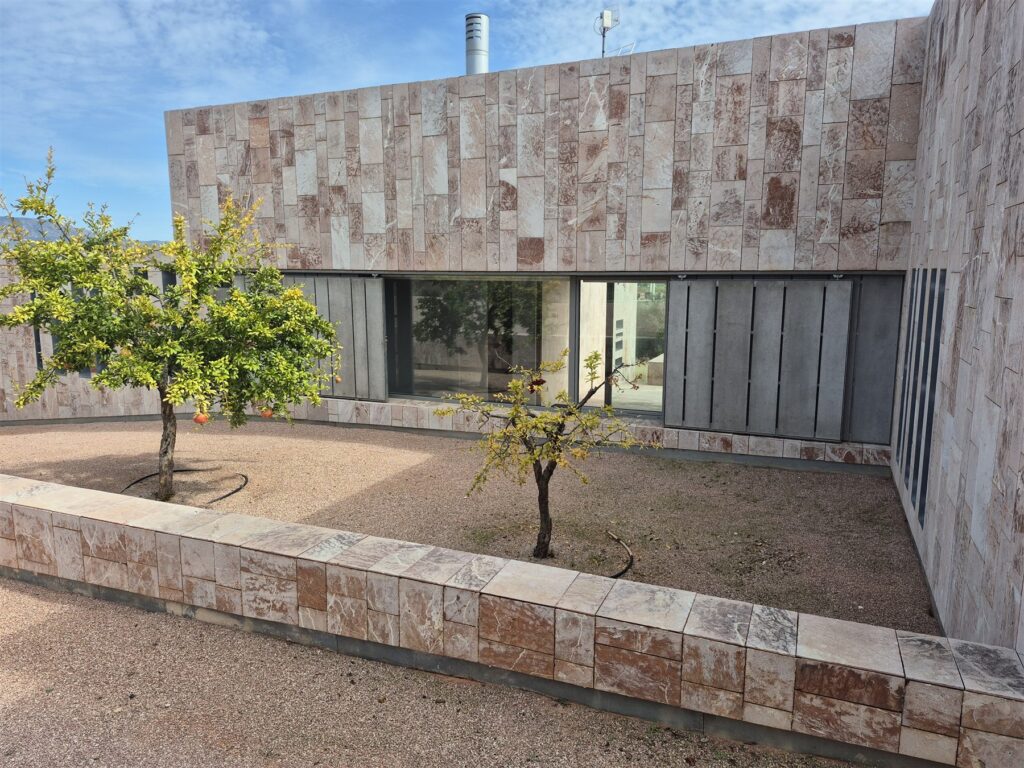
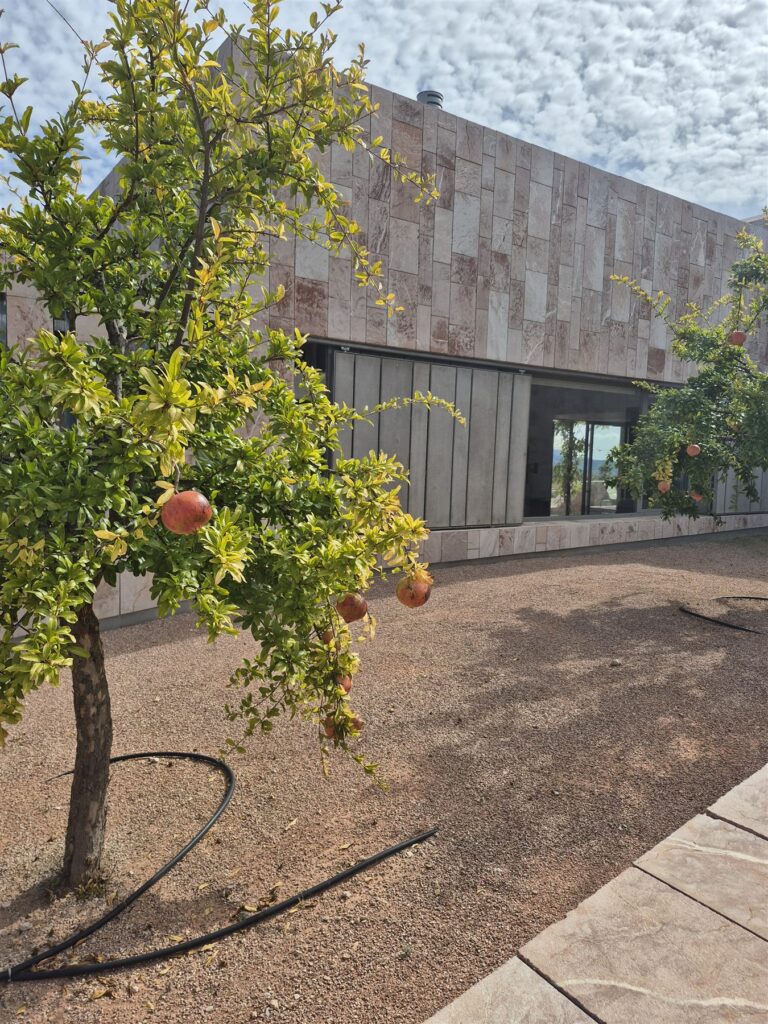
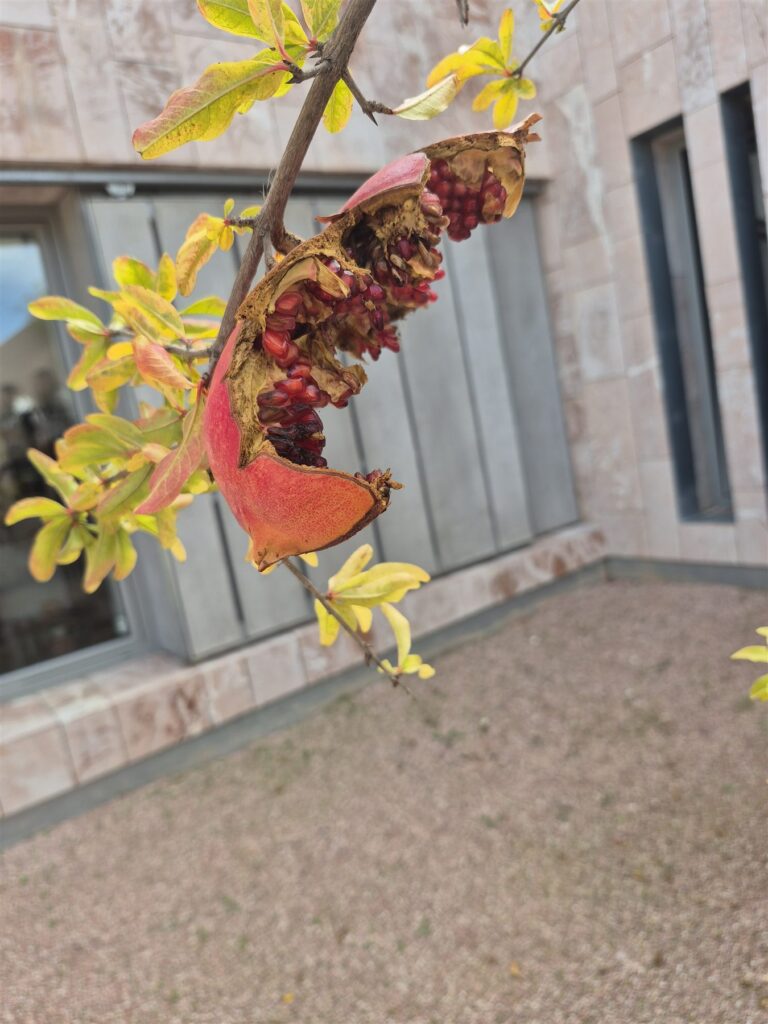
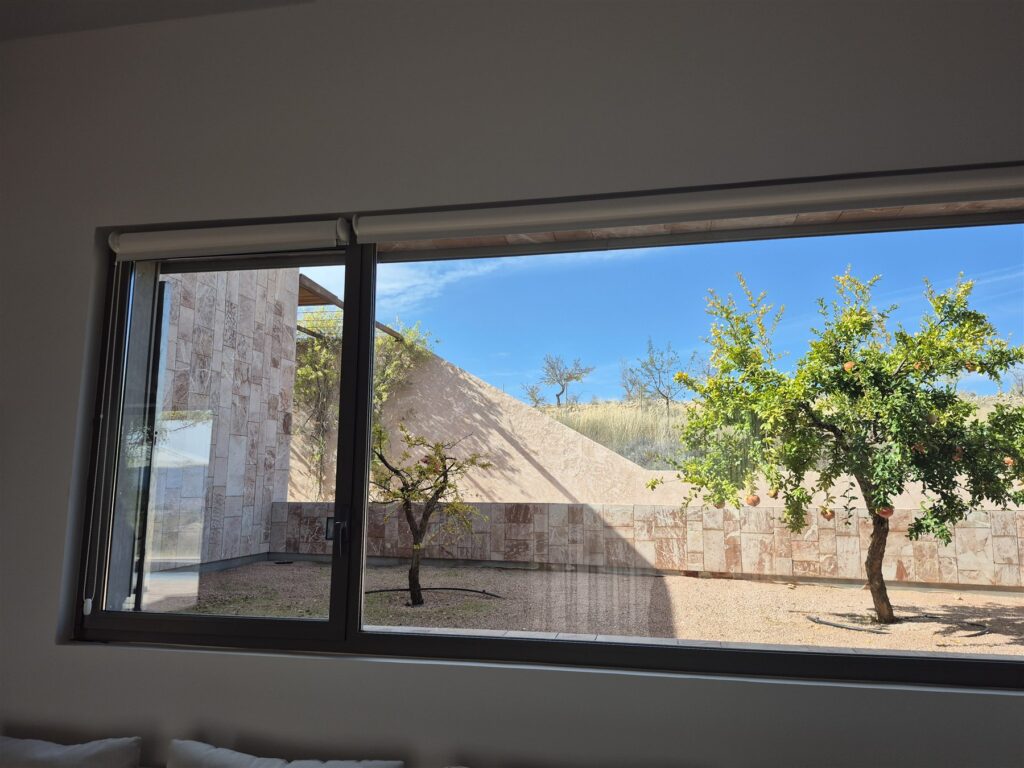
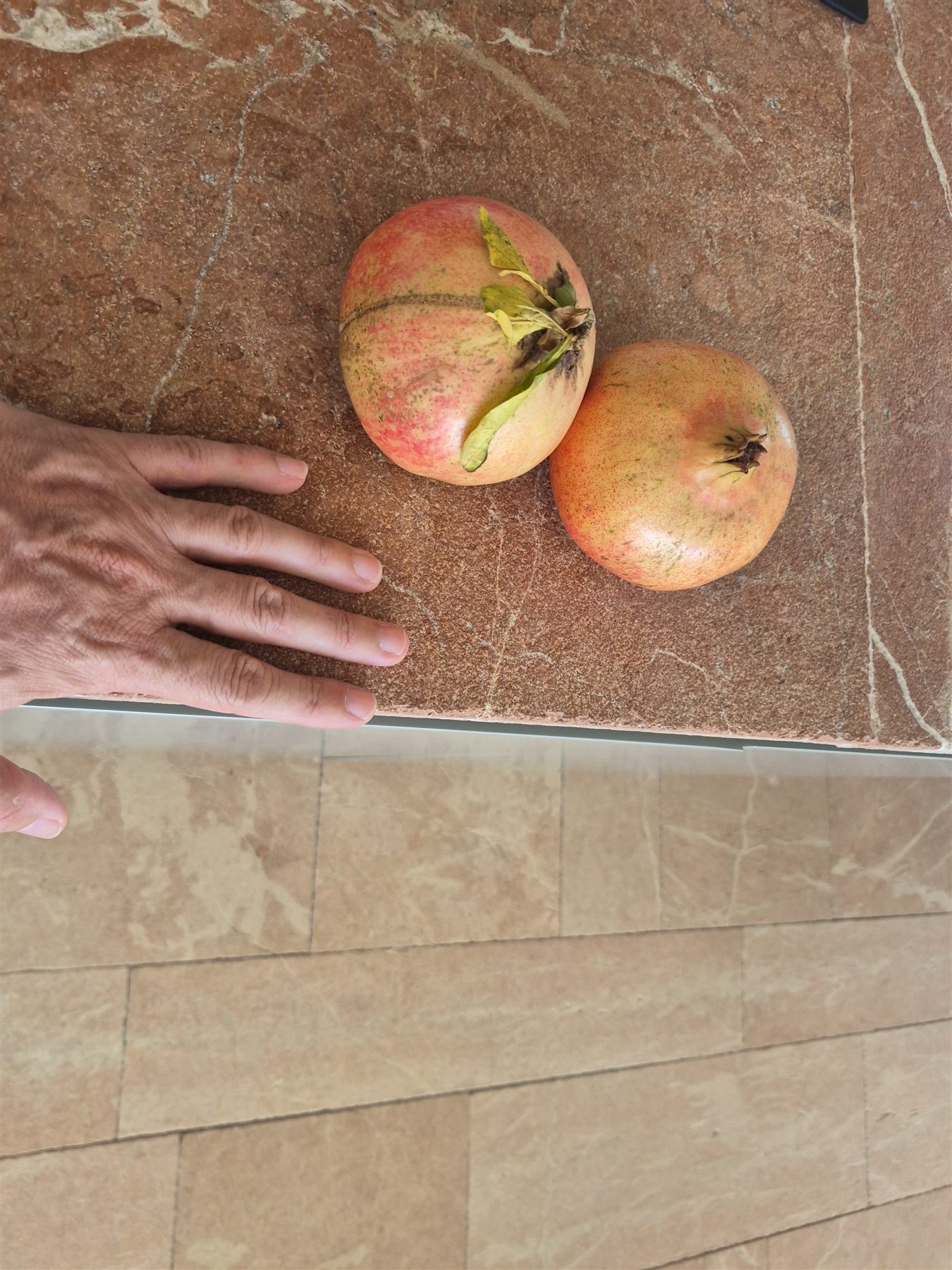
Between the volumes are courtyards with pomegranate trees. In October they were heavy with fruit, and the red of the pomegranates against the red of the stone was almost a lesson in colour. Pergolas with vines extend the interior outwards and give summer shade. And the pool, a long narrow sheet of water, points straight at the landscape.
inside, the same stone.
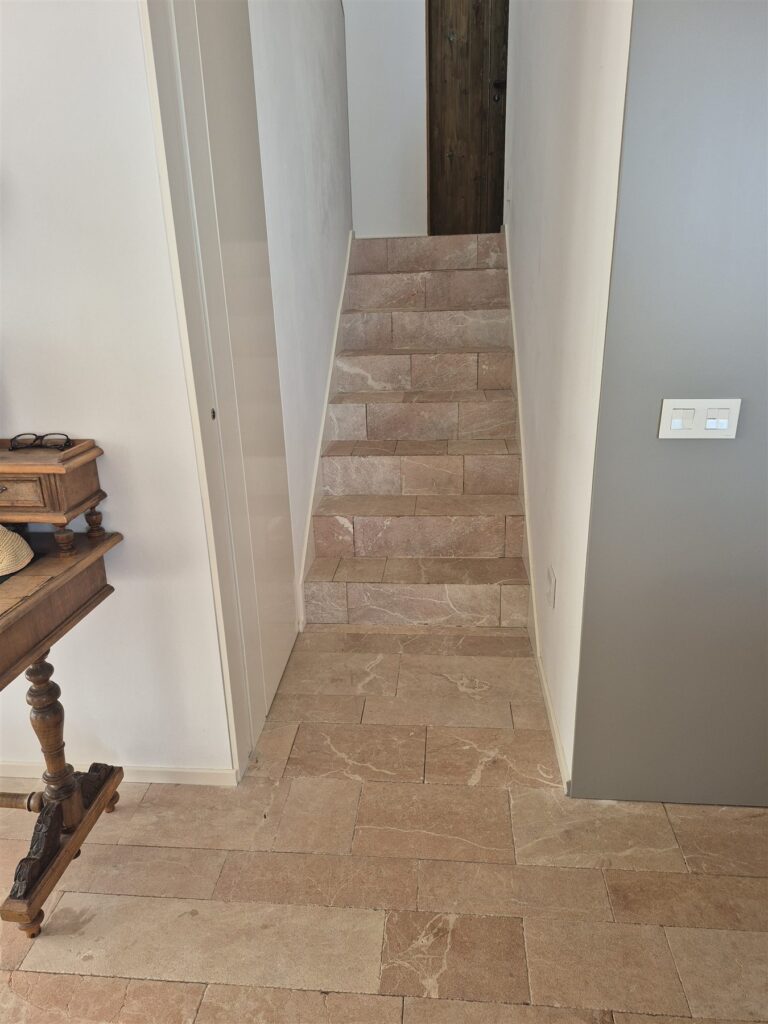
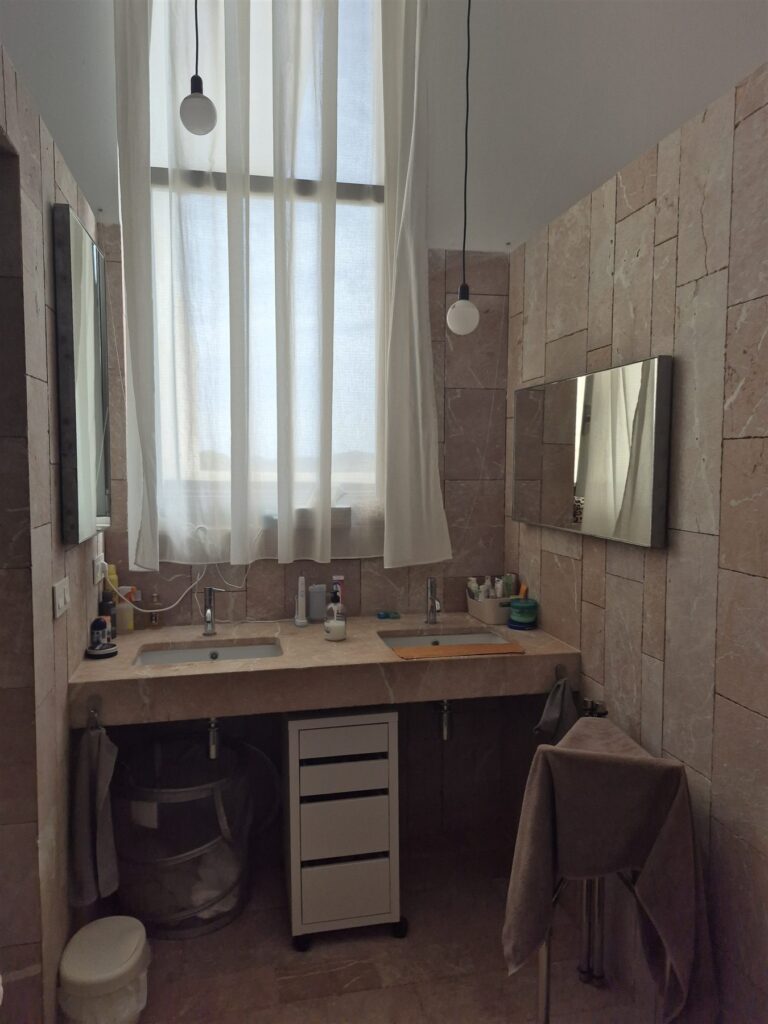
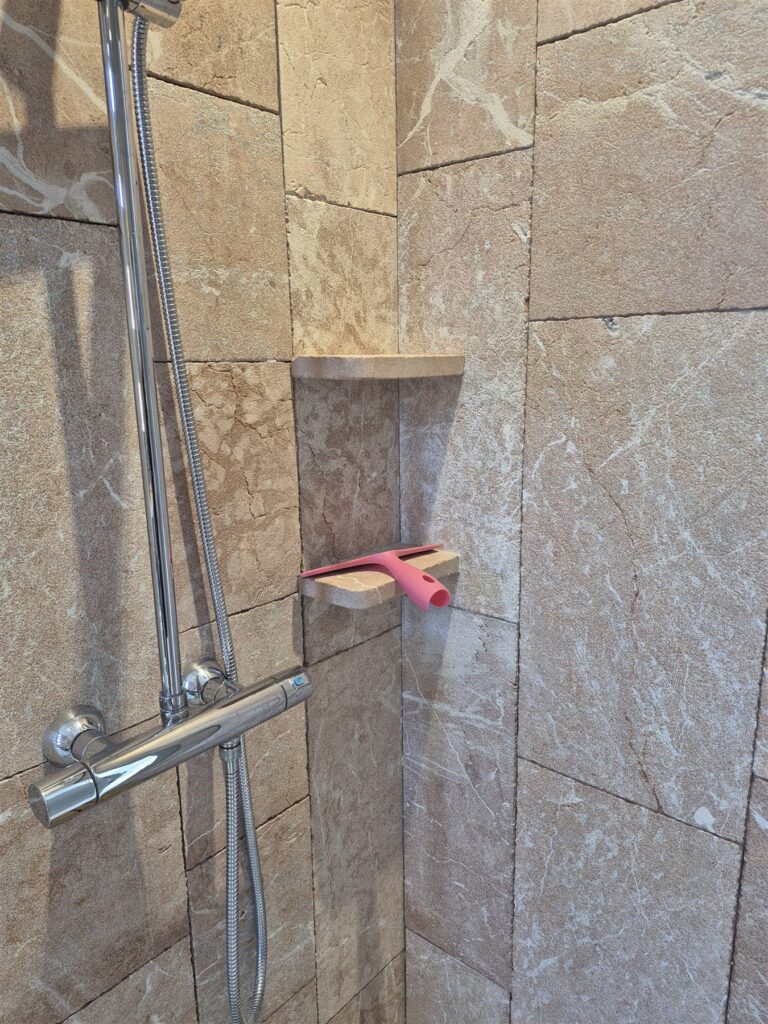
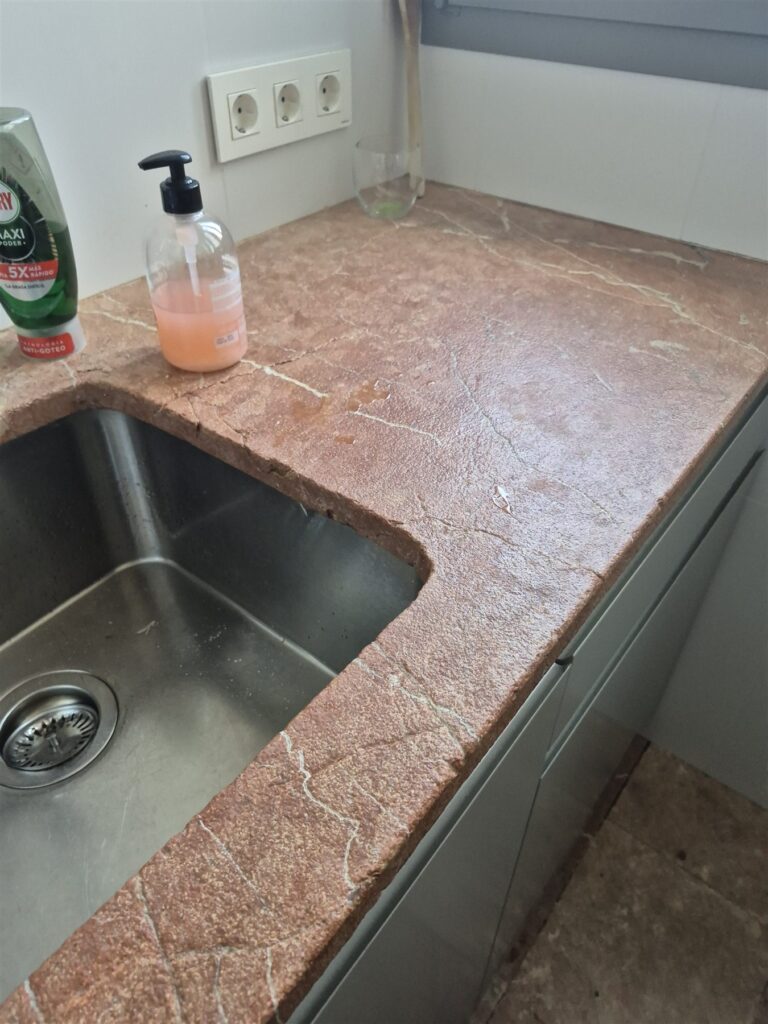
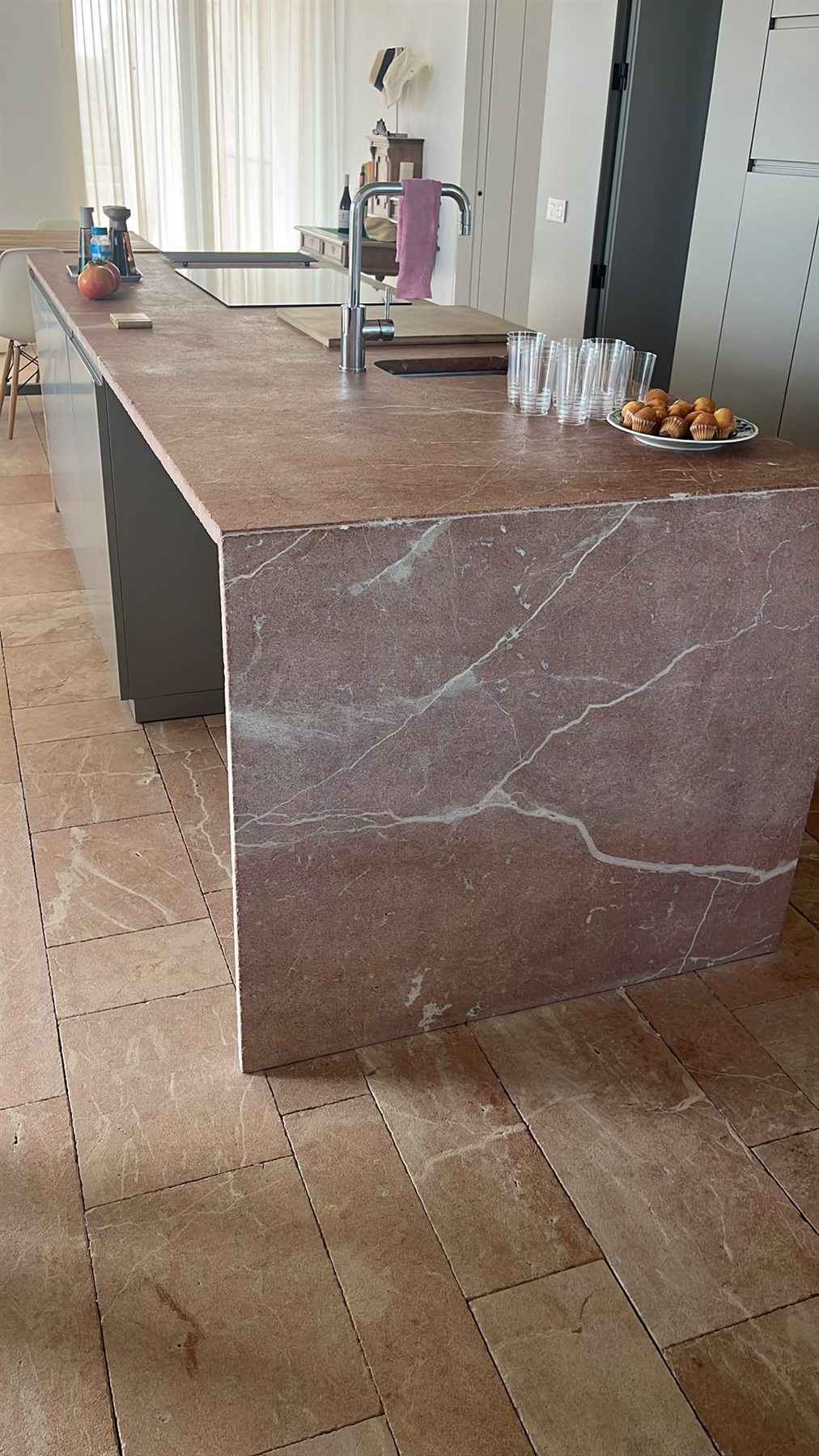
Inside, Rojo Alicante continues: floors, stairs, bathrooms, shower and kitchen worktop. The windows frame the landscape like paintings. And there is something you feel underfoot: in winter the stone warms in the sun and holds the heat for hours, even until the next day; in summer, sliding panels and cross ventilation do the rest.
what i take home: how it ages.
What I take home above all is how it ages. The house is almost ten years old and does not look it: the stone has not deteriorated, it has matured. Sun, rain and use have settled it naturally, with no stains out of place and none of the sad wear of materials that imitate. It is a noble material and it ages nobly. That is an advantage worth explaining to any client: natural stone is not only beautiful on handover day, it gains character over the years.
A 2018 house that looks as if it had always been there. Natural, local materials (stone, iron, timber), with the quarry a few kilometres away, cutting transport and footprint. And a lesson for those of us who work with stone: the material is not chosen at the end, it is chosen at the beginning, and it decides what house it will be.
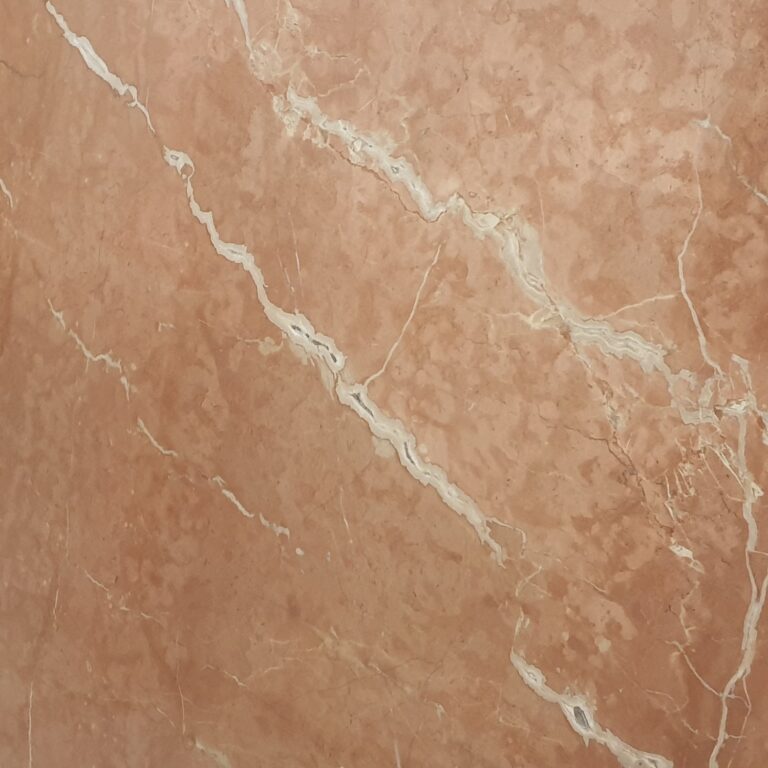
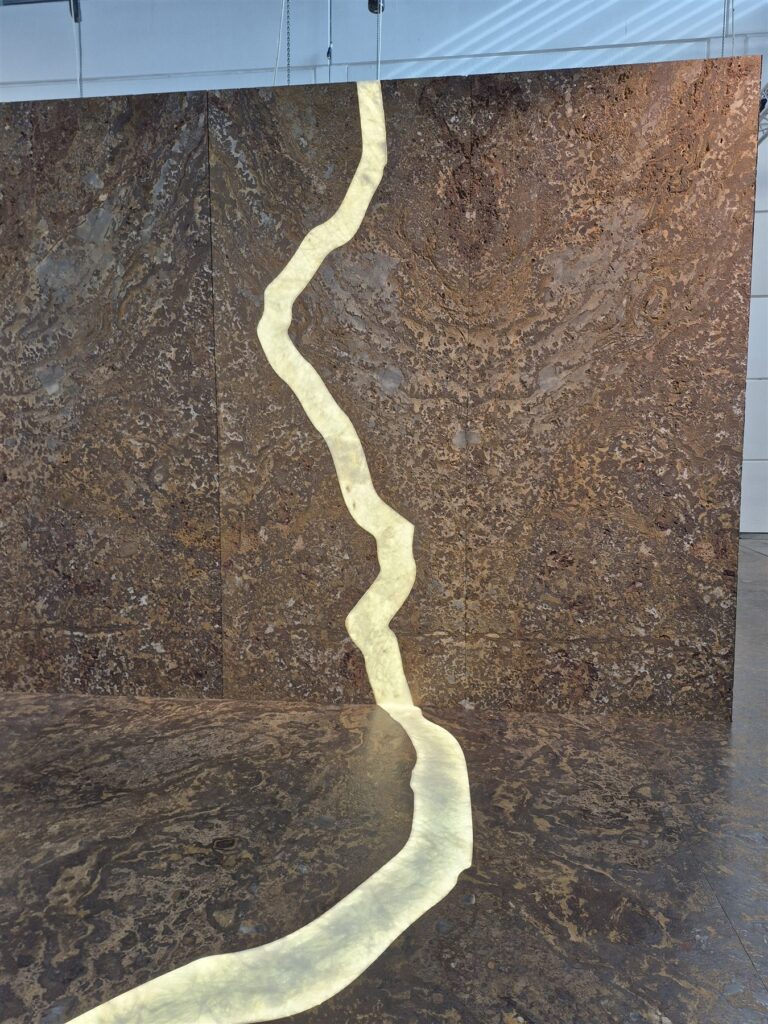
Rojo Alicante is one of the stones we have direct quarry access to. Sandblasted, as here, it turns matt, warm and close to the earth; polished, it regains all the intensity of its red and white veining. See Rojo Alicante →
 Rojo Alicantesee the stone →
 Rojo Coralitoask us
 Rosso Levantoask us
nothing else.
Travel, fairs, quarries and buildings, told by an architect. We only write when there is something to tell, and you can unsubscribe at any time. By subscribing you accept our privacy policy.
bala material studio · alicante