— notebook · quarries · alicante · october 2026
rojo alicante.
from the quarry to the house.
One stone, told from start to finish. Rojo Alicante comes from quarries inland in the province of Alicante; it is chosen by the block, cut into slabs or formats, given a finish and ends up as architecture. We tell it with our own quarry photos and a house built entirely with it: Isaac Peral’s Casa Camaleón, which we visited a few days ago.
words: Ray Ródenas, architect · october 2026
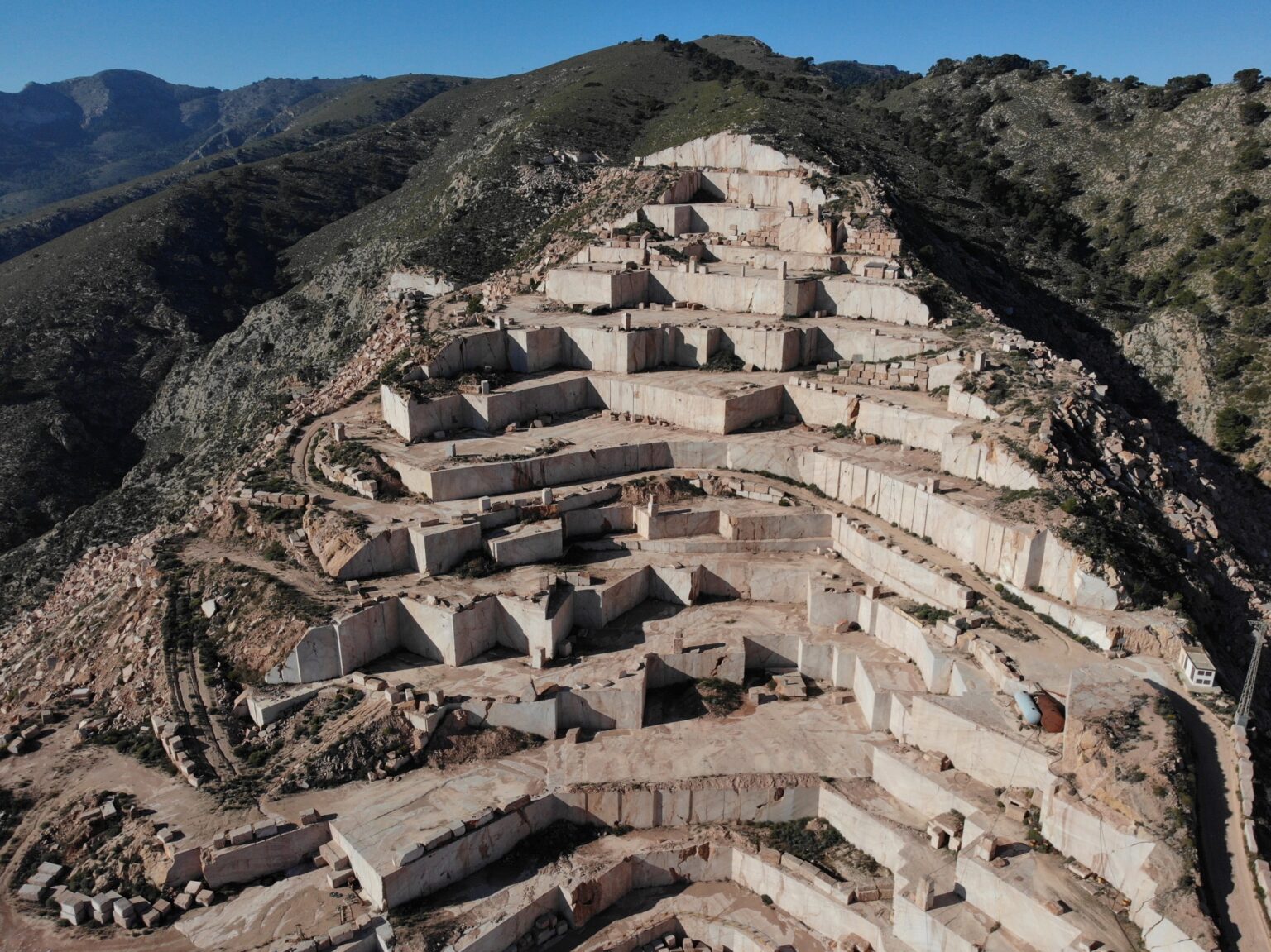
the quarry.
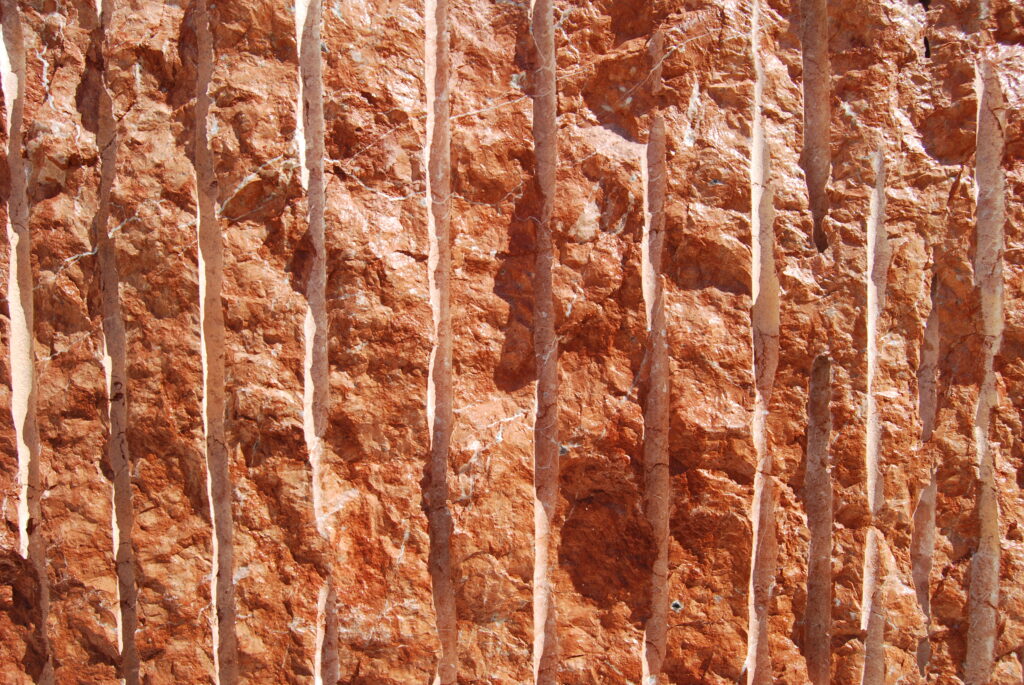
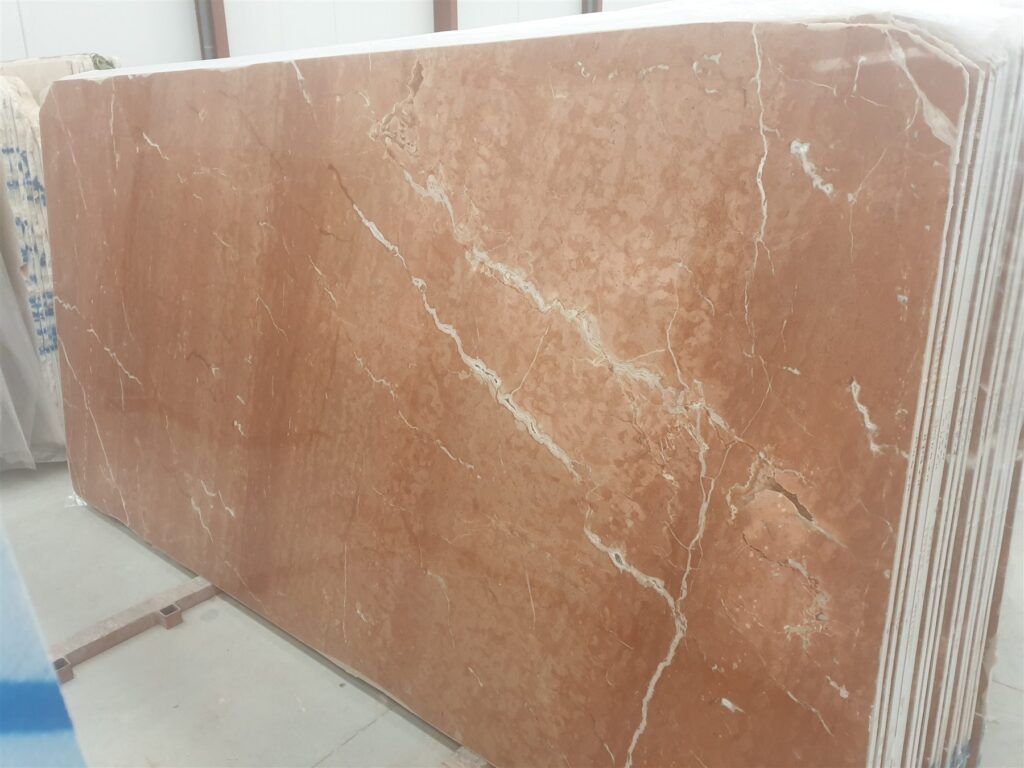
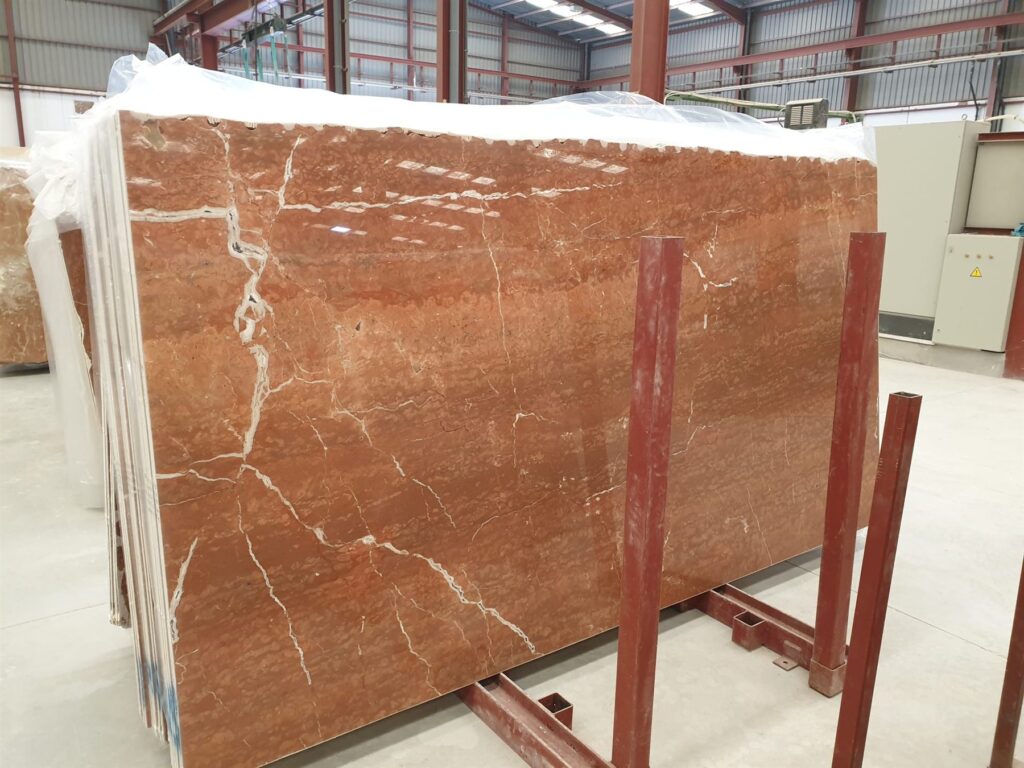
Everything starts here. Rojo Alicante is an intense red marble crossed by white calcite veins. At the quarry you see what never appears in a catalogue: how the tone shifts from one bed to the next, where the veining closes and where it opens, which areas yield sound blocks and which do not.
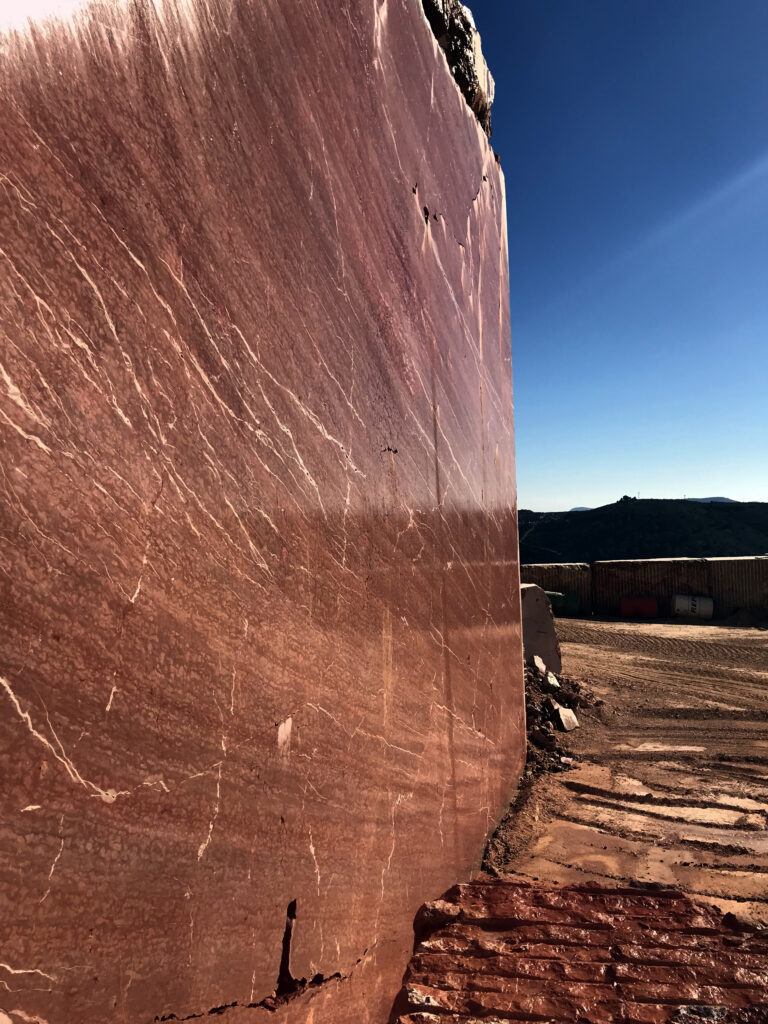
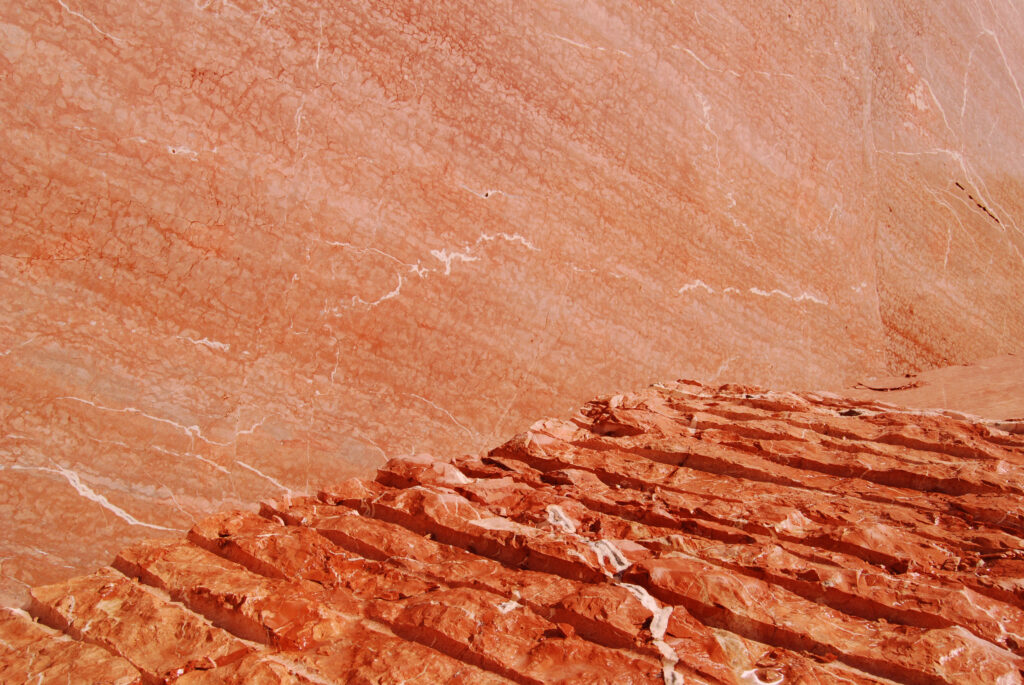
the block.
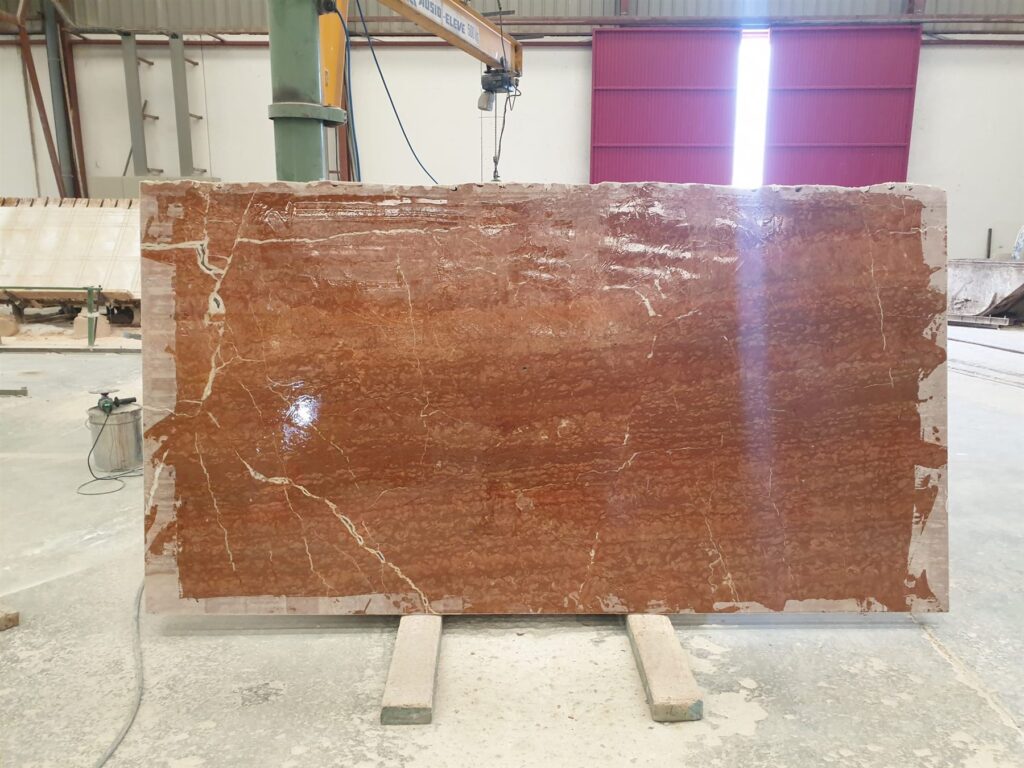
We have direct quarry access, and that changes the conversation: the material is chosen by the block, before it is cut. Colour, vein density, fissures. The drill marks tell how each piece was extracted. On a project with many square metres, choosing the block is the difference between an even floor and a surprise on site.
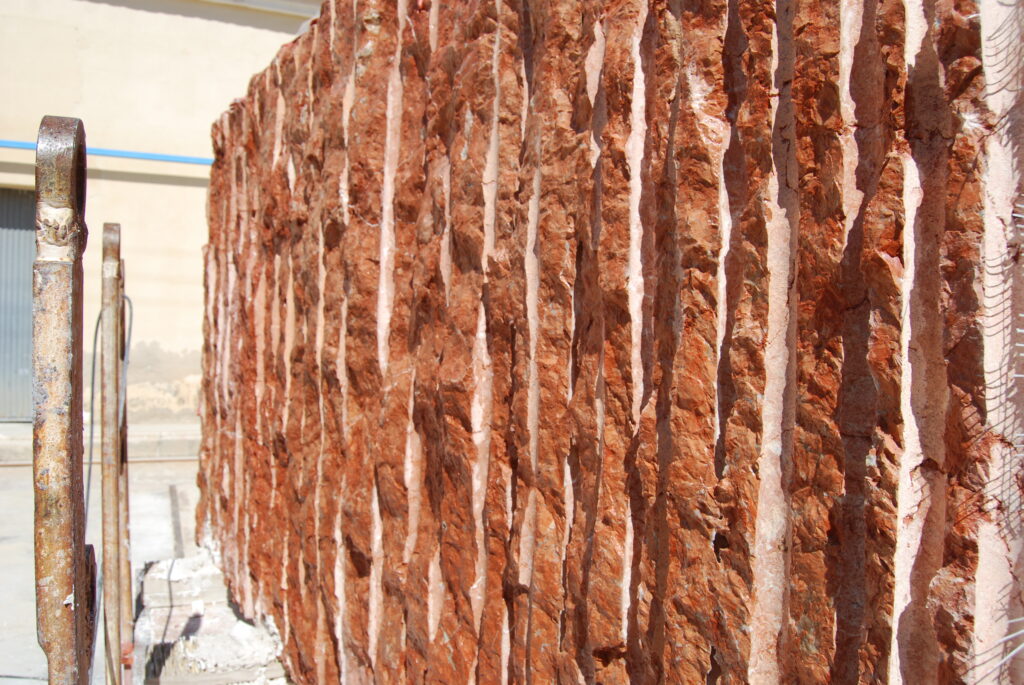
slab and format.
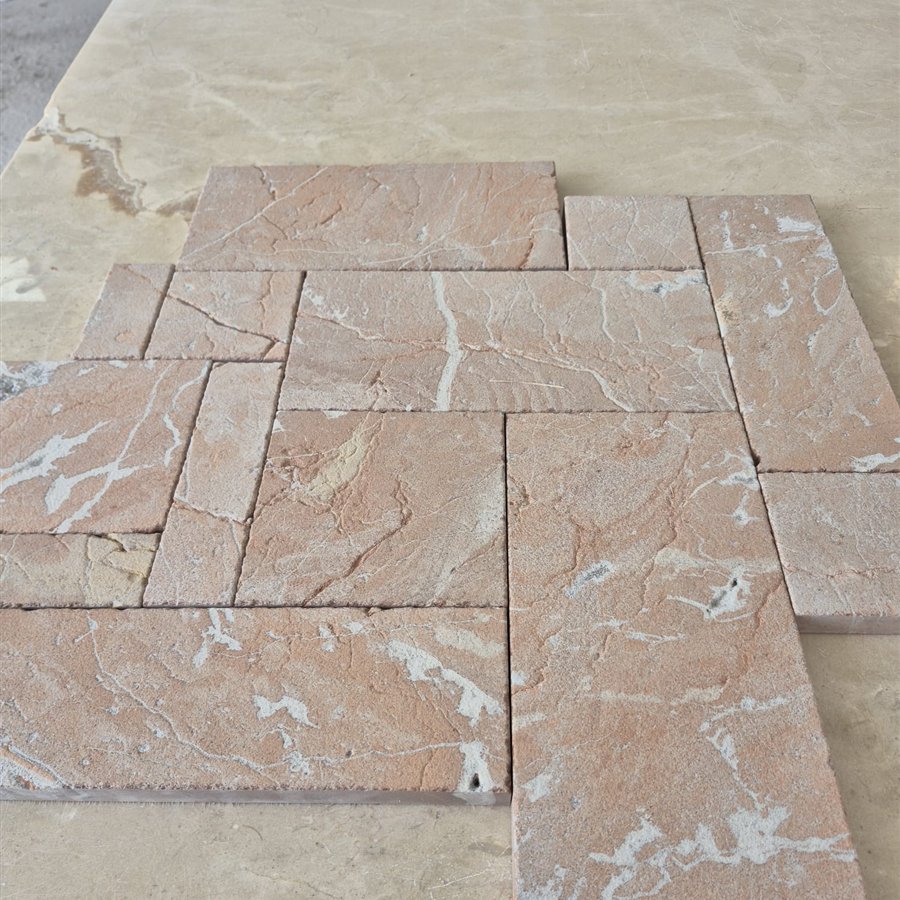
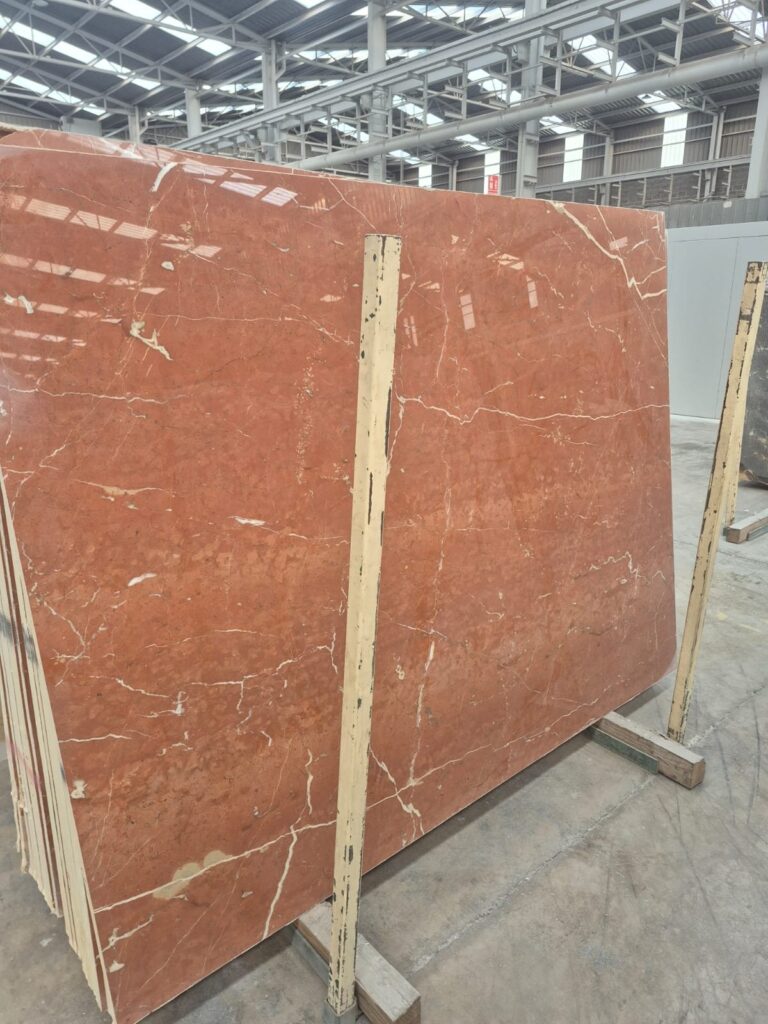
The block yields slabs for worktops, cladding and one-off pieces, or formats for paving: tiles, opus, steps, copings. And every slab is checked at the factory before it leaves.
the finish decides.
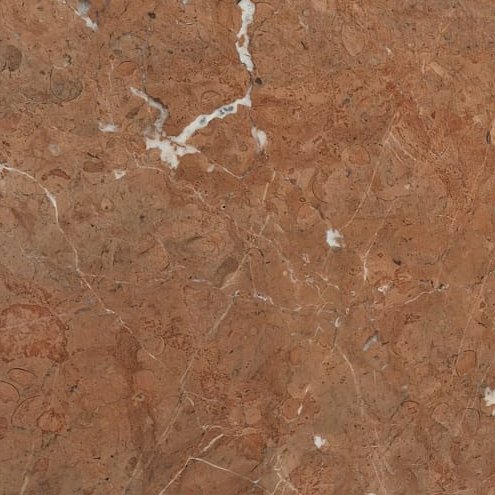
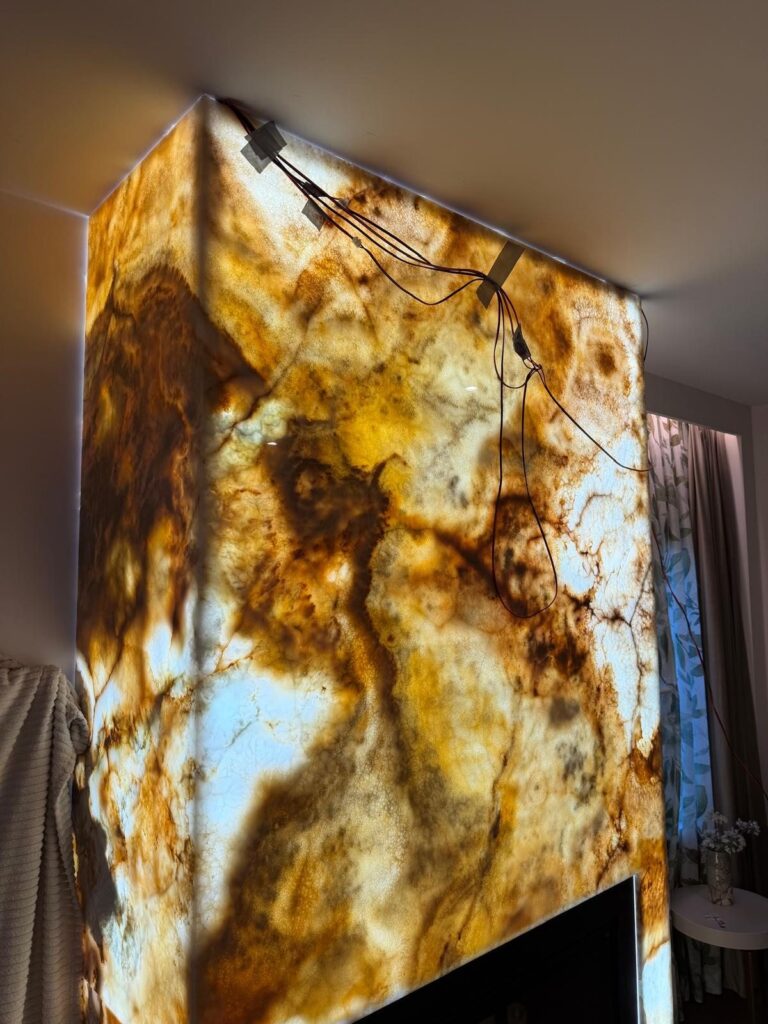
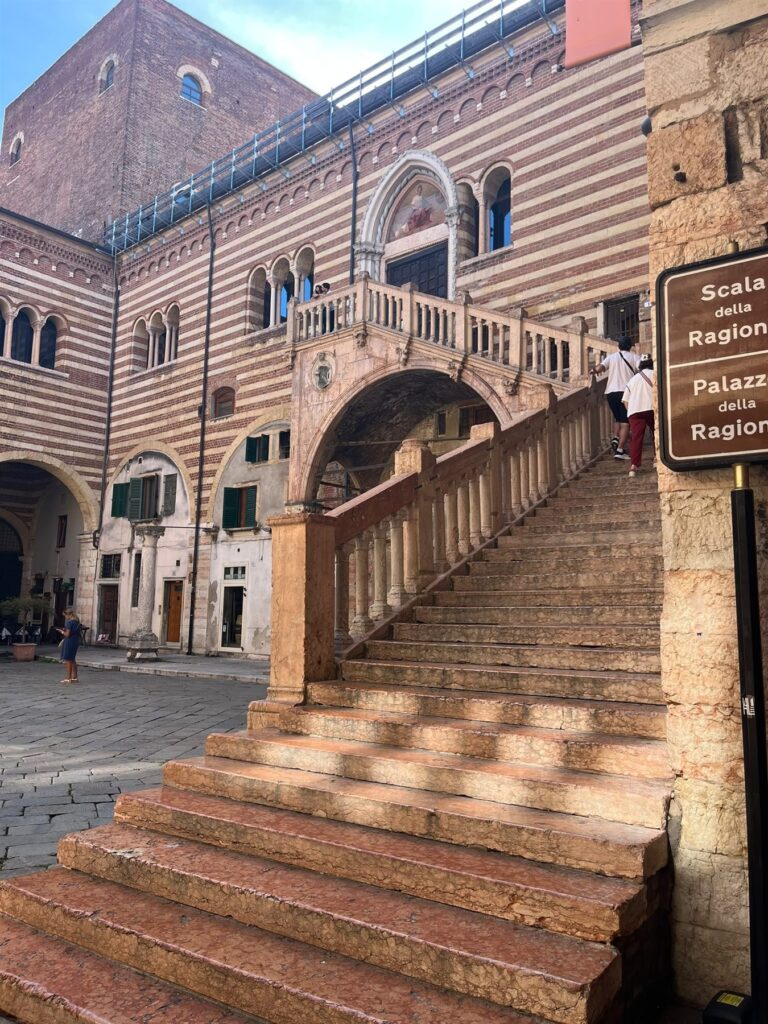
Same stone, and it looks like two. Polished, Rojo Alicante is intense and deep, with strongly marked white veining: perfect for worktops and interiors. Sandblasted or bush-hammered, it lightens to a warm, matt pink and the veining becomes a soft drawing: ideal outdoors, for paving and façades.
the house.
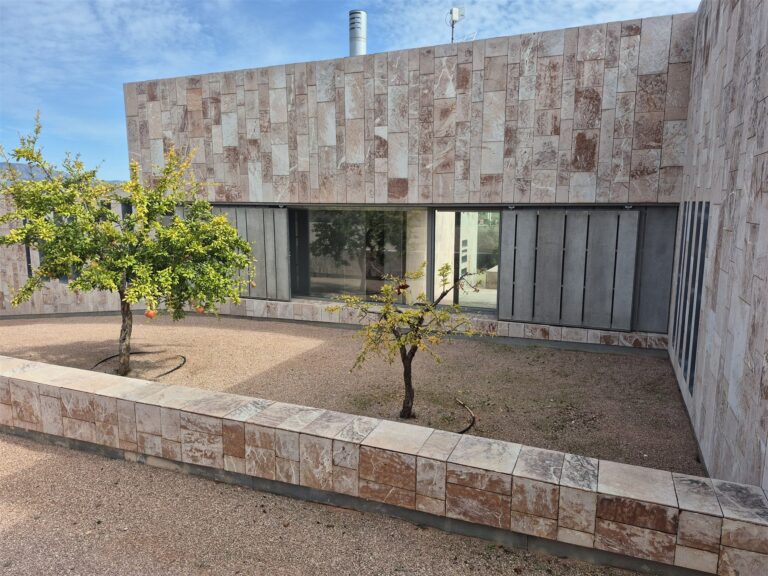
Casa Camaleón in Pinoso is the best example of the whole journey. Isaac Peral chose Rojo Alicante from the nearby quarries because, sandblasted, it has the colour of the earth around the house. He used it everywhere: floors, façades, walls and roofs.
“The house is built from the material. With another stone it would be another house.”— Isaac Peral
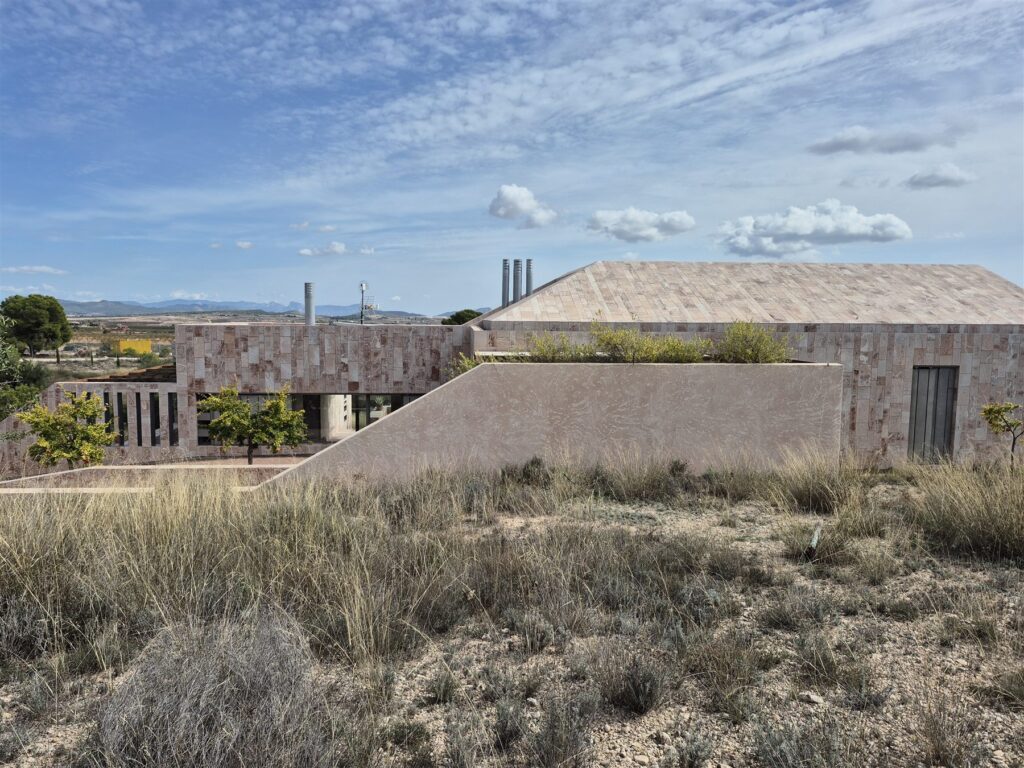
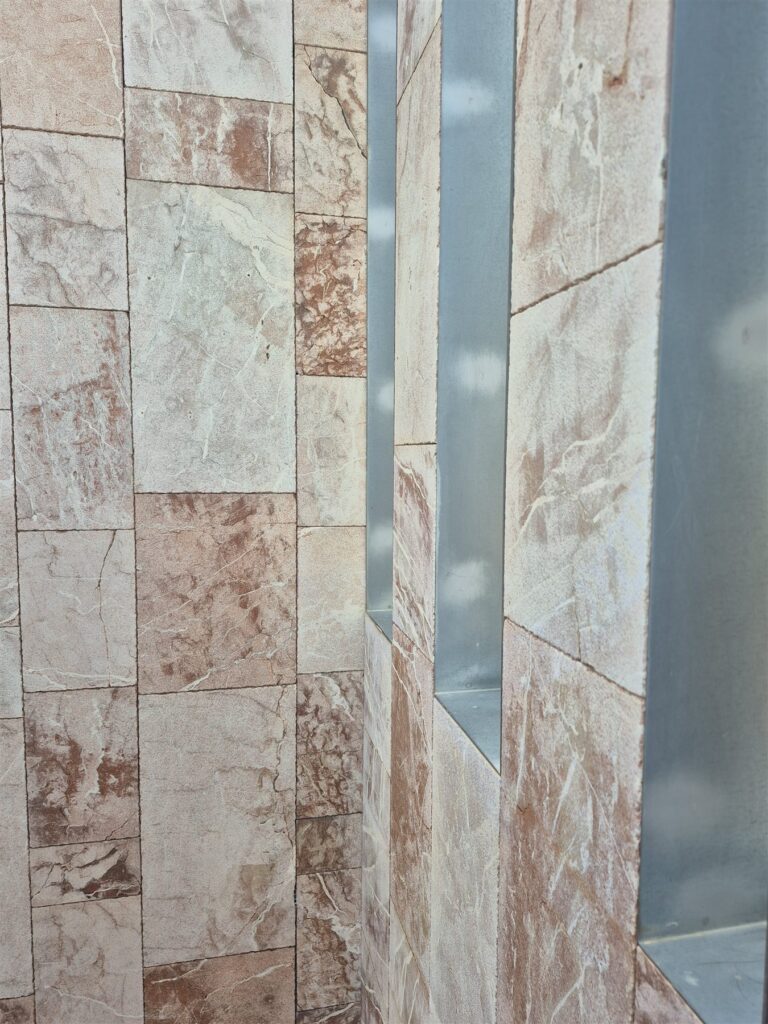
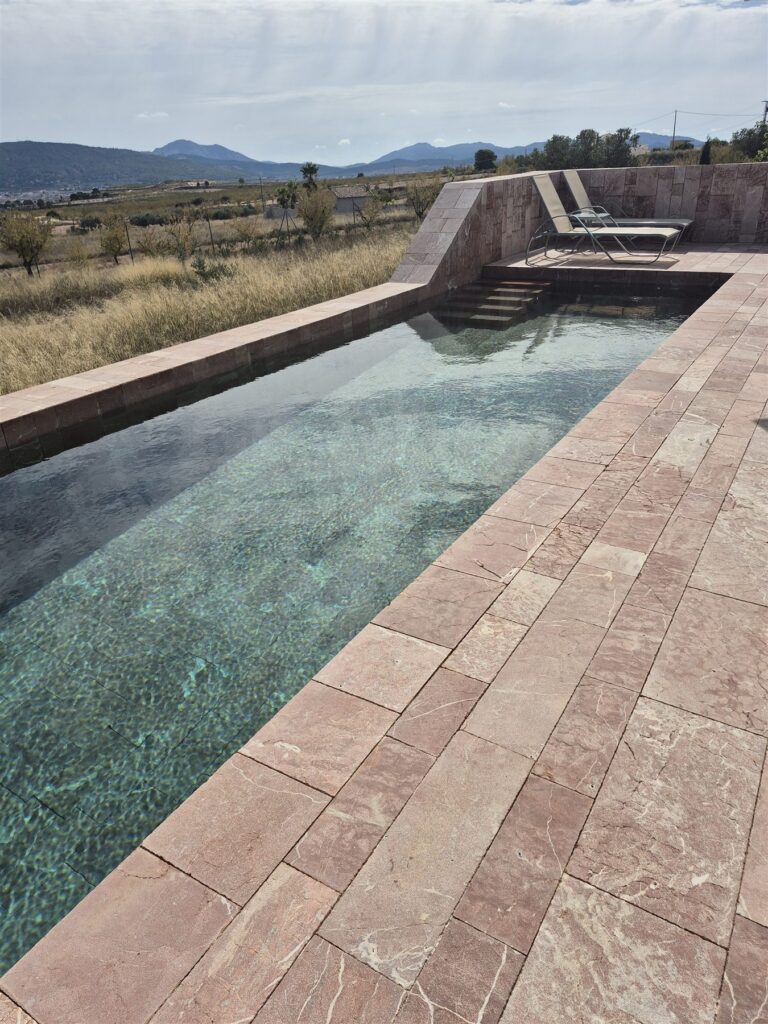
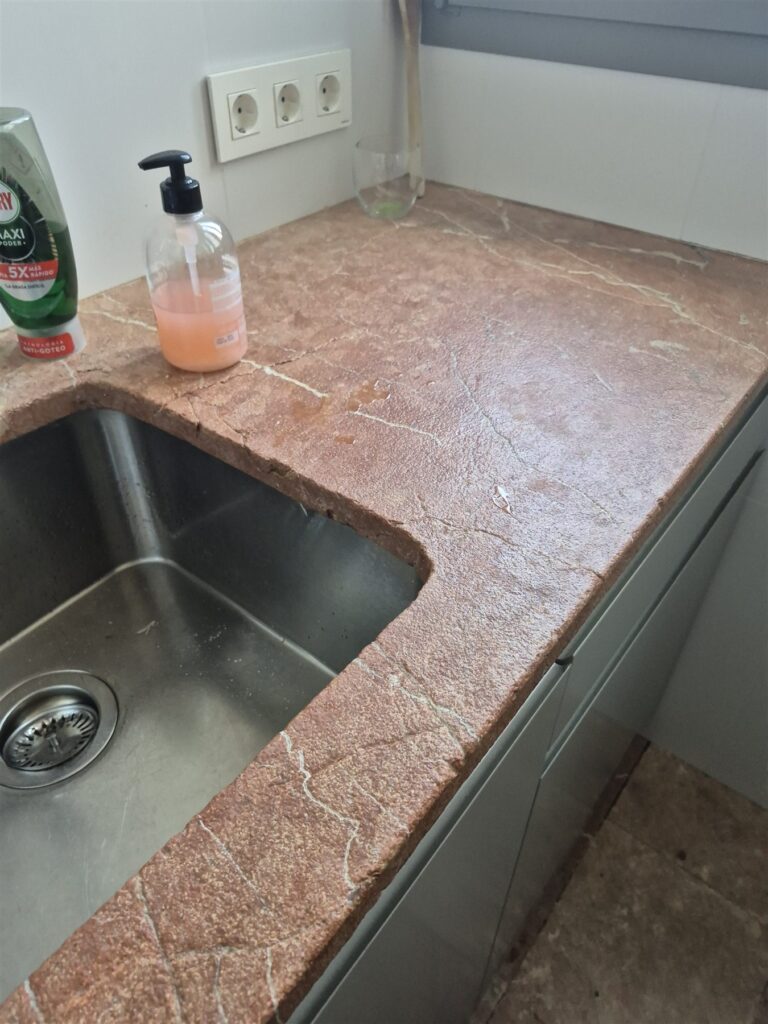
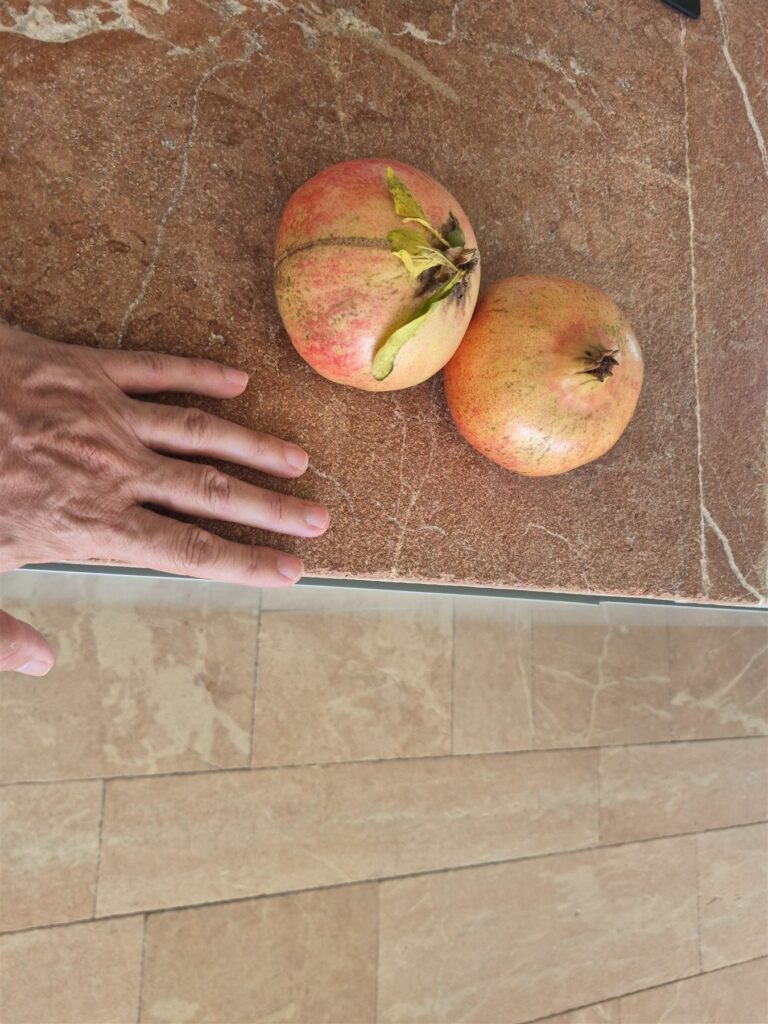
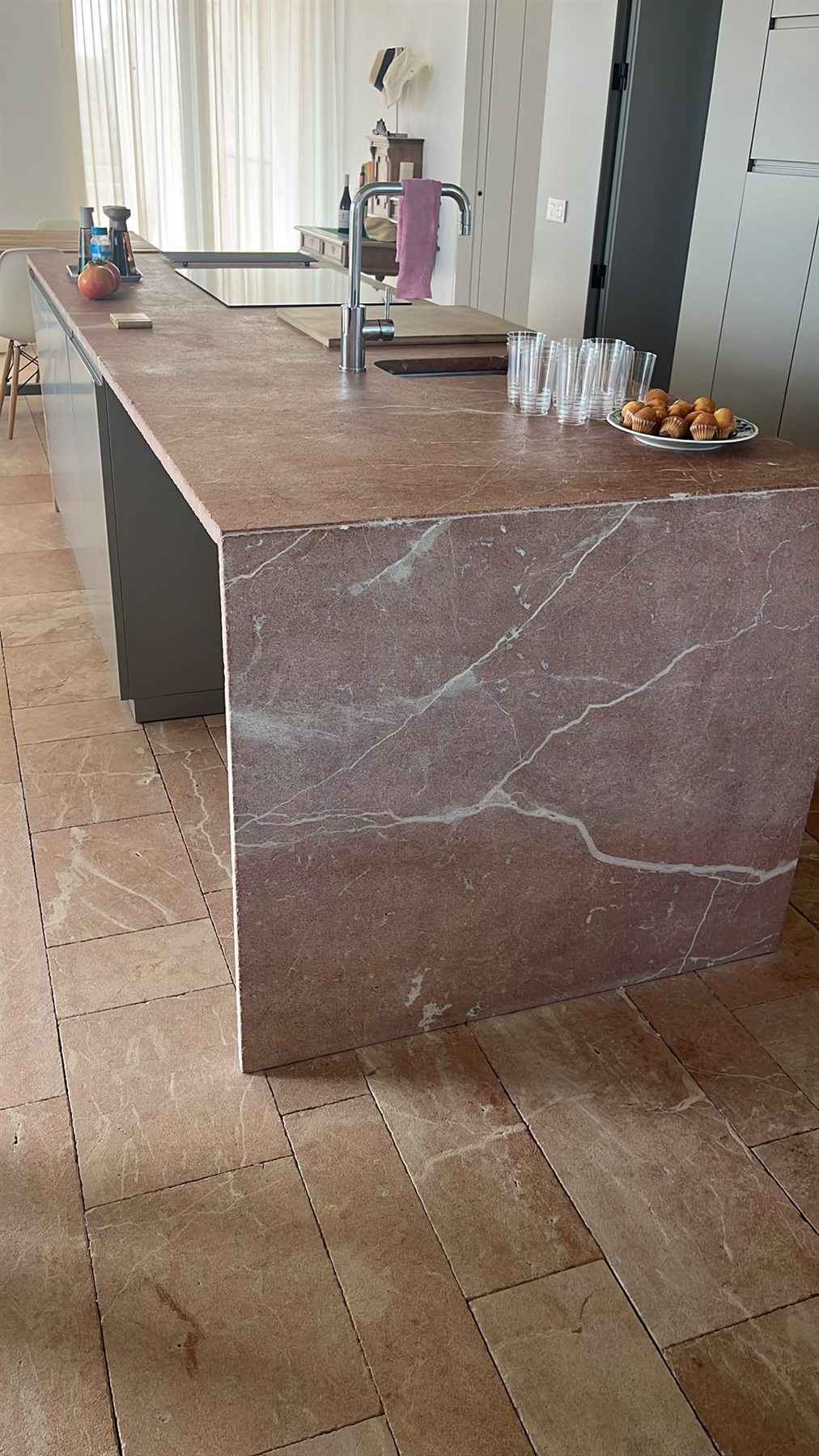
And almost ten years on, the stone has not aged: it has matured. Read the full Casa Camaleón visit →
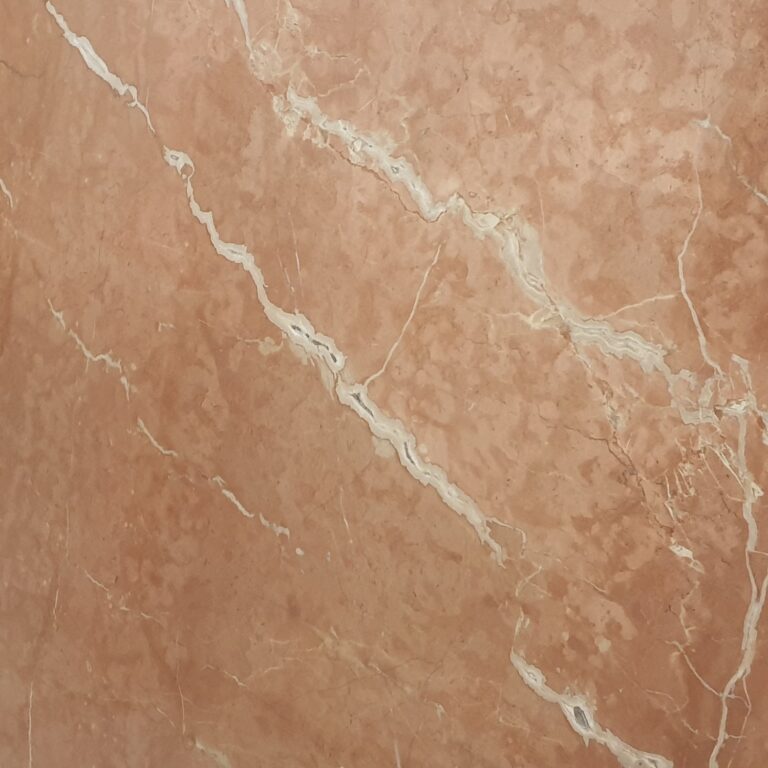 Rojo Alicantesee the stone →
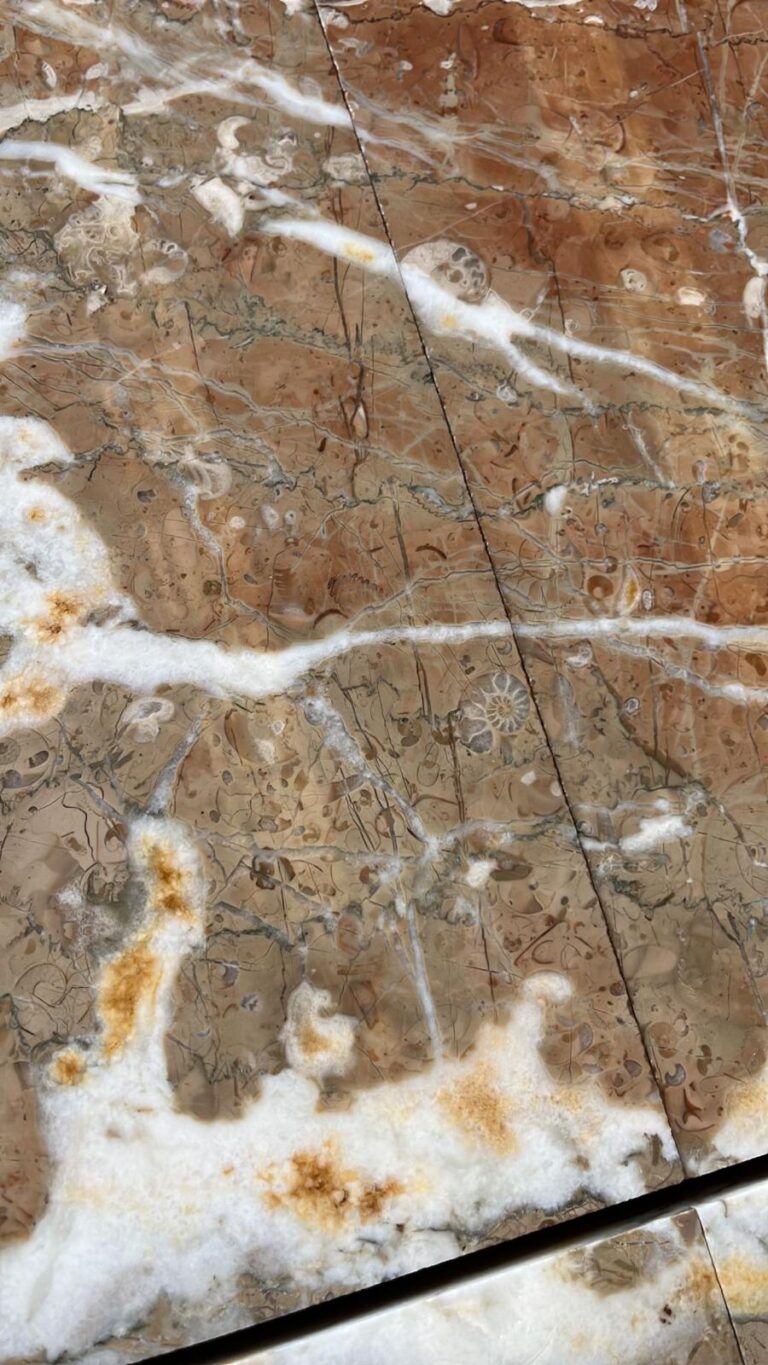 Rojo Coralitoask us
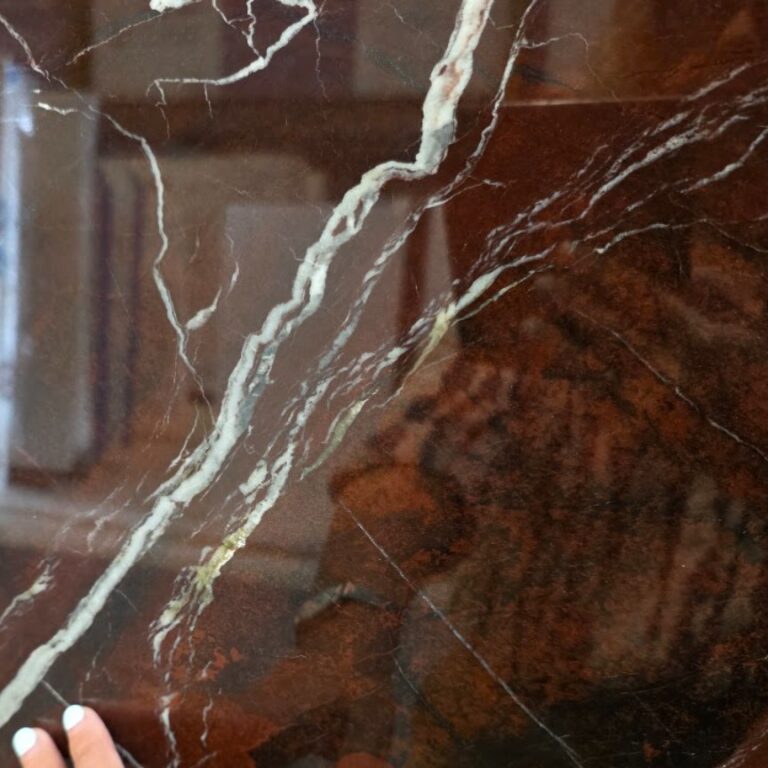 Rosso Levantoask us
nothing else.
Travel, fairs, quarries and buildings, told by an architect. We only write when there is something to tell, and you can unsubscribe at any time. By subscribing you accept our privacy policy.
bala material studio · alicante