— notebook · travel · burgos · gipuzkoa · october 2026
the north.
from block to basilica.
Three days in northern Spain with one question in mind: what happens to stone between leaving the mountain and becoming architecture. A quarry in the Valle de Mena, a walled town on the Bidasoa and a basilica that caused a scandal in the 1950s. And the rain, which in the north also works the stone.
text and photos: Ray Ródenas, architect · october 2026
the quarry.
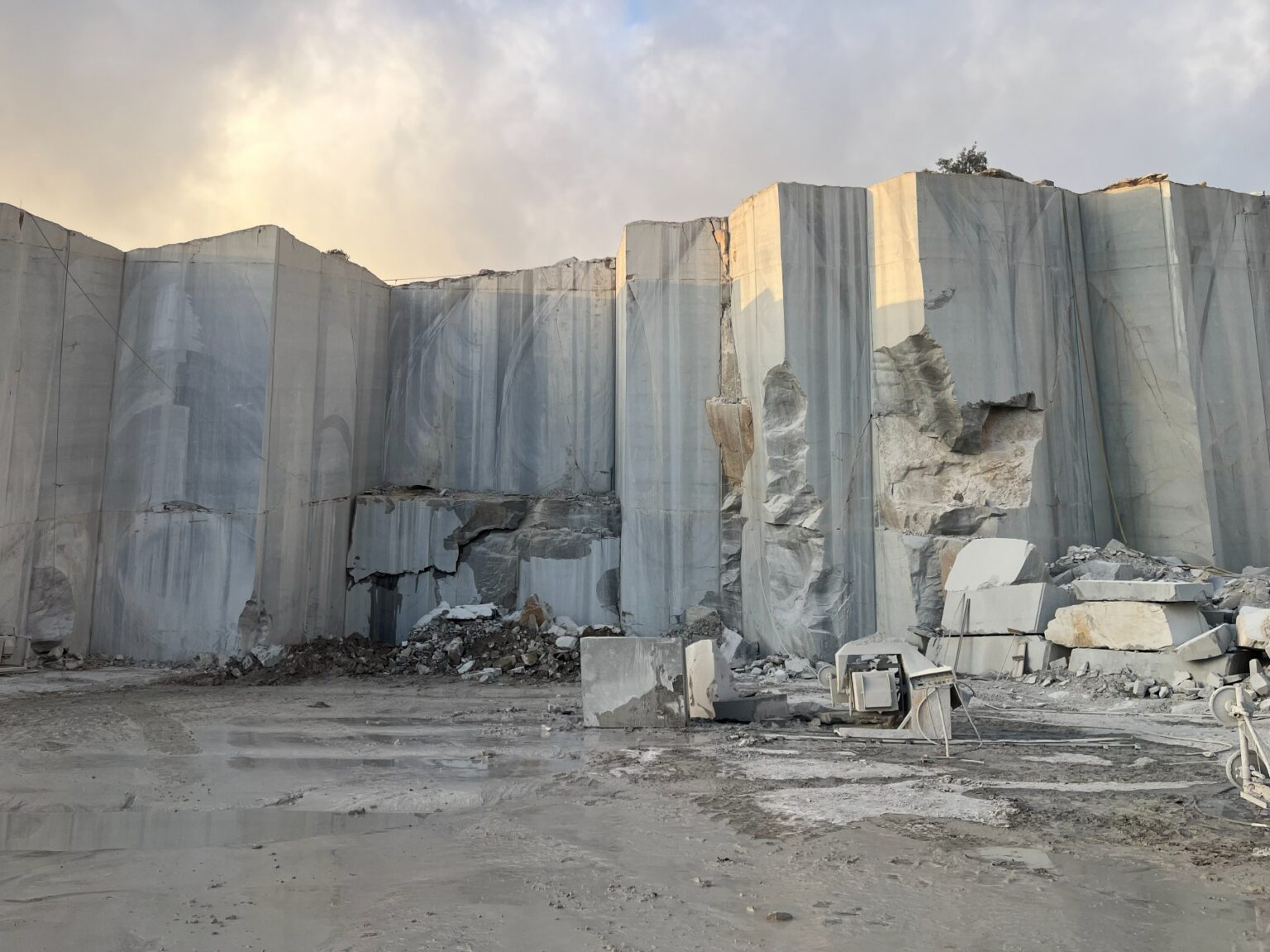
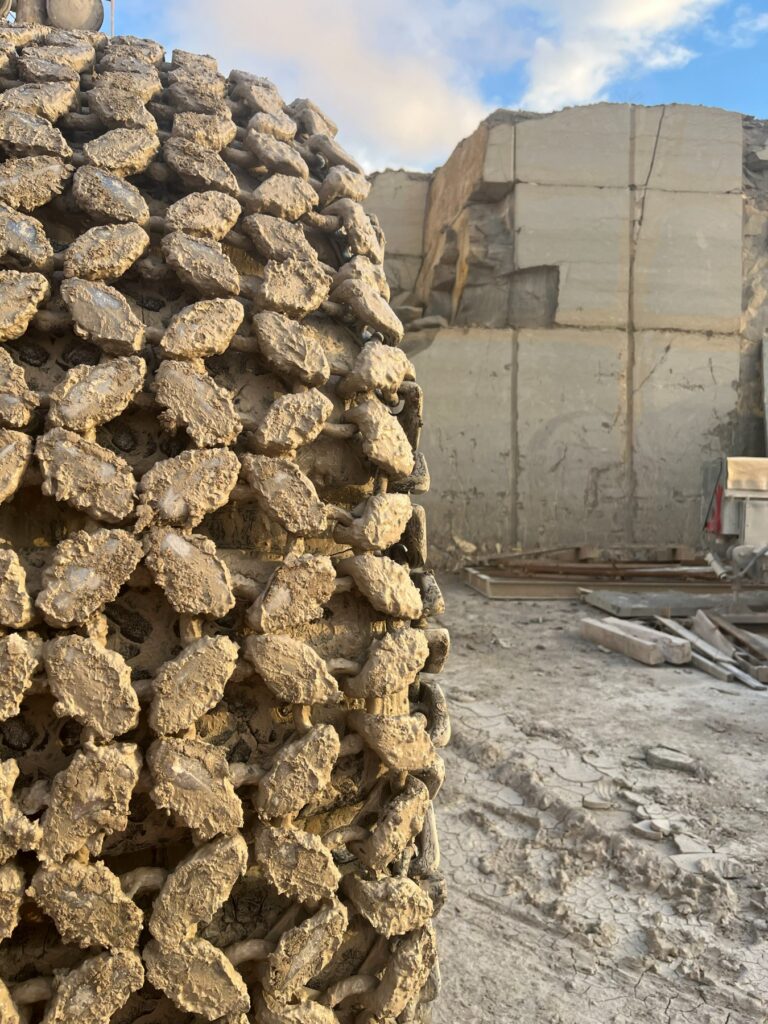
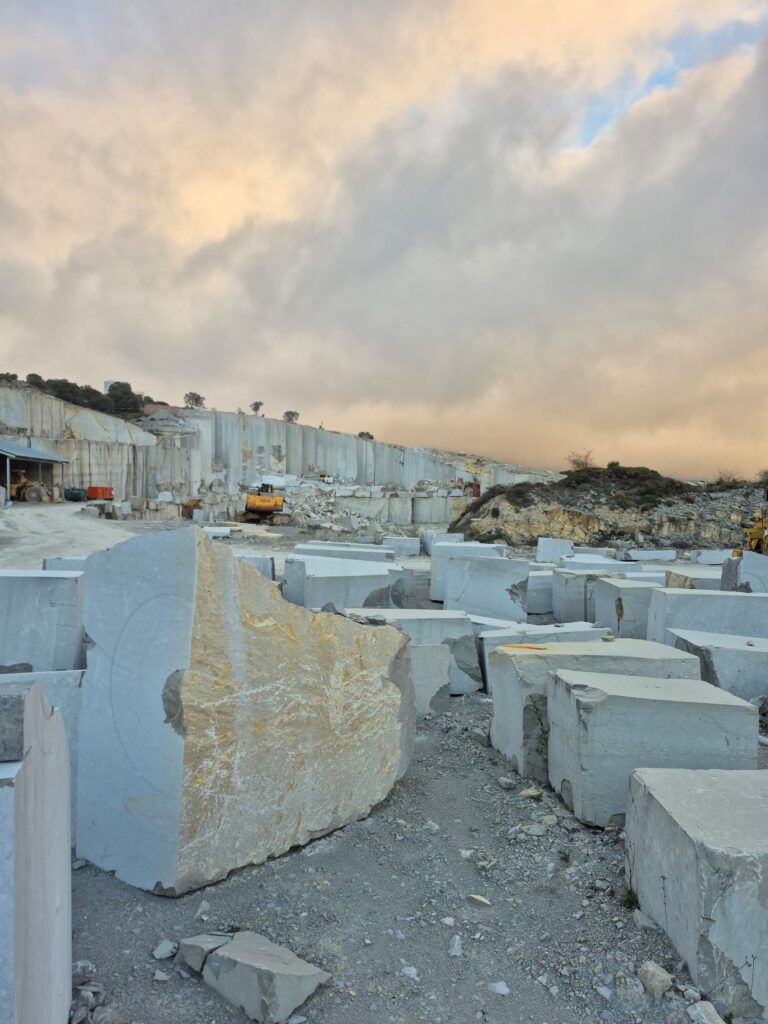
Our first stop was the Arival quarry, the grey stone company, in Castrobarto, Valle de Mena (Burgos). The owner showed us round himself, and the first impression is one of scale: the mountain opens up in vertical benches several metres high, with flat faces and clean edges. Before it becomes a façade or a floor, the stone already looks like architecture. A building in reverse: here architecture is taken away, not added.
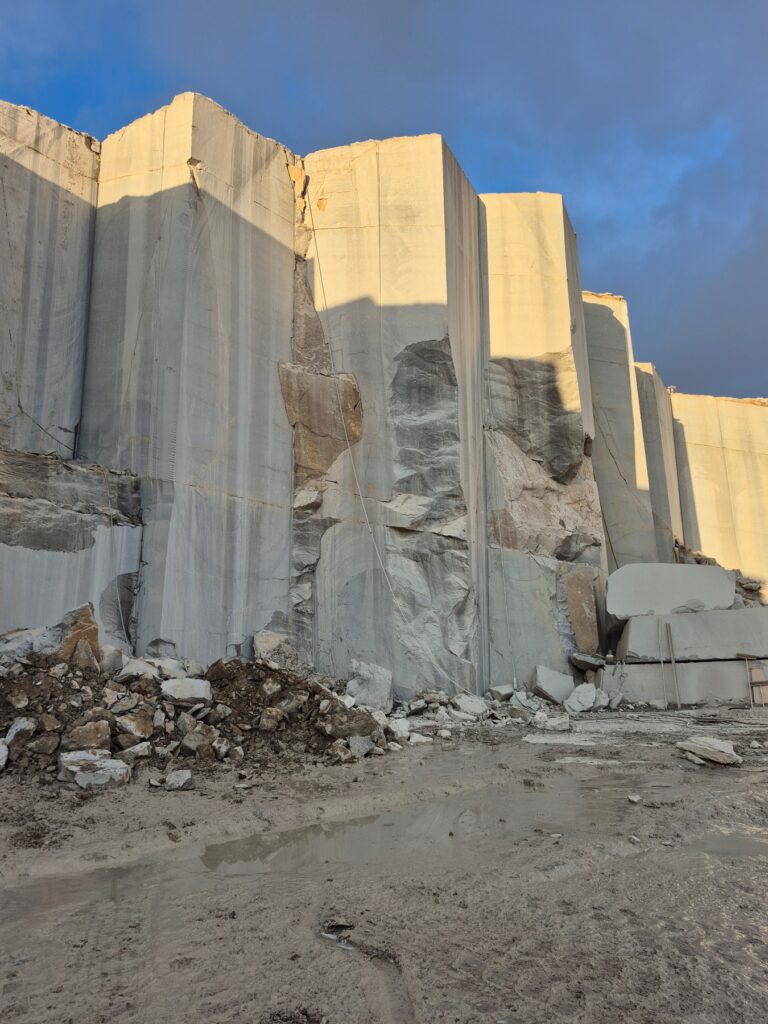
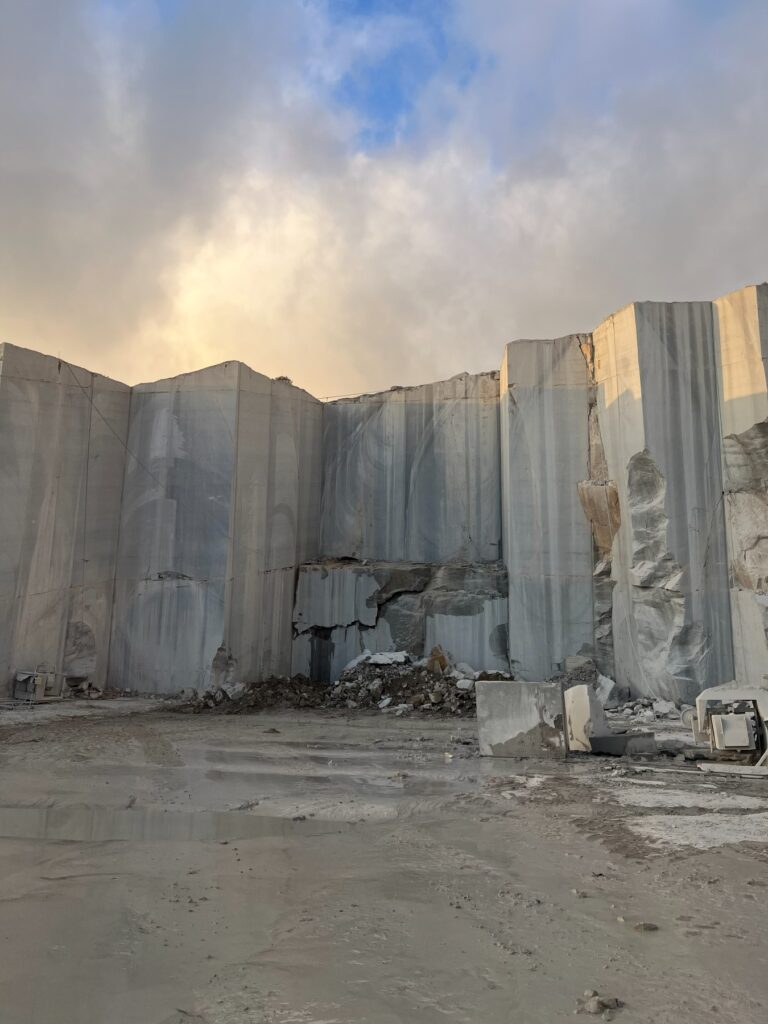
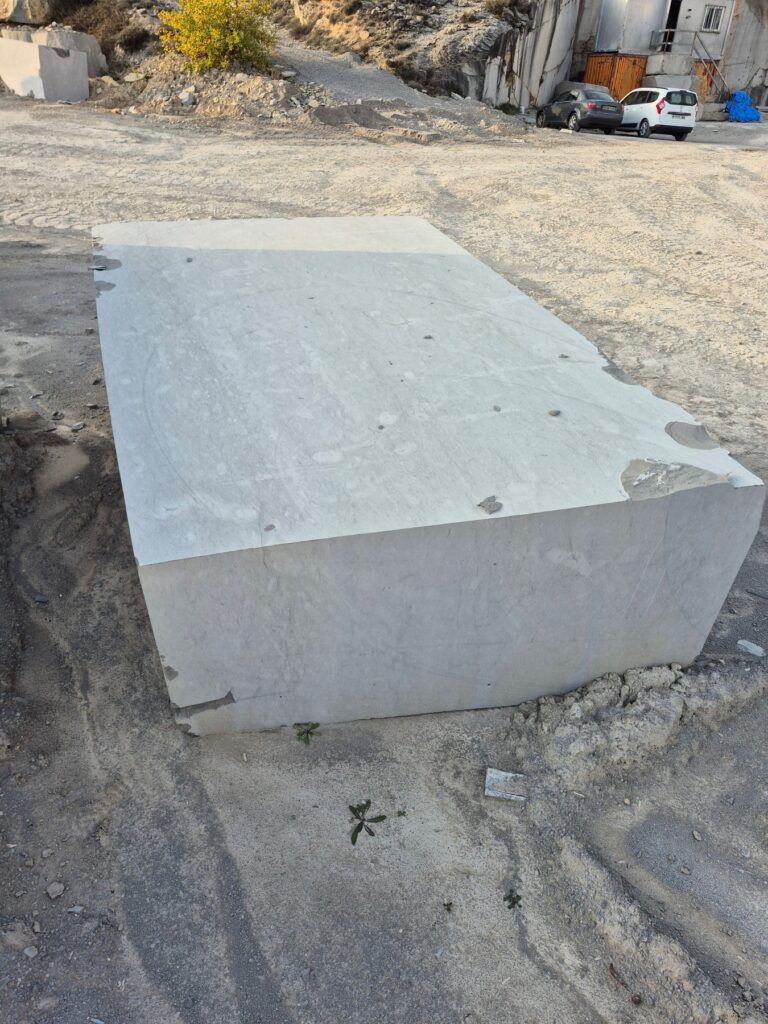
What stayed with us is not the picture of the face, but what you only see up close. The real colour of the stone shows on the fresh edge, where the block has just broken: almost black, the colour of cement. And every block carries the mark of how it was extracted, with the drill traces still on its face.
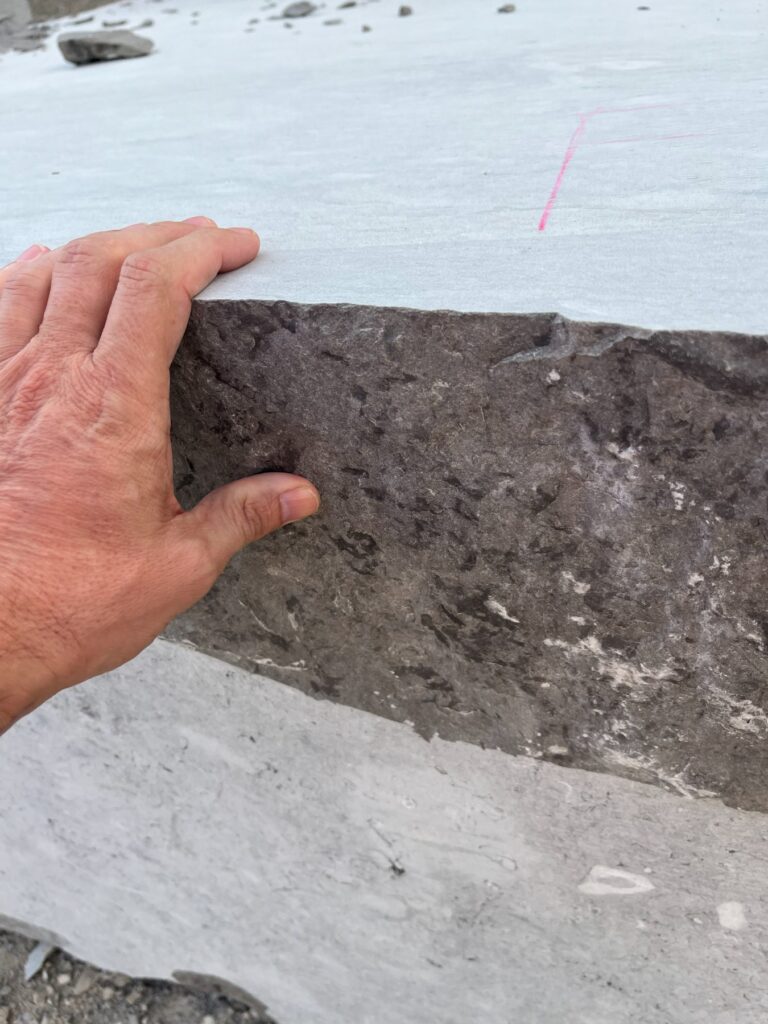
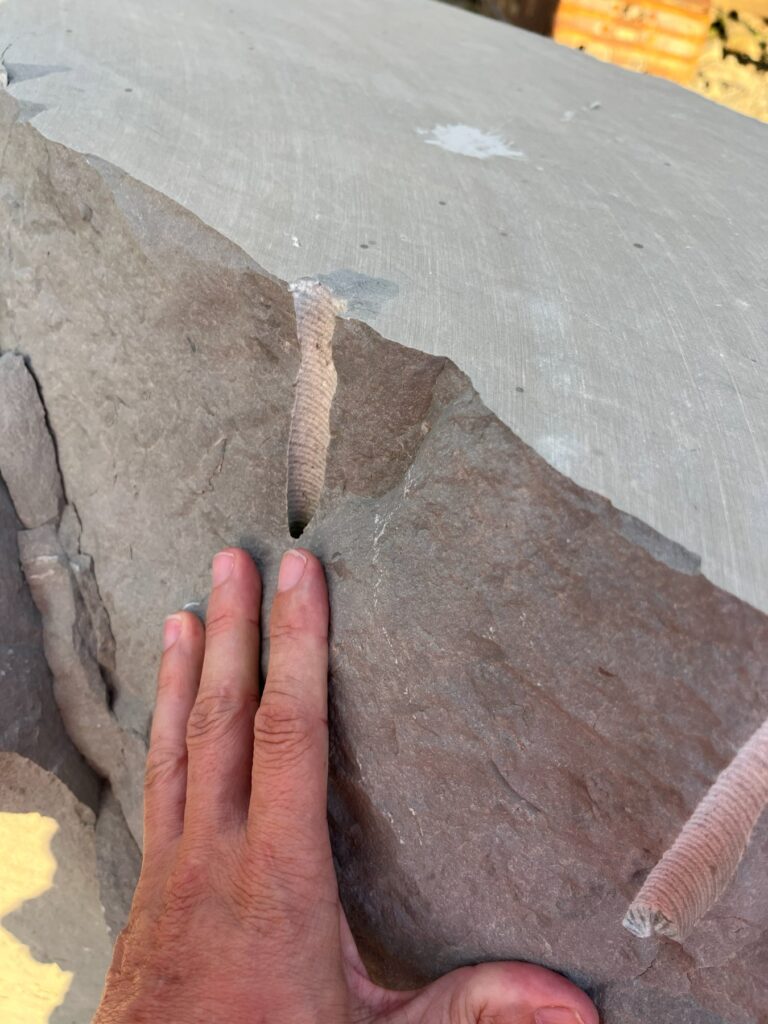
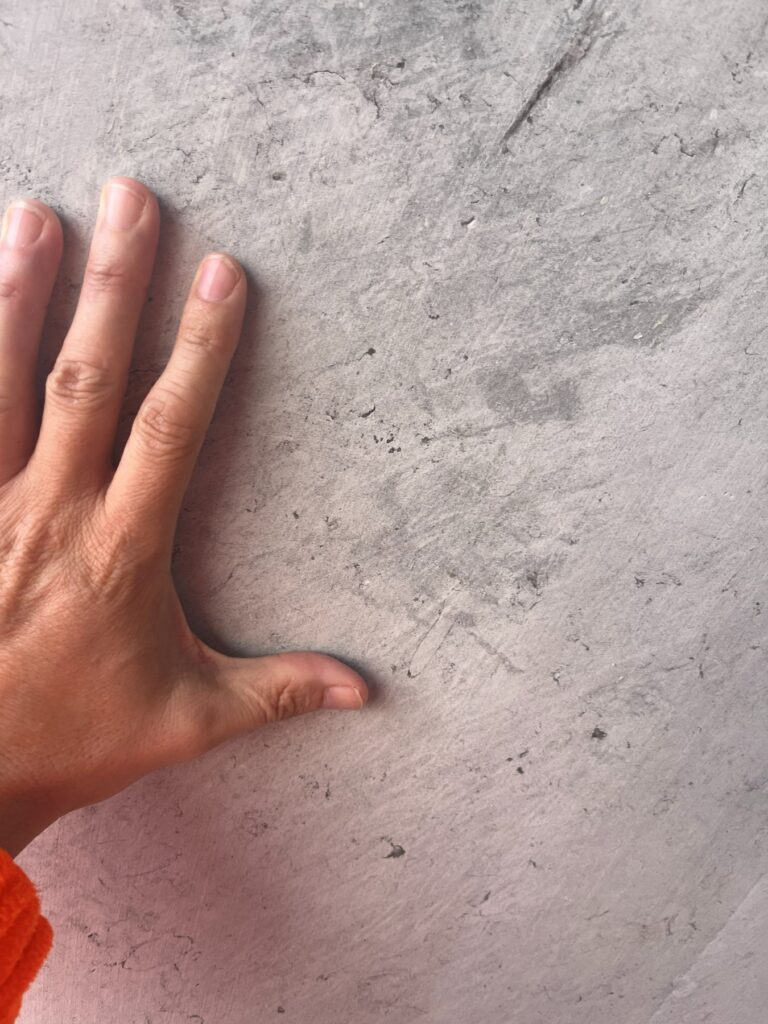
The block yard is where a project is decided: colour, veining and size, before the material reaches the workshop. That is why we go to the quarry. A catalogue photo cannot show how a stone changes from one block to the next; the block can.
the walls.
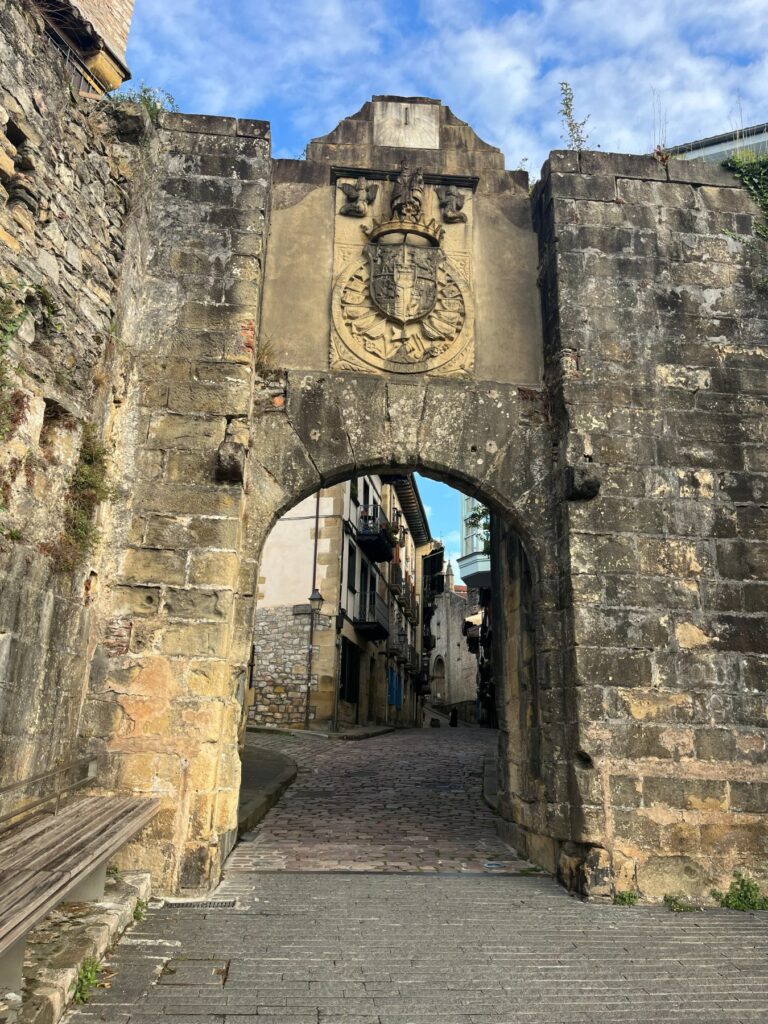
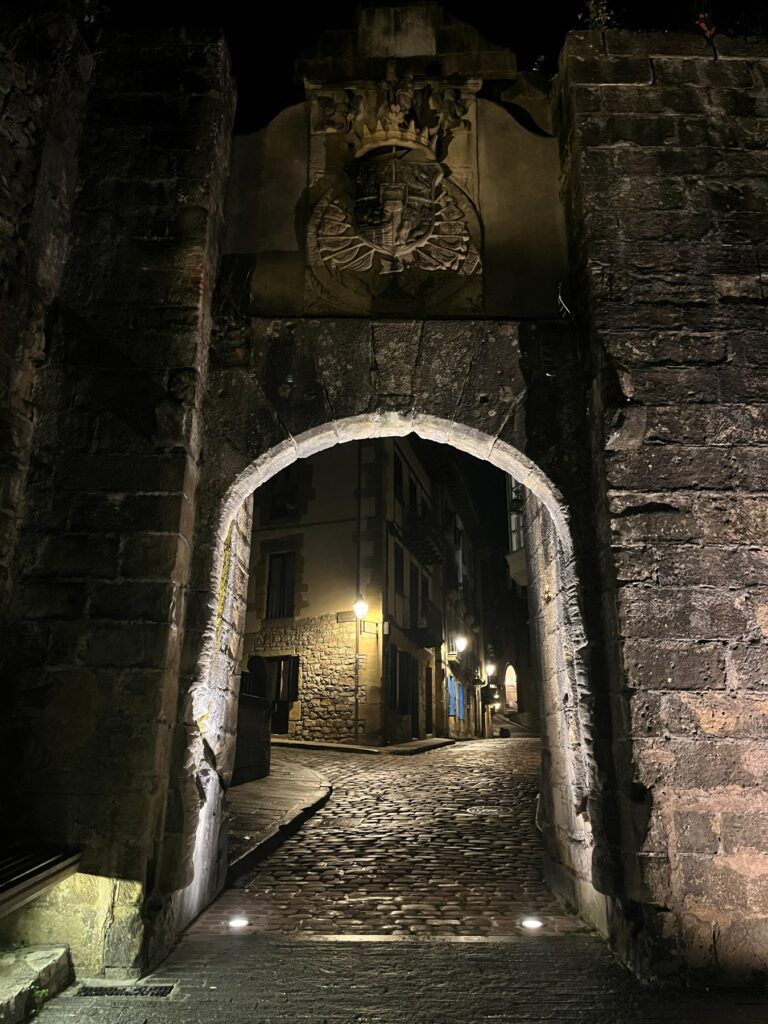
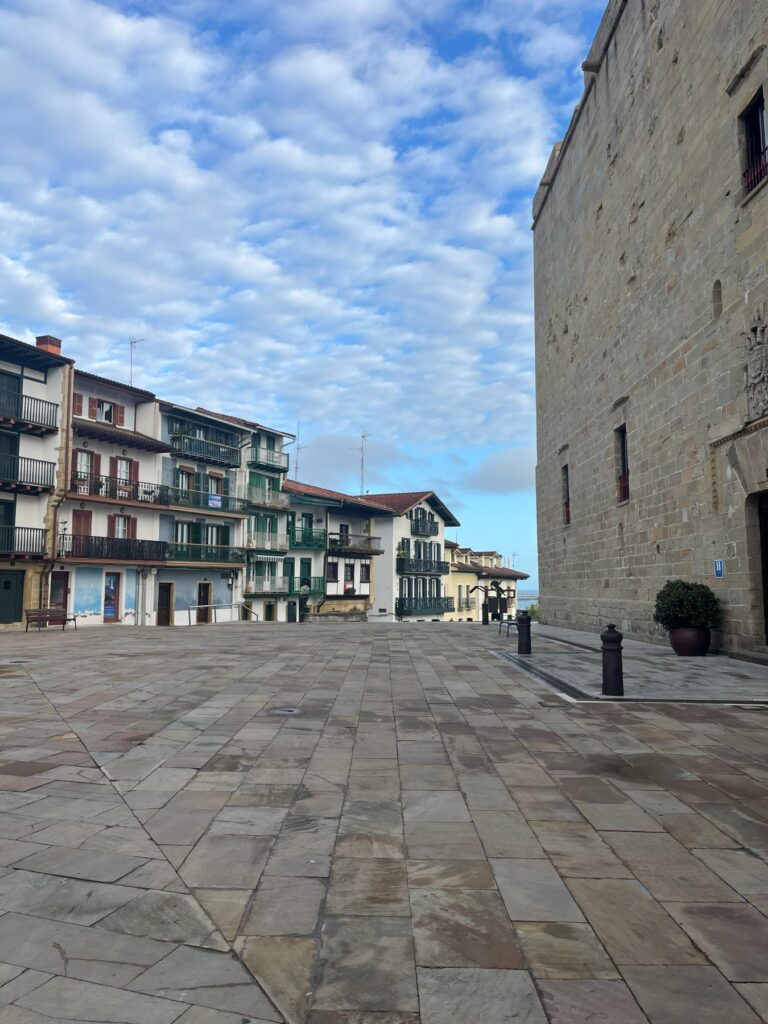
From Burgos we drove up to Hondarribia, at the mouth of the Bidasoa. The town keeps its walls, built in sandstone from Mount Jaizkibel, just a few kilometres away. You enter through the Santa María gate, with the town’s coat of arms dated 1694, and above it lies the Plaza de Armas, facing the castle of Charles V, now a Parador hotel.
We arrived at night in the rain and came back the next morning in the sun. Same places, same stone, and they look like different ones. By day the sandstone looks golden and matt; wet and in raking light, it darkens and shows all its texture.
In the Plaza de Armas the floor does the same. By day, the large slabs go almost unnoticed. Wet, they change colour: reddish, ochre, greenish. Rain is the best polish there is, and the cheapest.
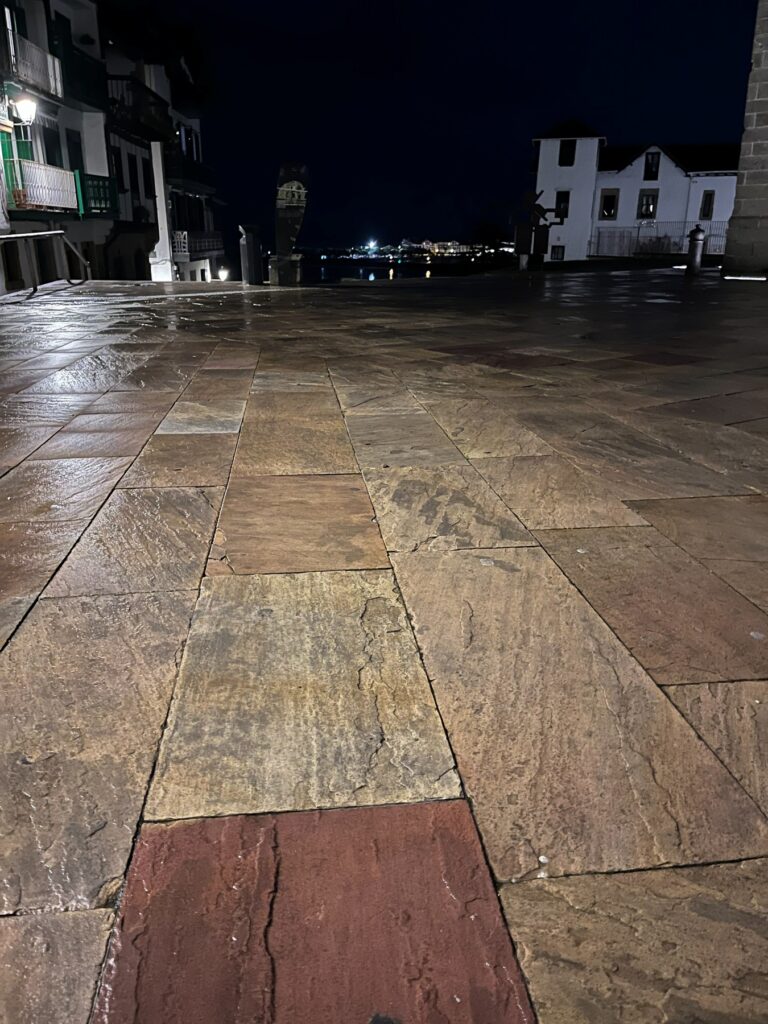
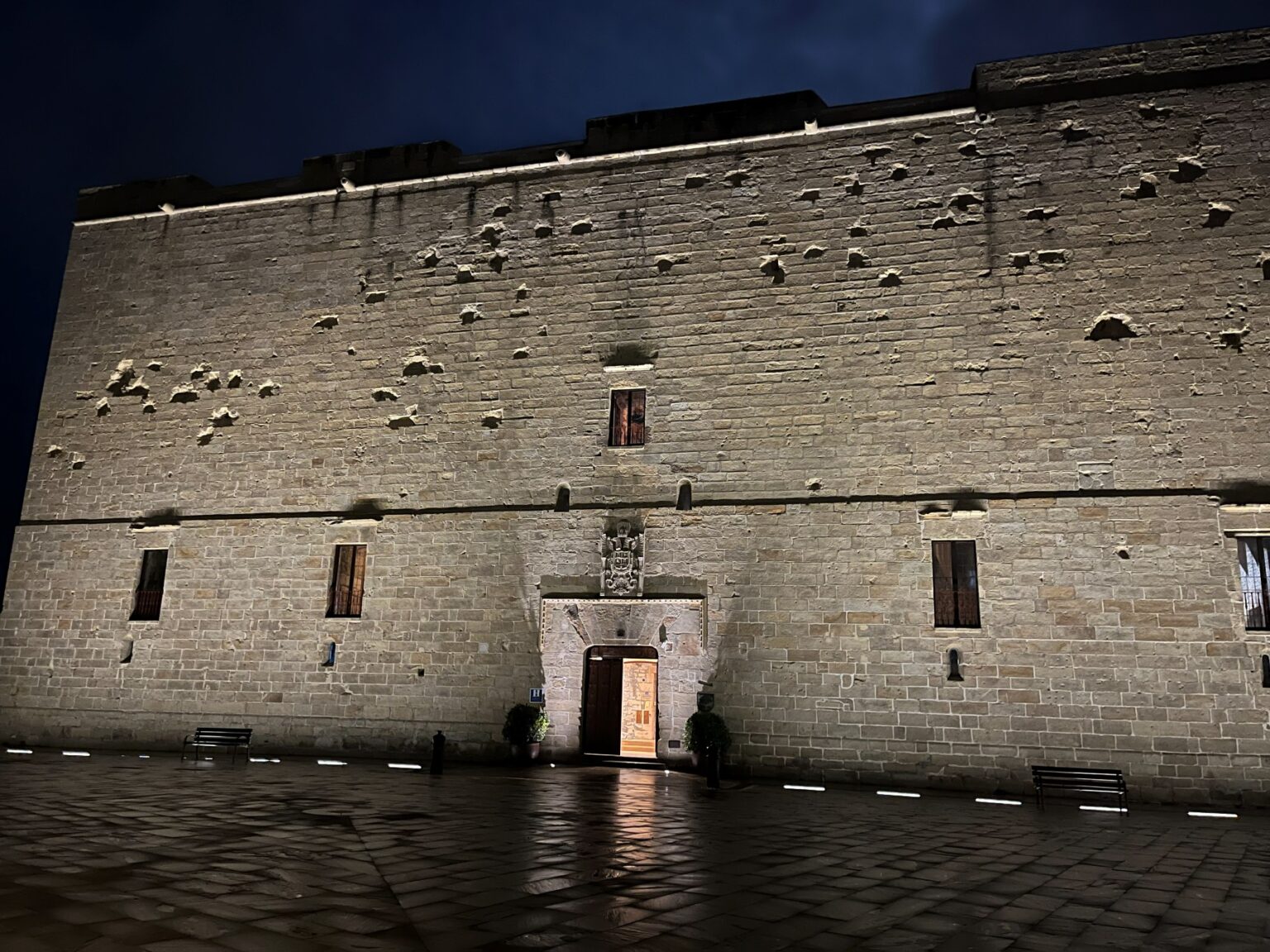
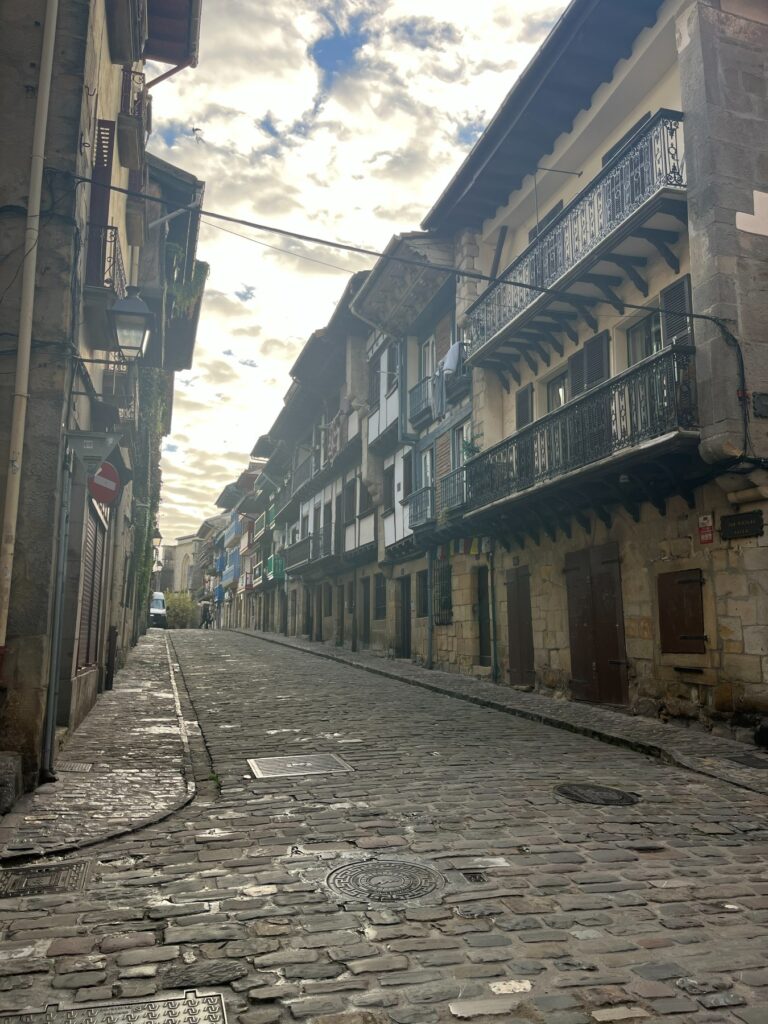
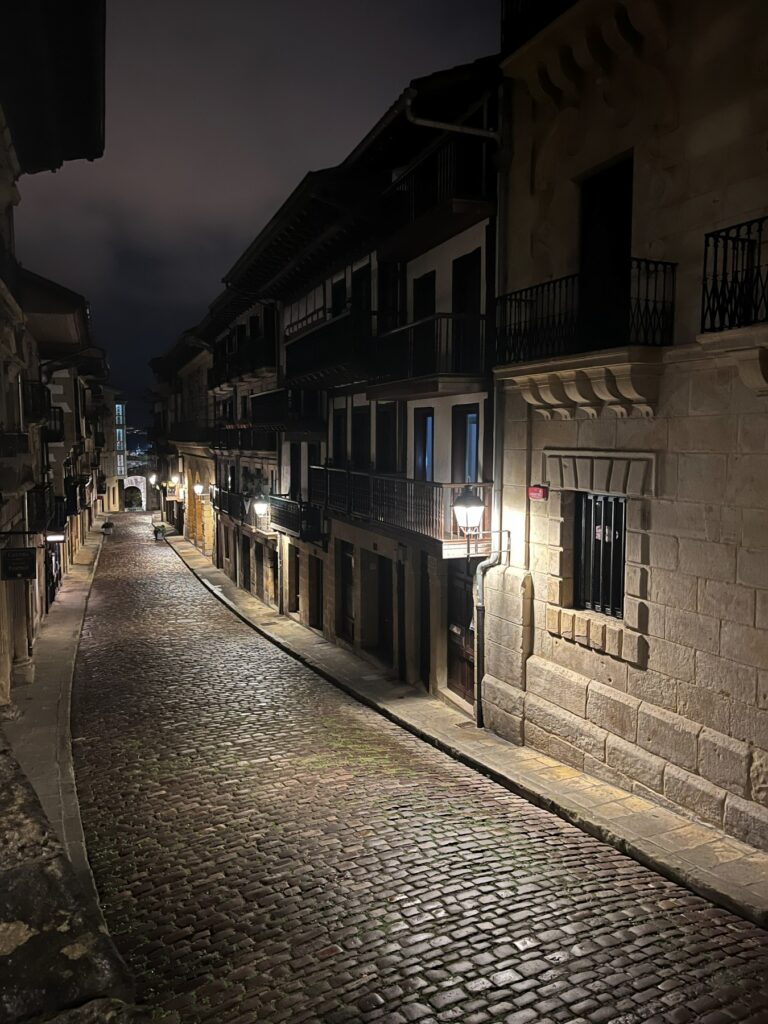
In the streets of the old town, by day the colour of the wooden balconies takes over. At night, with the cobbles wet, the wood fades and the stone shines. And the ground has its own details: strips of stone stitching the cobbles together and marking the way.
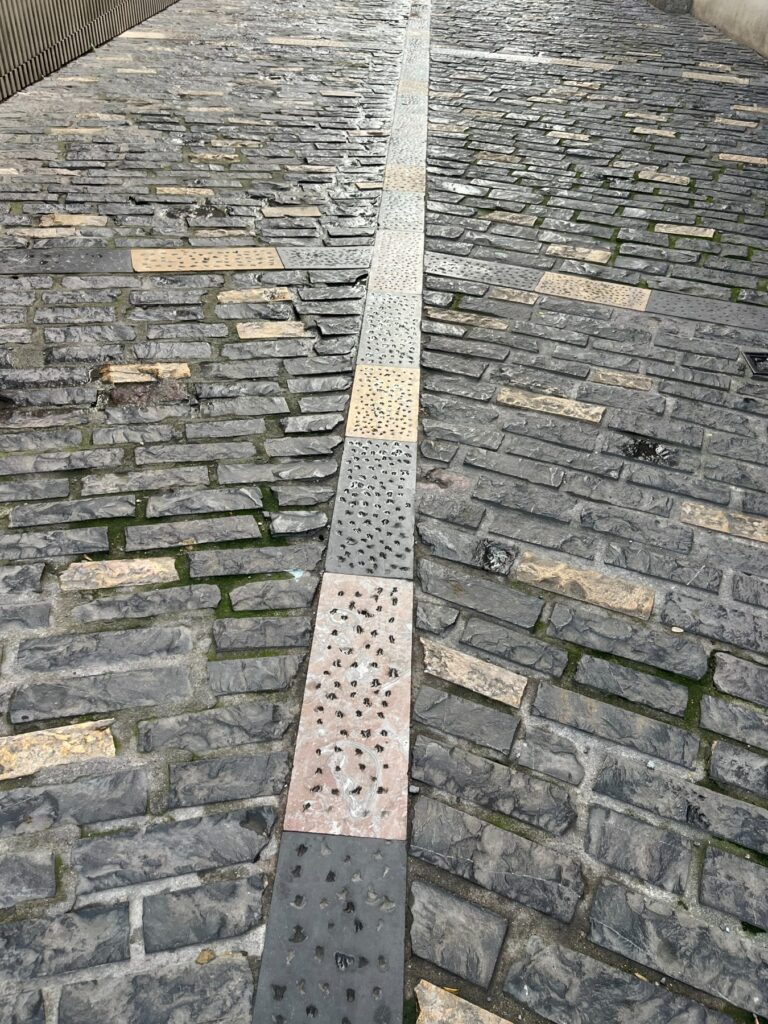
“Choosing a stone also means thinking about how it will look in the rain.”— what we take away
arantzazu.
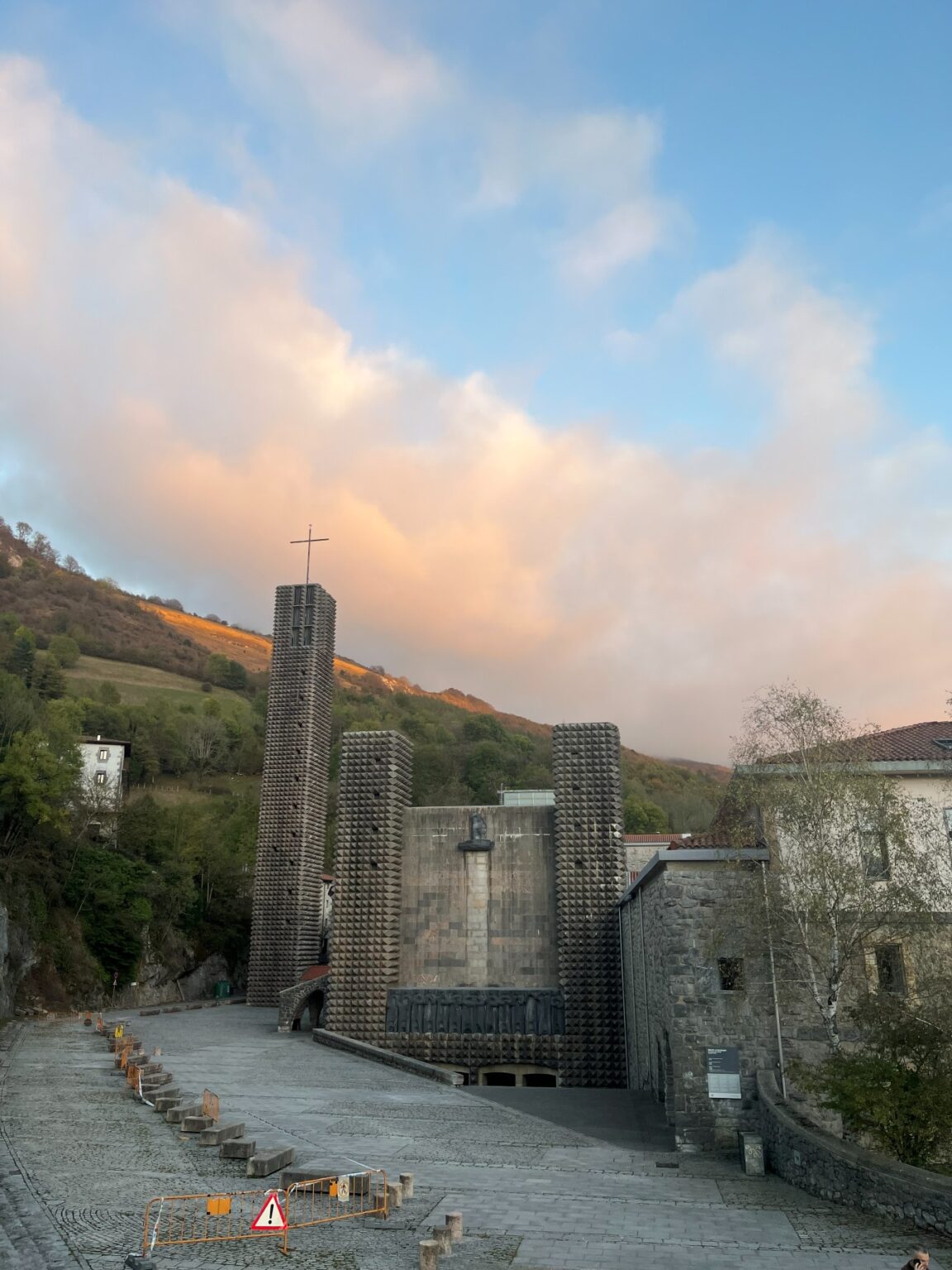
Our last stop was the sanctuary of Arantzazu, in Oñati, perched above a gorge. In 1950 the Franciscans decided to build a new basilica, designed by Francisco Javier Sáenz de Oiza and Luis Laorga. The project was so daring that the controversy halted the decorative work for years. The architecture was already standing, but its artistic expression would take much longer to complete.
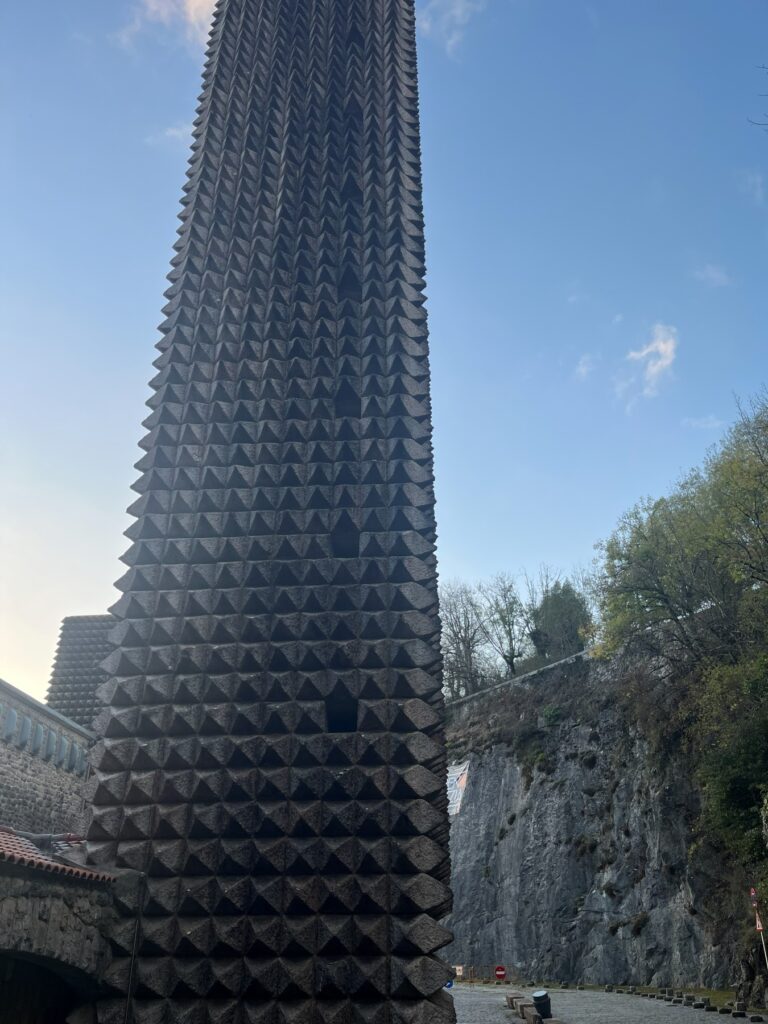
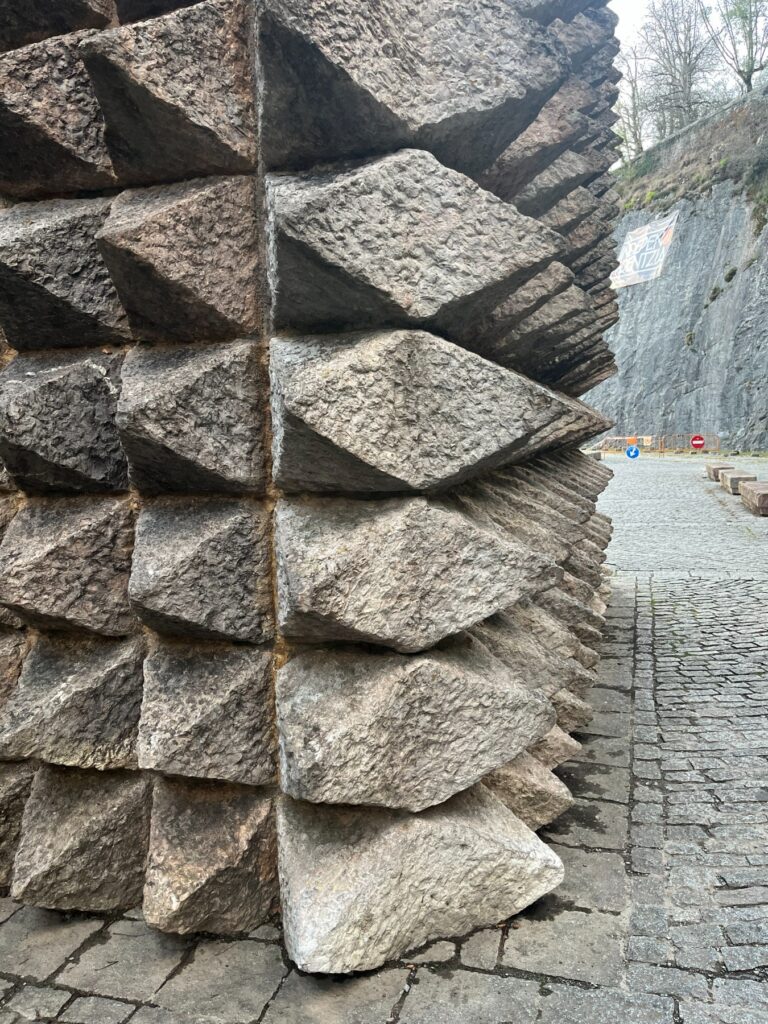
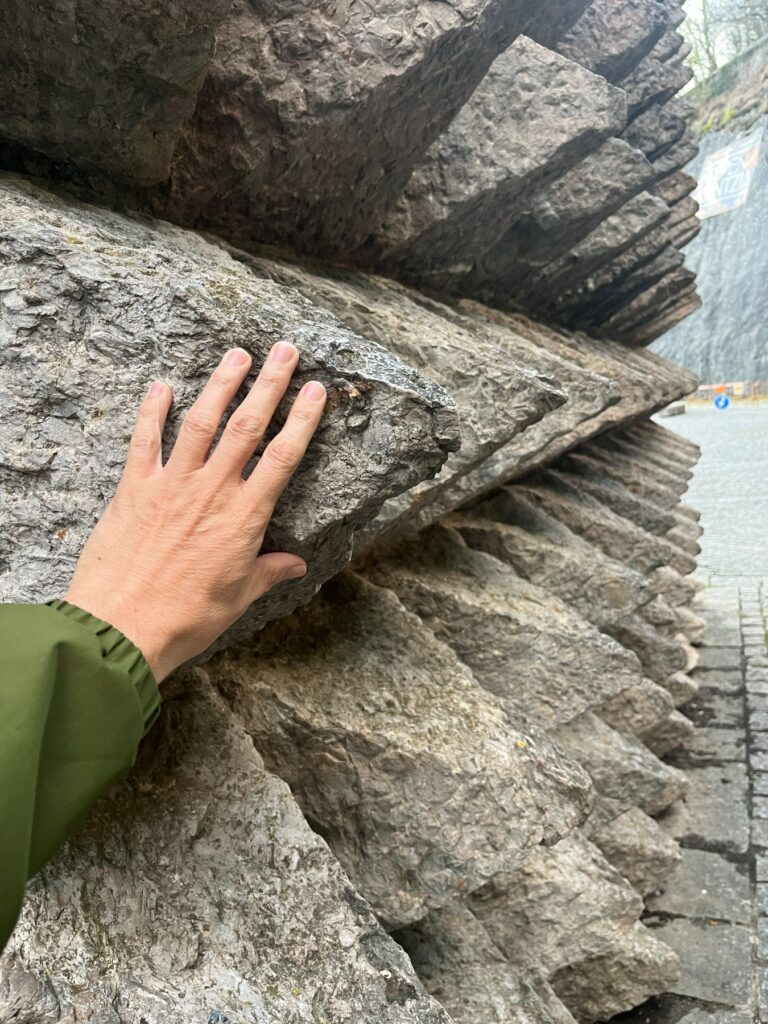
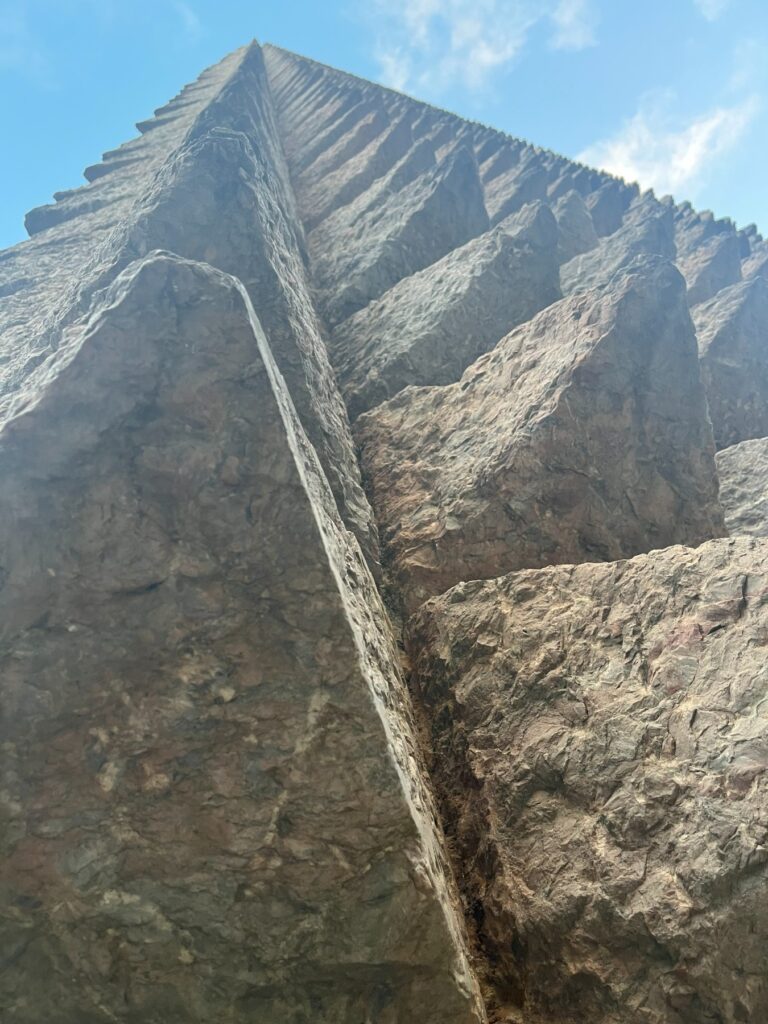
The façade is plain stone, framed by two towers, like the 44-metre side bell tower. The towers are built of limestone blocks carved in a diamond-point pattern, a reference to the hawthorn where, according to legend, the Virgin appeared. From afar it reads as a texture; up close, every block is a stone pyramid you cannot touch without feeling it.
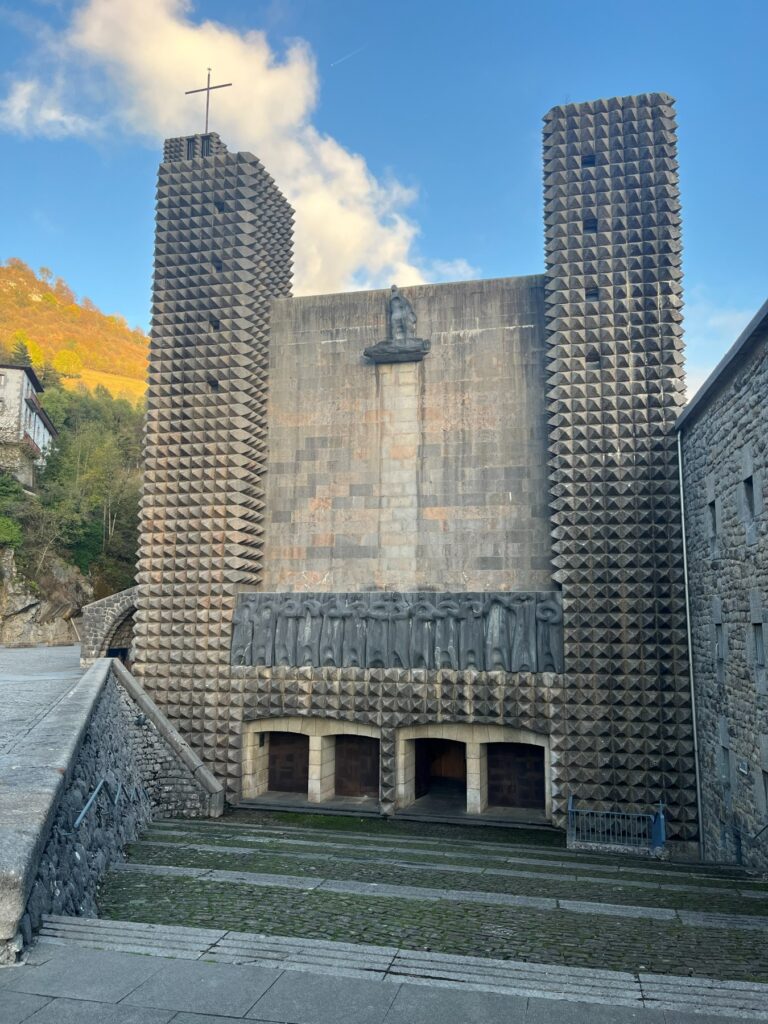
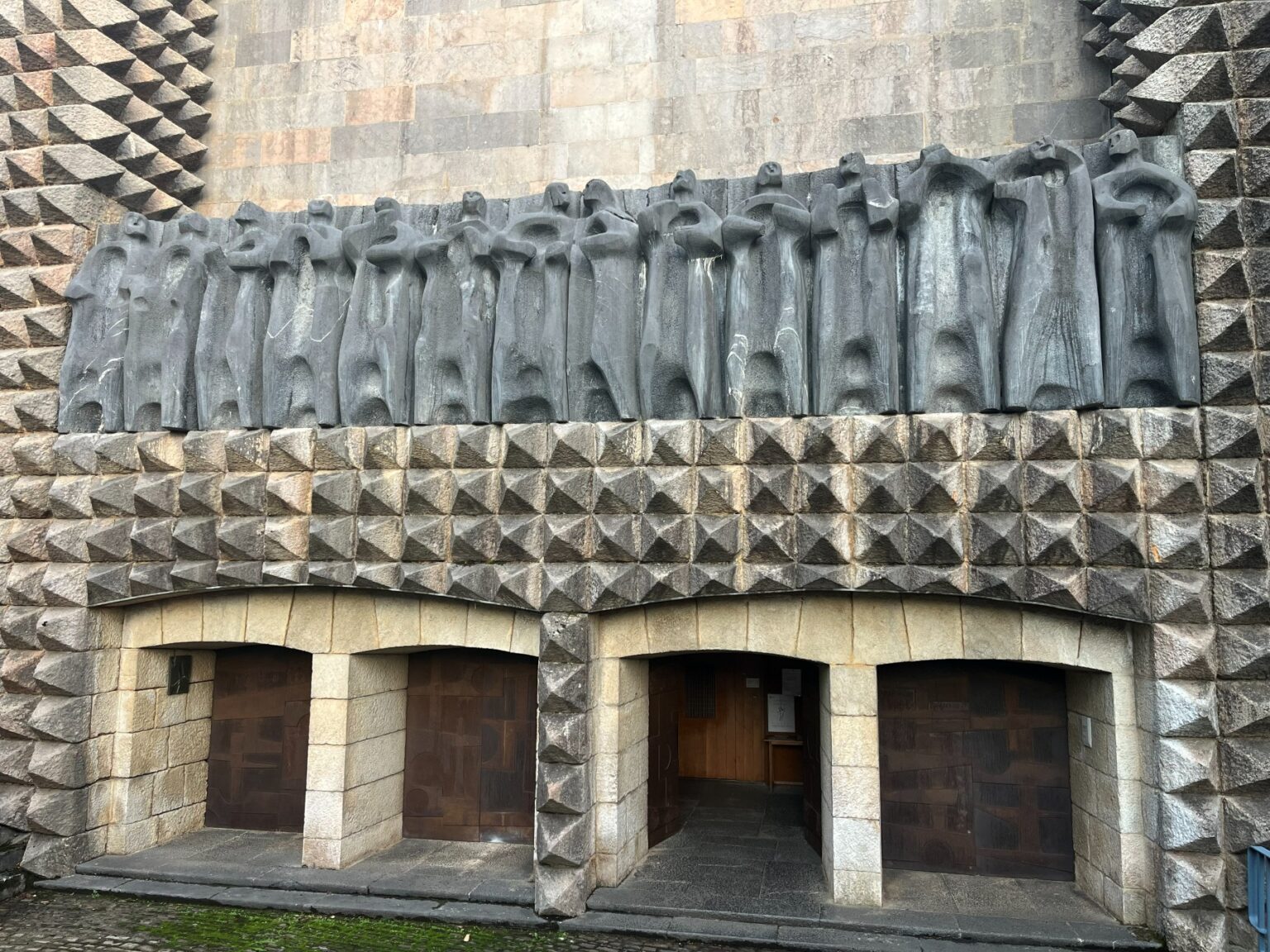
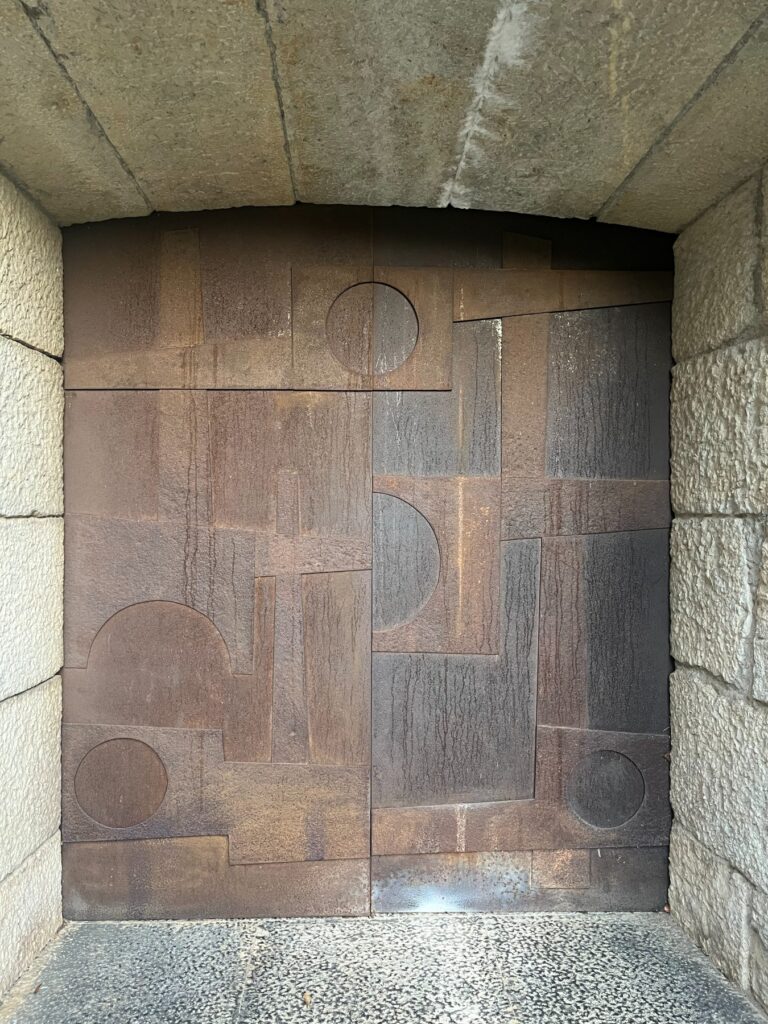
Above the portal stand the frieze of the fourteen apostles and, higher up, the Pietà: both by Jorge Oteiza. The frieze, carved in grey Markina stone, from the land of Negro Marquina, was not put in place until 1969. The four iron doors are by Eduardo Chillida. Stone, iron and, inside, wood: three materials that age well together.
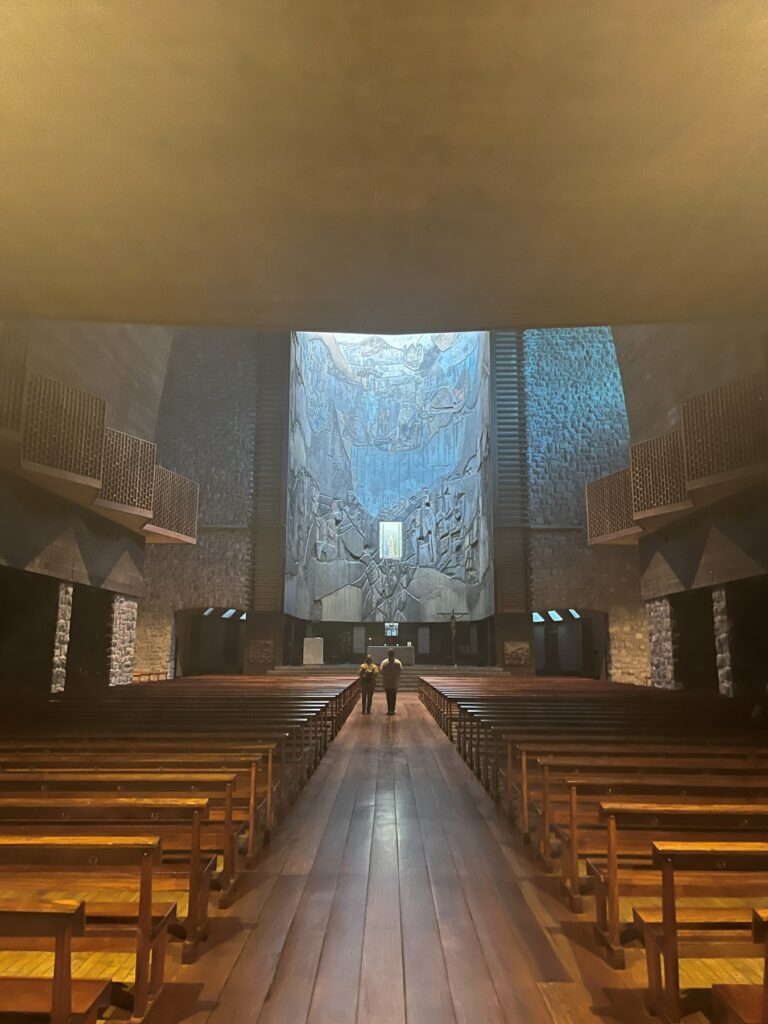
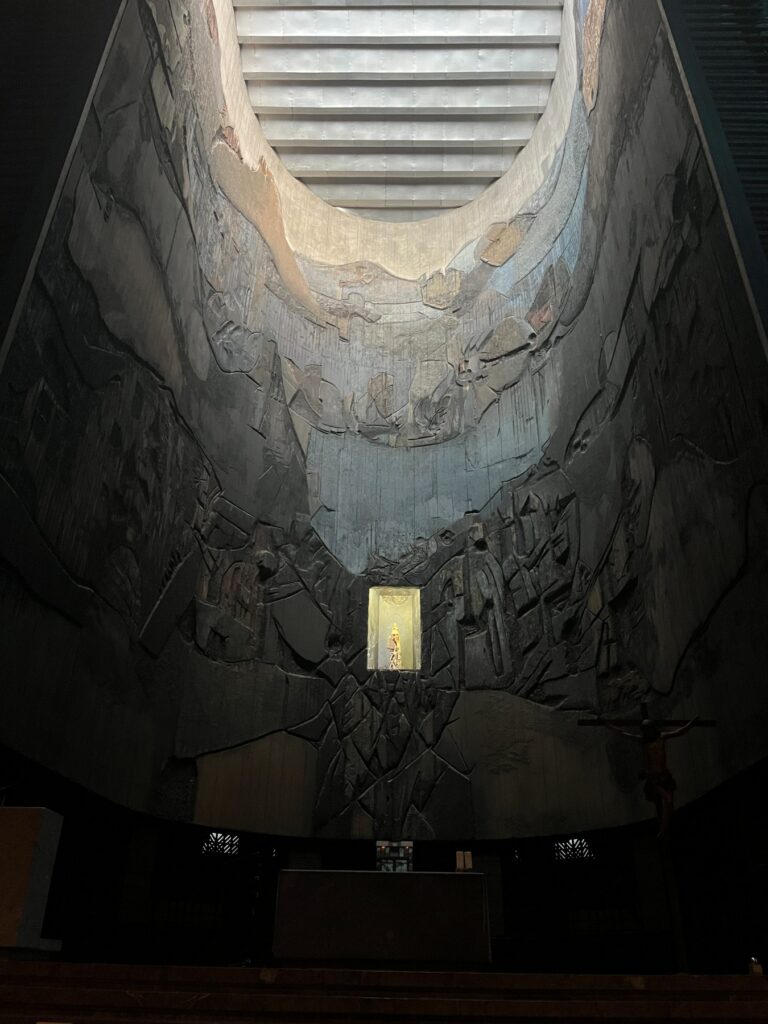
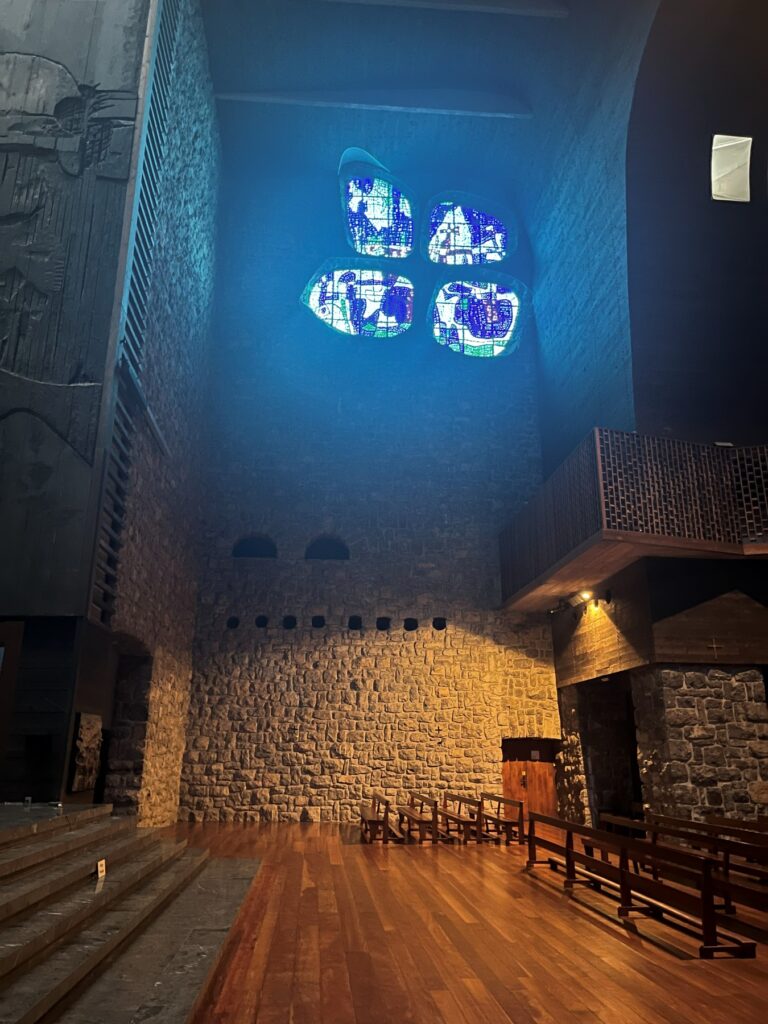
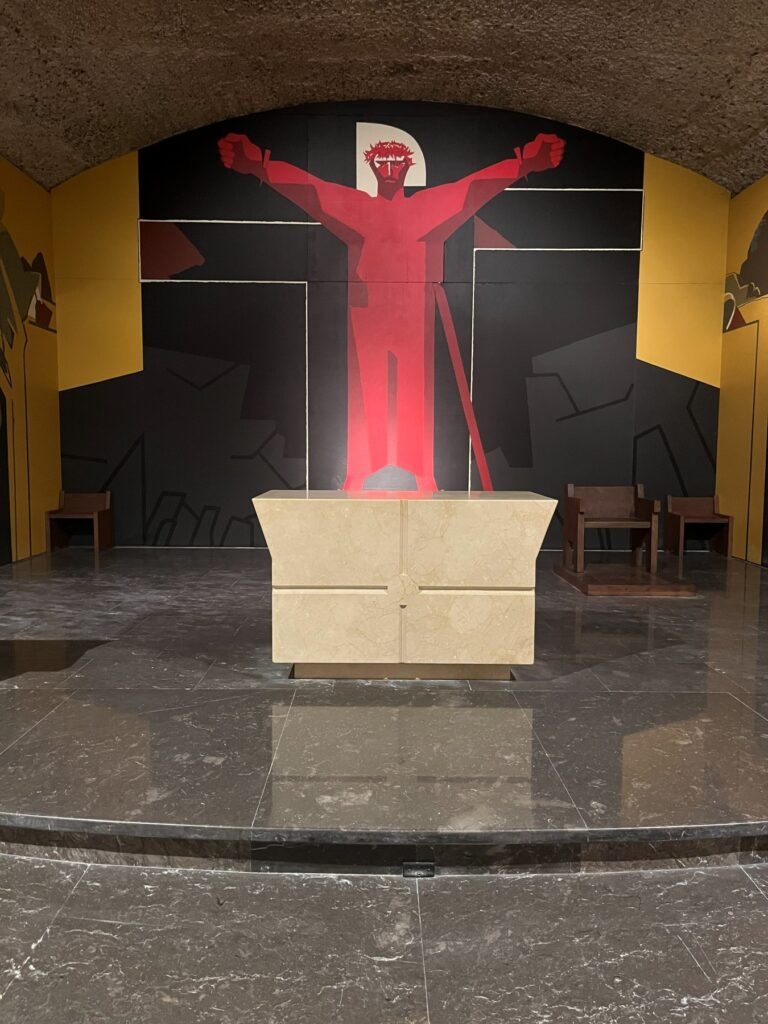
Inside, a single nave 66 metres long and 20 wide leads the eye to the apse by Lucio Muñoz, inspired by the rugged Arantzazu landscape. The stained glass is by Friar Javier María Álvarez de Eulate, and the crypt murals by Néstor Basterretxea.
what we take away.
From quarry to basilica, the trip leaves three ideas we apply to every project. First: the block is chosen at source, because no photo shows how stone changes from one block to the next. Second: stone has to be thought of wet too, because climate changes it more than any finish. Third, from Arantzazu: the same material, plain or carved, can tell two different stories. Texture is architecture too.
nothing else.
Travel, fairs, quarries and buildings, told by an architect. We only write when there is something to tell, and you can unsubscribe at any time. By subscribing you accept our privacy policy.
bala material studio · alicante